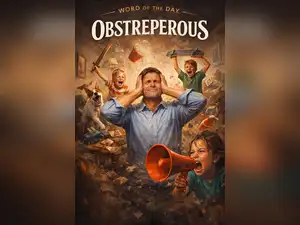
Obstreperous Echoes: How Noise, Defiance, and Latin Roots Shape Our World
The English language, a vast and ever-evolving tapestry, is enriched by words that not only convey meaning but also paint vivid pictures and evoke strong emotions. Among these is \"obstreperous\" – a word that, while perhaps not uttered daily, carries a weight of meaning that resonates deeply within the annals of history, the clamor of contemporary society, and the subtle nuances of literature. It is a word that speaks of noisy defiance, a powerful descriptor for individuals, groups, or even ideas that refuse to be silenced or subdued. To truly grasp the essence of \"obstreperous,\" we must journey into its Latin origins, explore its multifaceted relevance, and understand the profound implications it holds for our political discourse, social movements, and artistic expressions.
The Cacophony of Opposition: Unpacking \"Obstreperous\"
At its core, \"obstreperous\" describes something characterized by unruly or clamorous opposition. It is not a quiet protest, a thoughtful dissent, or a measured disagreement. Instead, it conjures images of a loud, persistent, and often disruptive outcry. Think of a boisterous crowd that refuses to be dispersed, a child throwing a public tantrum, or a political faction that loudly obstructs any form of compromise. The word carries a sense of being difficult to control or manage due to its inherent loudness and argumentative nature.
While its modern usage is clear, understanding the etymology of \"obstreperous\" offers a richer appreciation for its evocative power. The word\'s journey begins in Latin, a language that has bequeathed countless words to English, many of which carry a certain gravitas and historical resonance.
The Latin root of \"obstreperous\" can be traced to two key components:
* \"ob-\": This is a Latin prefix that often signifies \"against,\" \"in the way,\" or \"before.\" It implies an obstruction or a sense of opposition.
* \"strepere\": This Latin verb means \"to make a loud noise,\" \"to roar,\" or \"to clamor.\" It is intrinsically linked to the concept of audible disruption.
When combined, \"obstrepere\" literally meant \"to make a loud noise against\" or \"to clamor against.\" This direct translation perfectly encapsulates the essence of the word – a noisy and forceful opposition.
The word then evolved into the Latin adjective \"obstreperus,\" carrying the meaning of \"noisy,\" \"clamorous,\" or \"boisterous.\" From Latin, it made its way into Old French and eventually into Middle English, retaining its core meaning of loud, unruly, and defiant noise.
This linguistic journey underscores a crucial point: the concept of noisy, disruptive opposition is not a modern invention. It has been a recurring theme throughout human history, and our language has developed specific terms to describe it. \"Obstreperous\" is one such term, a word that has stood the test of time because the phenomenon it describes remains persistently relevant.
Beyond the Dictionary: \"Obstreperous\" in the Arena of Human Affairs
The true power of \"obstreperous\" lies not just in its etymology but in its applicability to a wide spectrum of human experience. It is a word that transcends mere definition, offering a lens through which we can analyze and understand various aspects of our world.
Political Tempest: The Obstreperous Arena
Perhaps the most immediate and potent application of \"obstreperous\" is in the realm of politics. In democratic societies, dissent and opposition are not only expected but are often vital for a healthy political landscape. However, when this opposition becomes excessively loud, disruptive, and unwilling to engage in reasoned debate, it can be aptly described as obstreperous.
Consider these scenarios:
* Legislative Gridlock: When opposing parties in a parliament or congress resort to filibusters, constant shouting matches, or obstructionist tactics that prevent any meaningful legislation from passing, their behavior can be deemed obstreperous. This is not constructive opposition; it is a deliberate act of making noise to prevent progress.
* Public Demonstrations: While peaceful protests are a cornerstone of free speech, demonstrations that escalate into widespread rioting, vandalism, and an unwillingness to heed any authority can be labeled as obstreperous. The noise and chaos become the primary form of expression, often overshadowing the original grievances.
* Political Rhetoric: The use of inflammatory, aggressive, and often baseless pronouncements by politicians, aimed at inciting a passionate and often unthinking response from their base, can be seen as obstreperous. This type of rhetoric prioritizes volume and emotional appeal over factual accuracy or policy substance.
* Lobbying and Interest Groups: While lobbying is a legitimate part of the democratic process, certain powerful interest groups can become obstreperous when they employ aggressive tactics, spread misinformation, or exert undue pressure to block legislation that might benefit the wider public.
The term \"obstreperous\" in a political context often carries a negative connotation. It suggests a lack of decorum, a disregard for established procedures, and a tendency to prioritize disruption over constructive engagement. It implies a group or individual that is not merely disagreeing but actively making a nuisance of themselves to achieve their aims.
Social Unrest: The Echoes of Defiance
Beyond formal politics, \"obstreperous\" finds fertile ground in describing social movements and public reactions. History is replete with examples of individuals and groups who, through their loud and persistent defiance, have challenged the status quo.
* Civil Rights Movements: While many aspects of civil rights movements were characterized by strategic, non-violent resistance, there were often moments of obstreperous protest where the sheer volume and persistence of the outcry forced society to confront injustices. Think of the sit-ins, the marches that blocked traffic, or the vocal opposition to discriminatory laws. The noise, in these instances, was a deliberate tool to disrupt the silence of complicity.
* Youth Culture and Rebellion: Throughout history, successive generations of young people have often expressed their dissatisfaction with prevailing norms and expectations through obstreperous behavior. From the Beat Generation\'s literary provocations to the punk rock scene\'s anti-establishment anthems, youth culture has frequently embraced a noisy and defiant stance against the perceived complacency of their elders.
* Community Activism: Local communities that organize to protest against harmful developments, corporate exploitation, or inadequate public services can be described as obstreperous when their efforts involve loud demonstrations, persistent petitions, and a refusal to be ignored. The \"NIMBY\" (Not In My Backyard) phenomenon, when vociferously expressed, can also be seen as obstreperous.
* Online Disruption: In the digital age, the concept of \"obstreperous\" has found new avenues of expression. Online mobs, viral campaigns that amplify outrage, and the coordinated spread of dissenting opinions can all contribute to an obstreperous digital landscape. While this can be a powerful tool for activism, it can also descend into online harassment and the spread of misinformation.
In the social context, \"obstreperous\" can carry a dual meaning. It can denote a disruptive and potentially problematic force, but it can also represent the necessary clamor required to bring about social change. The line between constructive protest and mere obstruction can be blurry, and the term \"obstreperous\" often reflects an observer\'s perspective on this dynamic.
Literary Resonance: The Obstreperous Voice in Art
The power of \"obstreperous\" extends into the realm of literature and the arts, where it can describe characters, narratives, and artistic movements that challenge convention and provoke thought through their sheer audacity and refusal to conform.
* Rebellious Characters: Literature is filled with characters who are inherently obstreperous – those who defy authority, question societal norms, and express themselves with a loudness that often lands them in trouble. Think of characters like Holden Caulfield from J.D. Salinger\'s *The Catcher in the Rye*, whose internal monologue is a constant, often whiny, rebellion against the \"phoniness\" of the adult world. Or consider the defiant spirit of characters in Dickensian novels who cry out against injustice.
* Avant-Garde Movements: Artistic movements that deliberately sought to shock, disrupt, and challenge established aesthetic principles can be described as obstreperous. The Dadaists, for instance, with their nonsensical poems, anti-art installations, and provocative performances, were undeniably obstreperous in their rejection of traditional artistic values.
* Satire and Social Commentary: Satirical works often employ an obstreperous tone to highlight societal flaws. Writers who use biting wit, exaggeration, and bold pronouncements to expose hypocrisy and absurdity are, in a sense, using their words to create a loud and disruptive commentary.
* Poetry of Protest: Certain forms of poetry are designed to be a direct and forceful outcry against injustice or oppression. The rhythm, the imagery, and the sheer emotional intensity of these poems can create an \"obstreperous\" effect, demanding the reader\'s attention and challenging their complacency.
In literature, \"obstreperous\" often signifies a vibrant and essential element of artistic expression. It is the voice that refuses to be muted, the narrative that insists on being heard, even if it is uncomfortable or challenging. It represents the artist\'s or writer\'s determination to break through the silence and provoke a reaction.
The Stakeholders in the Obstreperous Debate
When we encounter obstreperous behavior, a range of stakeholders are invariably involved, each with their own perspectives and vested interests. Understanding these players is crucial to a comprehensive analysis.
* The Obstreperous Individual/Group: This is the source of the noise and defiance. Their motivations can range from genuine conviction and a desire for justice to a calculated attempt to gain attention, disrupt order, or achieve specific political or personal goals.
* Those Being Opposed: This could be a government, a corporation, an institution, or even societal norms. They are the target of the obstreperous behavior and may seek to suppress it, engage with it, or ignore it, depending on their power and goals.
* The Public/Audience: The wider community, both directly and indirectly affected by the obstreperous actions. Their reaction – whether sympathetic, indifferent, or hostile – can significantly influence the outcome of the situation. They are the recipients of the noise and the potential beneficiaries or victims of any resulting change.
* Media Outlets: The media plays a critical role in amplifying or downplaying obstreperous events. They can frame the narrative, providing context or exacerbating the conflict through their reporting. Their choices in what to cover and how to cover it can shape public perception.
* Law Enforcement and Authorities: In situations where obstreperous behavior crosses legal boundaries, law enforcement agencies and governing bodies may be called upon to restore order, enforce laws, or mediate disputes. Their actions can either de-escalate or intensify the situation.
* Academics and Commentators: Sociologists, political scientists, historians, and cultural critics often analyze and contextualize obstreperous events, offering explanations and interpretations that contribute to public understanding.
The dynamics between these stakeholders are complex and often fraught with tension. The effectiveness and perception of obstreperous actions are heavily influenced by how these different groups interact.
A Timeline of Noise: Tracing the Manifestations of \"Obstreperousness\"
While \"obstreperous\" is a static word, its manifestations are dynamic and have unfolded throughout history. Tracing these events provides a chronological understanding of how this trait has shaped human affairs.
Ancient World:
* Roman Republic: The Roman Forum often witnessed obstreperous debates amongst politicians and citizens. Orators would use loud rhetoric to sway public opinion, and sometimes, the sheer volume of the crowd\'s reaction could disrupt proceedings. The Gracchi brothers, for instance, engaged in populist rhetoric that was certainly obstreperous in its challenge to the senatorial elite.
* Greek City-States: Assemblies in places like Athens could become obstreperous during times of political crisis or public outcry, with citizens vociferously voicing their dissent or support.
Medieval and Renaissance Eras:
* Peasant Uprisings: Rebellions like the Jacquerie in France or the Peasants\' Revolt in England, while often rooted in legitimate grievances, were characterized by obstreperous displays of anger and defiance, often involving widespread violence and the disruption of established order.
* Religious Dissent: The Protestant Reformation saw figures like Martin Luther engage in obstreperous challenges to the authority of the Catholic Church, using bold pronouncements and public writings to rally support.
Enlightenment and Revolutions:
* American Revolution: The cry of \"no taxation without representation\" became an obstreperous rallying call. The Boston Tea Party, a decidedly obstreperous act of defiance, symbolized a loud rejection of British policy.
* French Revolution: The storming of the Bastille and the subsequent revolutionary fervor were marked by obstreperous cries for liberty, equality, and fraternity, often accompanied by widespread public unrest and violence.
19th Century:
* Abolitionist Movement: Abolitionists, through powerful speeches, public demonstrations, and the publication of vivid accounts of slavery, engaged in obstreperous opposition to the institution of slavery, challenging deeply entrenched societal norms.
* Suffragette Movement: Early women\'s suffrage movements, while sometimes employing more measured tactics, also saw moments of obstreperous protest, including public demonstrations, civil disobedience, and outspoken advocacy that challenged the patriarchal status quo.
20th Century:
* Civil Rights Movement (USA): As mentioned earlier, the Civil Rights Movement in the US featured numerous obstreperous moments – sit-ins, freedom rides, and mass marches that deliberately disrupted the fabric of segregationist society. The obstreperous voices of leaders like Martin Luther King Jr. and Malcolm X, though differing in method, both aimed to break through the silence.
* Anti-War Protests (e.g., Vietnam War): Mass demonstrations against the Vietnam War were often characterized by obstreperous displays of dissent, including protests that blocked traffic, disrupted government buildings, and featured loud chants and slogans.
* Counterculture Movements: The 1960s saw widespread obstreperous cultural shifts driven by youth movements challenging traditional values, often expressed through music, art, and protests.
21st Century:
* Occupy Movement: The Occupy Wall Street movement, with its encampments and vocal protests against economic inequality, was an obstreperous challenge to the established financial and political systems.
* Social Media Activism: The rise of social media has provided new platforms for obstreperous online campaigns, enabling rapid mobilization and the amplification of dissenting voices, sometimes leading to significant social and political impact.
* Contemporary Political Divides: The current era is marked by significant political polarization, often characterized by obstreperous rhetoric from all sides, making constructive dialogue and compromise increasingly difficult.
This chronological overview demonstrates that while the *word* \"obstreperous\" has a specific origin, the *behavior* it describes is a recurring and often transformative force in human history.
The Unfolding Future: Implications of \"Obstreperousness\"
As we look ahead, the role and impact of \"obstreperousness\" are likely to continue evolving, shaped by technological advancements, shifting societal values, and the ever-present human inclination towards both conformity and rebellion.
* The Amplification Effect of Technology: The internet and social media have already demonstrated their capacity to amplify voices, both rational and obstreperous. Future technologies, such as AI-driven content generation and sophisticated disinformation campaigns, could further complicate the landscape, making it even harder to discern genuine dissent from manufactured noise. This could lead to a more fragmented and obstreperous information ecosystem.
* The Challenge of Distinguishing Dissent from Disruption: As obstreperous tactics become more commonplace, societies will face an ongoing challenge in distinguishing between legitimate, rights-based dissent and disruptive behavior that undermines democratic processes or public safety. This will require a nuanced approach to governance and public discourse.
* The Blurring Lines of Political Discourse: The trend towards increasingly polarized and often obstreperous political rhetoric is likely to continue, posing a significant threat to reasoned debate and the possibility of finding common ground. This could lead to a perpetual state of political gridlock and social unrest.
* The Evolving Nature of Social Movements: Future social movements may leverage new technologies and strategies to express their grievances in increasingly obstreperous ways. This could involve more sophisticated forms of civil disobedience, digital activism, and targeted disruptions designed to exert maximum pressure.
* The Importance of Media Literacy: In an age where noise and information often compete for attention, developing robust media literacy skills will be paramount. The ability to critically evaluate sources, identify bias, and understand the motivations behind obstreperous campaigns will be essential for navigating the modern information landscape.
* The Potential for Both Progress and Peril: \"Obstreperousness\" is a double-edged sword. It can be the catalyst for necessary social change, forcing societies to confront uncomfortable truths and injustices. However, it can also devolve into unproductive chaos, hindering progress and exacerbating divisions. The future will likely see both of these outcomes play out simultaneously.
The continued relevance of \"obstreperous\" suggests that the tension between order and disorder, conformity and rebellion, silence and clamor, is an intrinsic part of the human experience. As our world becomes more interconnected and our societies more complex, the manifestations of obstreperousness will undoubtedly continue to shape our collective journey.
The Enduring Resonance of a Loud Word
The word \"obstreperous,\" with its roots firmly planted in the Latin expressions of clamor and opposition, is far more than just an obscure vocabulary entry. It is a vital descriptor for a persistent human phenomenon: noisy defiance. From the ancient forums to the digital town squares, from the halls of power to the quiet corners of artistic expression, the echoes of obstreperousness reverberate.
It is the loud cry against injustice, the disruptive challenge to the status quo, the boisterous argument that refuses to be silenced. While it can sometimes be uncomfortable, even problematic, obstreperousness also serves as a crucial indicator of underlying tensions and a potent, albeit sometimes unruly, force for change.
Understanding \"obstreperous\" allows us to better analyze the political battles, social movements, and artistic provocations that define our world. It reminds us that the pursuit of progress often involves a certain degree of clamor, and that silence, while sometimes golden, can also be the sound of complicity. In a world increasingly saturated with information and opinion, the ability to recognize and critically engage with the obstreperous – both its motivations and its consequences – is an indispensable tool for navigating the complexities of our time. The word itself, much like the behavior it describes, commands attention and demands to be heard.