A Betrayal Unfolding: Rahul Gandhi\'s Stark Warning on the India-US Trade Deal and its Impact on the Nation\'s Farmers
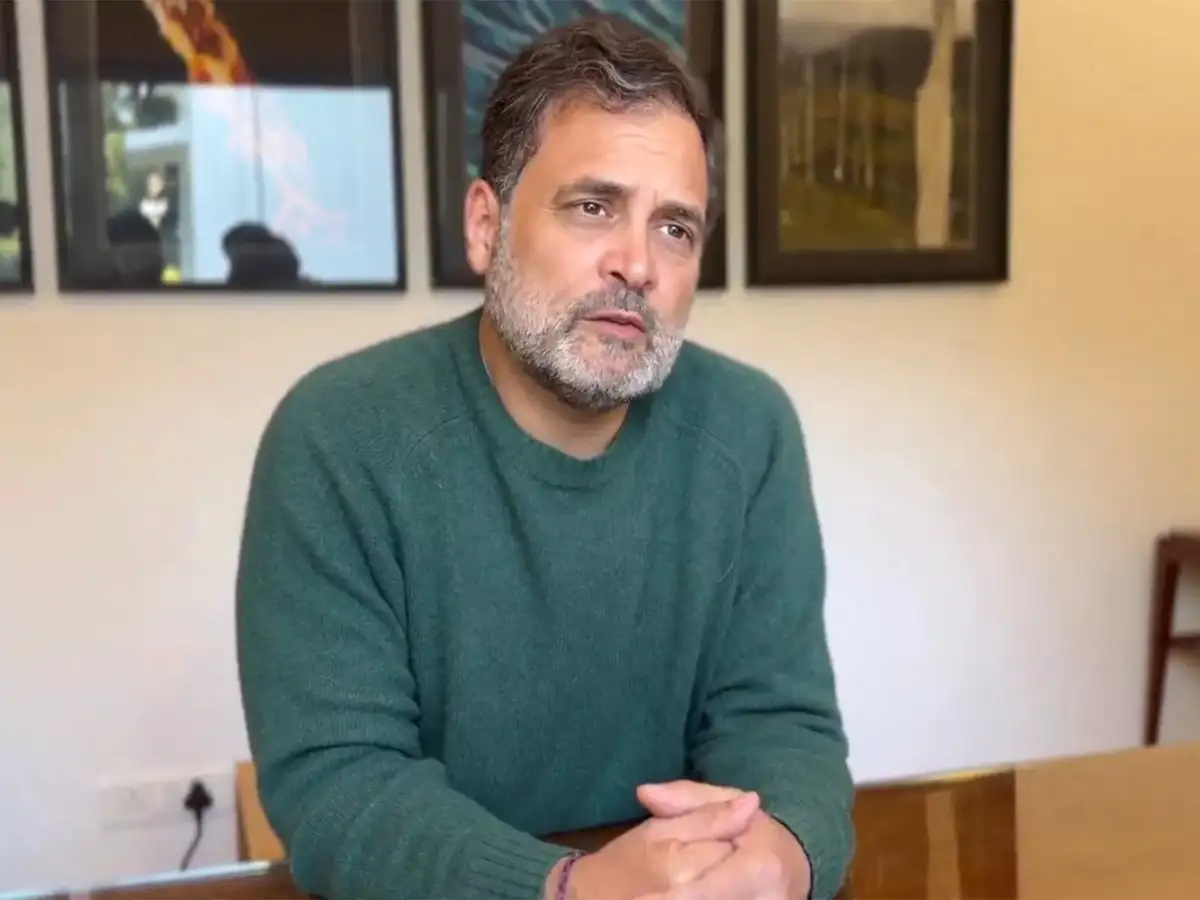
New Delhi, India – In a powerful and impassioned address that reverberated through the political landscape of India, senior Congress leader Rahul Gandhi has sounded a dire alarm, articulating profound concerns over the recently negotiated interim trade deal between India and the United States. Gandhi, a prominent voice within the Indian National Congress and a scion of a deeply influential political dynasty, has directly challenged Prime Minister Narendra Modi, accusing his government of orchestrating a pact that could irrevocably betray the interests of India\'s vast and vital farming community. The crux of his criticism centers on the proposed import of specific agricultural commodities – Dried Distillers\' Grains (DDGS) and Genetically Modified (GM) soybean oil – which Gandhi argues represent a dangerous concession to foreign entities and a potential long-term stranglehold on India\'s agrarian economy.
The description of this trade deal as an \"interim agreement\" itself carries significant weight. It suggests a preliminary understanding, a stepping stone towards a more comprehensive and potentially more impactful comprehensive trade agreement. This preliminary nature, Gandhi contends, makes the alleged concessions even more egregious. Instead of safeguarding India\'s domestic agricultural sector during these initial stages, the Modi government, according to Gandhi, has seemingly prioritized immediate economic gains or diplomatic expediency over the livelihoods and sovereignty of millions of Indian farmers. The narrative being woven by Gandhi is one of a nation, through its leadership, willingly compromising its agricultural future for the sake of perceived international trade benefits.
The Genesis of Concern: Unpacking the Trade Deal\'s Specifics
To fully grasp the gravity of Rahul Gandhi\'s accusations, it is imperative to dissect the specific components of the interim trade deal that have drawn his ire. The agreement, while not fully detailed in the public domain, has been understood to include provisions for the import of agricultural products that are already produced, or could be produced, in abundance within India. The inclusion of Dried Distillers\' Grains (DDGS) and Genetically Modified (GM) soybean oil are not merely technical clauses; they represent, in Gandhi\'s view, a fundamental challenge to the established agricultural ecosystem and the autonomy of Indian farmers.
Dried Distillers\' Grains (DDGS): A Challenge to Domestic Feed Production
Dried Distillers\' Grains (DDGS) are a co-product of corn ethanol production. They are primarily used as a high-protein animal feed ingredient. India does have a significant livestock population, and therefore, a substantial demand for animal feed. The import of DDGS, therefore, directly enters into competition with domestically produced feed ingredients.
Gandhi\'s critique likely stems from several interconnected concerns regarding DDGS imports:
* Competition with Domestic Feed Sources: India produces a variety of feed ingredients, including oilseed meals (like soybean meal, groundnut meal), pulses, and other agricultural by-products. The influx of cheap, readily available DDGS from the US could undercut the prices of these domestic alternatives. This would directly impact the profitability of farmers who cultivate crops that are used for feed production. For instance, if soybean meal becomes less competitive due to DDGS imports, the price of soybeans for domestic farmers could plummet, making cultivation less attractive.
* Potential Impact on Crop Diversification: India has historically encouraged crop diversification to improve soil health, reduce reliance on single crops, and enhance farmer incomes. Introducing a large-scale import of a specific feed ingredient like DDGS could discourage farmers from cultivating a diverse range of feed-related crops. This could lead to a narrowing of agricultural production, making the sector more vulnerable to climate-related shocks and pest infestations.
* Quality and Safety Concerns: While the US has stringent regulations for animal feed, questions can always arise regarding the quality, nutritional consistency, and potential contaminants of imported agricultural products, especially when produced on an industrial scale. Gandhi might be raising concerns about the rigorousness of India\'s own quality control mechanisms for such imported goods and whether they are sufficient to protect the health of Indian livestock.
* Economic Drain: Large-scale imports of agricultural commodities represent a significant outflow of foreign exchange. While trade deals are often framed in terms of economic benefits, Gandhi\'s argument likely emphasizes that this particular import could lead to a net economic disadvantage for India, enriching foreign producers at the expense of domestic agriculture.
* Subsidy Concerns: It is widely understood that US agricultural products are often heavily subsidized by the American government. The import of these subsidized goods into India could create an uneven playing field, making it nearly impossible for Indian farmers, who do not benefit from comparable levels of government support, to compete on price. This raises questions of fair trade practices.
Genetically Modified (GM) Soybean Oil: A Slippery Slope for India\'s Food Security
The inclusion of Genetically Modified (GM) soybean oil in the trade deal represents perhaps the most contentious aspect of Rahul Gandhi\'s apprehension. India has a complex and often contentious relationship with genetically modified crops and food products. While GM cotton has been widely adopted, the introduction of GM food crops for human consumption has faced significant public and political resistance due to concerns about health, environmental safety, and corporate control over seeds.
Gandhi\'s arguments against the import of GM soybean oil are likely multifaceted:
* Sovereignty and Food Security: The fundamental concern is over India\'s food sovereignty. Allowing the import of GM soybean oil, particularly if it becomes a significant part of the Indian edible oil market, could lead to a dependency on foreign suppliers. This dependency can be a vulnerability in times of international geopolitical instability, trade disputes, or supply chain disruptions. Gandhi might be invoking the spectre of India being held hostage by foreign agrochemical and seed giants.
* Health Concerns and Precautionary Principle: Despite assurances from proponents of GM technology, a significant segment of the Indian population, including many scientists and activists, remain apprehensive about the long-term health implications of consuming GM food products. The \"precautionary principle\" – the idea that if an action or policy has a suspected risk of causing harm to the public or to the environment, in the absence of scientific consensus that the action or policy is not harmful, the burden of proof that it is not harmful falls on those taking an action that would carry out the action – is often invoked in these debates. Gandhi\'s stance likely aligns with this cautious approach, arguing that the government should not be introducing products with potential, even if unproven, long-term health risks into the food chain without exhaustive and independent long-term studies.
* Impact on Domestic Oilseed Cultivation: India is a major producer of various oilseeds, including soybeans. The import of cheaper GM soybean oil could devastate the domestic soybean cultivation sector. Farmers who have invested in traditional or non-GM soybean cultivation could find themselves unable to compete with the price of imported GM oil. This would not only impact their income but also potentially lead to a decline in the cultivation of soybeans, a crucial crop in many Indian states.
* Corporate Control and Seed Monopoly: The introduction of GM technology is often inextricably linked with the business models of multinational agrochemical corporations, such as Monsanto (now Bayer). These companies typically patent their GM seeds and associated herbicides, creating a system where farmers become dependent on purchasing these proprietary inputs year after year. Gandhi\'s concern is that by facilitating the import of GM soybean oil, India could be indirectly paving the way for the eventual introduction and dominance of GM soybean cultivation within the country, leading to a loss of farmer autonomy and the potential for a seed monopoly.
* Ethical and Cultural Considerations: For many, the idea of genetically modifying food is not just a scientific or economic issue, but also an ethical and cultural one. There are concerns about \"tampering with nature\" and the potential unforeseen consequences of such interventions. Gandhi\'s appeal often taps into these deeper societal sentiments.
\"Betrayal of Indian Farmers\": Deconstructing the Allegation
The phrase \"betrayal of Indian farmers\" is not a casual accusation; it is a potent political and emotional statement that resonates deeply within a nation where agriculture forms the backbone of the economy and the primary source of livelihood for a significant portion of the population. Rahul Gandhi\'s use of this term suggests a profound breach of trust between the government and its citizens, specifically those engaged in farming.
What does this alleged \"betrayal\" entail?
* Prioritizing Foreign Interests Over Domestic Livelihoods: Gandhi argues that the government, in its pursuit of trade agreements, has demonstrably prioritized the economic interests of foreign corporations and nations over the immediate well-being and long-term sustainability of Indian farmers. This implies a political choice to potentially harm domestic producers for external gains, a perceived abandonment of the government\'s fundamental duty to protect its own citizens.
* Undermining Self-Sufficiency and Food Security: By opening the doors to large-scale imports of key agricultural products, the government is seen as weakening India\'s efforts towards achieving true food self-sufficiency. A nation that relies heavily on imports for its food needs is inherently more vulnerable to external pressures and less secure. Gandhi might be painting a picture of a government that is, willingly or unwillingly, making India more dependent and less resilient.
* Ignoring the Voices and Concerns of Farmers: The history of Indian agriculture is replete with instances of farmers\' protests and grievances. Gandhi is likely suggesting that the government has failed to adequately consult with or heed the concerns of farmer organizations, agricultural experts, and rural communities before entering into such a consequential trade deal. This perceived disregard for the lived experiences and expert opinions of those directly impacted is a core element of the \"betrayal\" narrative.
* Long-Term Economic Disadvantage: The \"betrayal\" extends beyond immediate price competition. Gandhi\'s warning about a \"long-term hold over India\'s agriculture industry\" points to a fear that these imports could fundamentally alter the structure of Indian agriculture, making it subservient to global market forces and foreign corporate interests. This could lead to a gradual erosion of India\'s agricultural autonomy and a permanent shift in the economic power dynamics within the sector.
* Erosion of Trust and Farmer Confidence: Ultimately, a betrayal erodes trust. If farmers perceive that their government is not acting in their best interests, it can lead to widespread disillusionment, apathy, and a decline in agricultural productivity. Gandhi\'s intervention aims to re-ignite this trust and rally support for a more farmer-centric trade policy.
\"Allowing Foreign Entities a Long-Term Hold\": The Specter of Corporate Dominance
The specific fear of foreign entities gaining a \"long-term hold over India\'s agriculture industry\" is a recurring theme in discussions about globalization and trade liberalization in developing nations. Gandhi\'s articulation of this concern is likely rooted in several interconnected anxieties:
* Market Share Capture: Once foreign products gain entry and establish a market presence, it can be incredibly difficult for domestic producers to regain lost ground, especially if the foreign products are cheaper due to subsidies or economies of scale. This can lead to a situation where foreign companies dominate key sectors of the agricultural supply chain, from inputs to processing and distribution.
* Influence on Policy and Regulation: A significant presence of foreign corporations in India\'s agriculture sector can translate into considerable lobbying power. This influence could be used to shape future policies and regulations in ways that are more favorable to foreign interests, potentially at the expense of Indian farmers and consumers. Gandhi might be warning of a future where India\'s agricultural policies are dictated by the agendas of multinational corporations.
* Control Over Seeds and Technology: As mentioned earlier, the introduction of GM technology is often linked to corporate control over proprietary seeds and associated agricultural inputs. A \"long-term hold\" could mean that Indian farmers become increasingly dependent on a few global giants for their seeds, fertilizers, and pesticides, limiting their choices and increasing their costs. This can also stifle domestic innovation and research in the agricultural sector.
* Shifting the Focus from Food Security to Profitability: The primary motive of multinational corporations is profit. While their activities can sometimes align with national interests, their ultimate decisions are driven by shareholder value. Gandhi\'s concern could be that an over-reliance on foreign entities will shift the focus of India\'s agriculture from ensuring food security and rural livelihoods to maximizing profits for global corporations, potentially leading to practices that are not in the long-term national interest.
* Vulnerability to External Shocks: A diversified and self-reliant agricultural sector is more resilient to global economic downturns, trade wars, or geopolitical crises. A sector heavily dominated by foreign entities becomes more vulnerable to external shocks, as decisions made by these foreign entities in their home countries or in other global markets can have a disproportionate impact on India\'s food supply and agricultural economy.
Prime Minister Narendra Modi and the Government\'s Stance
Rahul Gandhi\'s challenge is directly aimed at Prime Minister Narendra Modi and his administration. The Indian government, through its Ministry of Commerce and Industry and other relevant bodies, has historically sought to balance the pursuit of economic growth and trade partnerships with the protection of domestic industries. However, Gandhi\'s accusations suggest that in this instance, this balance has been skewed.
The government\'s response to such accusations typically involves:
* Highlighting Economic Benefits: The government would likely emphasize the overall economic advantages of the trade deal, such as increased export opportunities for Indian goods and services, greater access to foreign markets, and potential for attracting foreign investment.
* Assurances of Farmer Protection: They would likely issue statements and assurances that the deal includes safeguards for Indian farmers and that domestic agricultural interests are not being compromised. Specific measures to support farmers might be highlighted.
* Emphasis on Regulatory Frameworks: The government might point to existing regulatory frameworks and quality control mechanisms that will be applied to imported goods, asserting that these are robust enough to ensure safety and fair competition.
* Framing as a \"Win-Win\" Scenario: Trade agreements are often presented as mutually beneficial arrangements, with both countries gaining. The government would likely frame this interim deal as a step towards a \"win-win\" outcome for both India and the US.
* Technical Justifications: Explanations might be provided for the inclusion of specific items like DDGS and GM soybean oil, perhaps citing their importance for certain industries (e.g., animal husbandry for DDGS) or the perceived benefits of certain technologies.
However, Gandhi\'s critique goes beyond these standard justifications. He is challenging the very premise of the deal and the government\'s priorities, suggesting that the perceived benefits are illusory or come at too high a cost. His focus on the \"betrayal\" narrative taps into a deep-seated concern among a significant portion of the Indian populace regarding the nation\'s economic sovereignty and the welfare of its most vulnerable communities.
The Broader Political and Economic Context
Rahul Gandhi\'s statements are not occurring in a vacuum. They are part of a larger political discourse in India, where the Congress party, as the main opposition, seeks to hold the ruling Bharatiya Janata Party (BJP) accountable. Gandhi\'s role as a prominent leader of the Congress party allows him to articulate these concerns on behalf of a significant political bloc.
The broader economic context is also crucial. India is a nation striving for economic development and integration into the global economy. Trade agreements are seen as vital tools for achieving these goals. However, the challenge lies in navigating these agreements in a manner that fosters sustainable growth without sacrificing the livelihoods of its vast agricultural workforce or compromising its food security.
The debate over GM crops, agricultural subsidies, and the influence of multinational corporations in the agricultural sector is a global phenomenon. India\'s position on these issues is closely watched internationally, and domestic political pronouncements, like those of Rahul Gandhi, shape this national and international perception.
Conclusion: A Call for Reconsideration and Farmer-Centric Policies
Rahul Gandhi\'s sharp criticism of the India-US interim trade deal, particularly concerning the import of DDGS and GM soybean oil, serves as a potent reminder of the complex interplay between international trade policy and the domestic realities of a nation like India. His allegations of a \"betrayal of Indian farmers\" and the risk of foreign entities gaining a \"long-term hold over India\'s agriculture industry\" are not mere political rhetoric; they reflect deep-seated anxieties about economic sovereignty, food security, and the well-being of millions who depend on agriculture for their sustenance.
Gandhi\'s intervention is a call to action, urging the government to reconsider its approach and to prioritize the interests of Indian farmers. It is an appeal for policies that foster self-reliance, protect domestic production, and ensure that trade agreements contribute to the nation\'s overall prosperity without jeopardizing the foundations of its agrarian economy. The onus now falls on the Modi government to address these serious concerns with transparency, robust debate, and a clear demonstration of its commitment to safeguarding the future of Indian agriculture and the millions of farmers who are its custodians. The nation watches, and waits, to see how this critical dialogue unfolds and what course India\'s agricultural destiny will ultimately take.