We are discovery rich, but development poor: Dr. Reddy's Laboratories' Co-Chairman and Managing Director
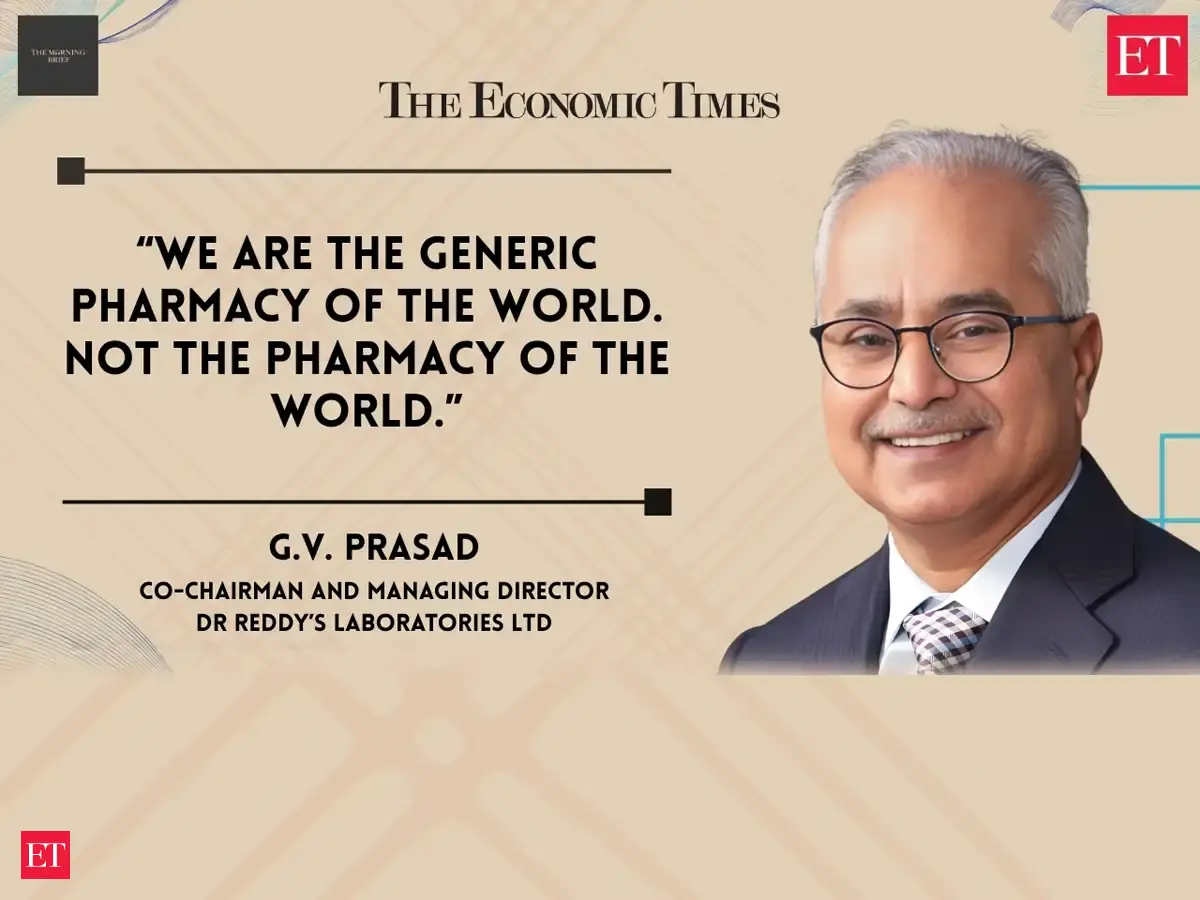
In a candid conversation with ET's pharma editor Vikas Dandekar on Corner Office Conversation, G.V. Prasad, Co-Chairman and Managing Director of Dr. Reddy's Laboratories, shared his insights on the challenges and opportunities facing the company, the Indian pharma industry, and the global healthcare landscape. With over thirty years at the helm of Dr. Reddy's Laboratories, Prasad has witnessed both the triumphs and tribulations of the company, and has a unique perspective on what has worked and what has not.
The Generic Pharmacy of the World
Prasad emphasized that India is the generic pharmacy of the world, rather than the pharmacy of the world. This distinction matters, as it highlights the country's strong track record of developing generic versions of complex drugs, but its lack of innovation in developing new, patented medicines. India's generics industry has been a major contributor to the country's economic growth, with many international pharma companies outsourcing their manufacturing operations to Indian firms. However, Prasad believes that the country's focus on generics has come at the expense of innovation, which is essential for driving growth and addressing the pressing healthcare challenges of the future.
Regulatory Crises and Missed Opportunities
Prasad reflected on the regulatory crises that Dr. Reddy's Laboratories has weathered over the years, including the 2008 FDA warning letter and the subsequent ban on the company's manufacturing facilities. He acknowledged that the company had been too slow to respond to the challenges posed by the FDA and had missed opportunities to address the issues before they became major problems.
Innovation Pipeline: Underfunded and Underdeveloped
Prasad also spoke about the company's innovation pipeline, which has remained perpetually underfunded and underdeveloped. While Dr. Reddy's Laboratories has made some investments in research and development, Prasad believes that more needs to be done to drive innovation and develop new, patented medicines. The company has a strong track record of developing generic versions of complex drugs, but this is not enough to sustain growth in the long term.
The Role of AI in Pharma
On the topic of artificial intelligence (AI) in pharma, Prasad was deliberately unsentimental. While he acknowledged that AI can be helpful at the margins, he does not believe that it has the potential to be transformational for the industry. Prasad believes that AI should be used to augment human capabilities, rather than replace them, and that the industry should focus on developing human-centered solutions that address the complex healthcare challenges faced by patients.
Dr. Reddy's Next Act: Innovation-Led Growth
Prasad emphasized the need for Dr. Reddy's Laboratories to pivot from incremental generics to innovation-led growth. The company has set a hard target to achieve this, but Prasad acknowledged that it will require a significant investment in research and development and a shift in the company's culture to achieve this goal.
Conclusion
In conclusion, Prasad's candid conversation with ET's pharma editor provides valuable insights into the challenges and opportunities facing Dr. Reddy's Laboratories and the Indian pharma industry. While the company has a strong track record of developing generic versions of complex drugs, it is clear that more needs to be done to drive innovation and develop new, patented medicines. The company's pivot to innovation-led growth will require a significant investment in research and development and a shift in the company's culture, but Prasad believes that this is essential for driving growth and addressing the pressing healthcare challenges of the future.
Analysis
The conversation with Prasad highlights the challenges facing the Indian pharma industry, including the need to balance the development of generic medicines with innovation in new, patented medicines. The industry's focus on generics has been driven by the need to address the healthcare challenges faced by patients in low- and middle-income countries, but it is clear that this focus has come at the expense of innovation.
The conversation also highlights the importance of regulatory compliance and the need for companies to invest in research and development to drive innovation. Prasad's emphasis on the need for Dr. Reddy's Laboratories to pivot from incremental generics to innovation-led growth is timely, as the company's focus on generics has not been sufficient to drive growth in the long term.
Recommendations
Based on the conversation with Prasad, the following recommendations can be made:
1. The Indian government should provide incentives to encourage pharma companies to invest in research and development and develop new, patented medicines.
2. Dr. Reddy's Laboratories should prioritize innovation-led growth and invest in research and development to develop new, patented medicines.
3. The company should also focus on building its capabilities in areas such as AI and data analytics to drive innovation and improve patient outcomes.
4. The Indian pharma industry should balance its focus on generics with innovation in new, patented medicines to drive growth and address the pressing healthcare challenges of the future.
Overall, the conversation with Prasad provides valuable insights into the challenges and opportunities facing Dr. Reddy's Laboratories and the Indian pharma industry. It highlights the need for companies to prioritize innovation-led growth and invest in research and development to drive growth and address the pressing healthcare challenges of the future.