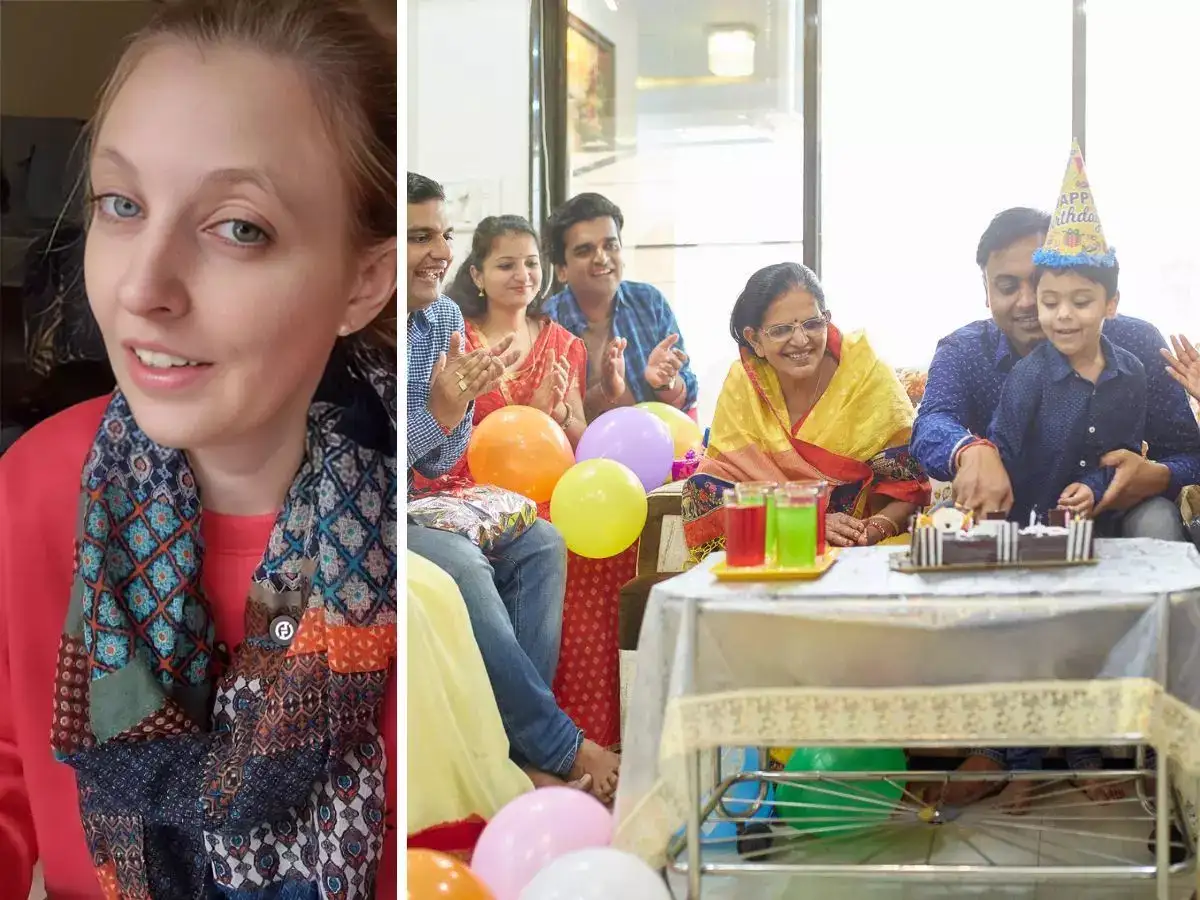
The Great Birthday Bill Debate: American Mum in India Left Speechless by Whose Turn It Is to Pay
New Delhi, India - For Sarah Chen, an American expat who has embraced life in India with open arms, many cultural differences have been a source of fascination and, at times, mild amusement. But one particular birthday tradition in her adopted homeland has left her genuinely taken aback, challenging her deeply ingrained American understanding of who foot the bill.
"In America, it's simple," Sarah explains with a chuckle, recounting her initial bewilderment. "If it's your birthday, you're the guest of honor, and everyone else pays. It's a given. You celebrate *them* celebrating *you*." This ingrained principle, familiar to millions of Americans, was Sarah's expectation as her own birthday approached in India.
However, as the celebrations began to unfold, Sarah noticed a peculiar and, to her, unprecedented pattern. Instead of her friends and family lining up to treat her, it seemed to be her guests who were initiating payments, often for their own meals and drinks.
"At first, I thought maybe it was a misunderstanding," Sarah admits, "I kept waiting for someone to say, 'Don't worry, it's on me!' But it never happened. Instead, people would casually pull out their wallets, settle their own bill, and then wish me a happy birthday. It was… disorienting."
The shock intensified when, after attending a friend's birthday gathering, Sarah found herself unexpectedly reaching for her own wallet to pay for her share. "I was stunned," she confesses. "It felt completely backward. I was the birthday girl! Why was I paying for myself, and sometimes even for others around me?"
This experience, while seemingly minor, highlights a significant cultural divergence in how birthdays are celebrated and who bears the financial responsibility. In many Indian cultures, the concept of the birthday person *paying* for their own celebration, or at least contributing significantly, is not only accepted but often seen as a gesture of generosity and gratitude.
"It's about showing appreciation for the well wishes and the company," explains Rajesh Kumar, an Indian friend of Sarah's who witnessed her initial confusion. "Instead of expecting others to shower you with gifts and pay for everything, the birthday person might treat their close friends to a meal, or at least cover their own expenses as a sign of thanks for them taking the time to celebrate. It's not about being stingy; it's about sharing the joy and the cost."
Sarah's initial reaction was a mixture of disbelief and a touch of offense. "I felt like I was being asked to pay for my own party," she says. "It went against everything I understood about being celebrated. I even worried if people thought I was being cheap by not offering to pay for everyone."
However, as she spoke with more Indian friends and observed other birthday celebrations, Sarah began to grasp the underlying sentiment. It wasn't about the birthday person being obligated to foot an entire bill, but rather a more communal approach to celebration, where individuals often take responsibility for their own portion, fostering a sense of shared experience rather than a clear host-guest financial dynamic.
"It’s more about the gathering itself being the gift," Sarah reflects. "The effort people make to come and celebrate with you is what's valued. And sometimes, that effort translates into them handling their own costs. It's less about a grand gesture from one person and more about a collective enjoyment."
The transition hasn't been entirely seamless. Sarah admits to still occasionally feeling a pang of ingrained American expectation, especially when an Indian friend insists on paying for her. "It's a lovely surprise when they do," she smiles, "but I've had to actively remind myself that it's not the norm, and I shouldn't expect it. And I've learned that if I *am* the one initiating payments for myself or others, it's seen as a positive, not a burden."
This seemingly simple difference in birthday etiquette offers a fascinating glimpse into the contrasting values of hospitality and social obligation. While Americans often view a birthday as a day for the celebrant to be entirely catered to, Indian culture can embrace a more shared responsibility, where gratitude is expressed through various means, including contributing to the shared experience.
For Sarah, the shock has evolved into an appreciation for this unique cultural nuance. "It's definitely made me think differently about what it means to celebrate," she concludes. "It’s a reminder that traditions are diverse, and sometimes the most surprising lessons come from the most unexpected places. And while I might still instinctively reach for my wallet on my *next* birthday in America, here in India, I'm learning to embrace the beautiful, and sometimes bewildering, Indian way."