Congress Leader Sukjinder Singh Randhawa Advocates for a Stern Stance Against Pakistan, Demands Treatment as an Enemy Nation Ahead of India-Pakistan Match
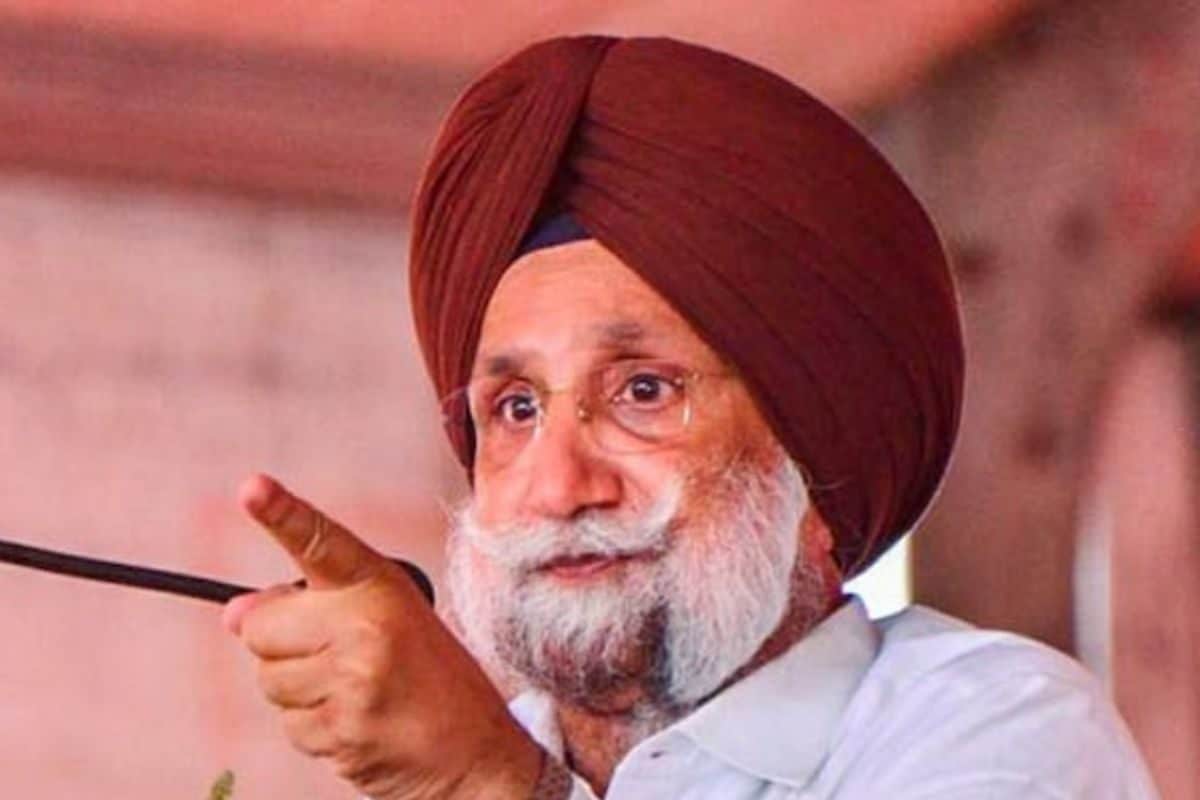
Jaipur, Rajasthan – In a fiery pronouncement delivered upon his arrival in Jaipur, Sukhjinder Singh Randhawa, the Congress in-charge for Rajasthan, has unequivocally declared Pakistan an enemy nation. His statement, made in the context of the highly anticipated India-Pakistan cricket match, signals a hardening of diplomatic and public sentiment towards the neighboring country, reflecting a deep-seated distrust and a perception of Pakistan as a persistent antagonist. Randhawa’s remarks are particularly resonant given the heightened emotions and national pride often associated with sporting encounters between the two nuclear-armed South Asian rivals.
The Congress leader’s forthright declaration was made amidst preparations for a significant political event: the Congress party’s \'Paigham-e-Mohabbat\' (Message of Love) program, scheduled to be held at the Birla Auditorium in Jaipur. The event, aiming to project a message of unity and inclusivity, is set to be a high-profile affair, drawing the participation of prominent Congress leaders, including the incumbent Chief Minister of Rajasthan, Ashok Gehlot, and the renowned poet and politician, Imran Pratapgarhi. The juxtaposition of Randhawa’s hardline stance on Pakistan with the ostensibly peace-oriented theme of the Congress event highlights a nuanced and perhaps even paradoxical approach to national discourse, where diplomatic tensions can coexist with calls for internal harmony.
Randhawa’s statement is not merely a casual observation but a carefully worded articulation of a political sentiment that resonates with a significant portion of the Indian populace. For decades, India-Pakistan relations have been fraught with tension, largely due to issues such as cross-border terrorism, territorial disputes, and historical animosities. Cricket matches between the two nations, while celebrated globally for their sporting spectacle, are often overshadowed by this underlying geopolitical friction. The shared passion for the sport frequently becomes a proxy battleground for national pride and perceived grievances.
The Context: A Nation Divided by Borders and Bound by Cricket
The India-Pakistan cricket rivalry is one of the most intense and watched in the world. Each encounter transcends the boundaries of sport, becoming a significant cultural and political event for both nations. The anticipation leading up to such matches is palpable, with fans on both sides exhibiting immense passion and nationalistic fervor. However, beneath the surface of this sporting camaraderie, historical wounds and ongoing political disputes simmer.
India has consistently accused Pakistan of sponsoring cross-border terrorism, a claim that has led to several major escalations in bilateral tensions, including armed conflicts and diplomatic standoffs. The Mumbai terror attacks of 2008, orchestrated by Pakistan-based militants, remain a particularly raw nerve for India. Similarly, the ongoing dispute over the disputed territory of Kashmir continues to be a major point of contention, fueling mistrust and animosity.
In this charged atmosphere, any statement from a political leader, especially one as prominent as a Congress in-charge, carries significant weight. Randhawa’s declaration that Pakistan should be treated as an enemy nation is a direct reflection of this entrenched animosity. It suggests a belief that diplomatic niceties and conciliatory approaches have failed to yield the desired results, and that a firmer, more assertive posture is required.
Randhawa\'s Statement: A Call for Reciprocity and a Rejection of Perceived Duplicity
Speaking to reporters in Jaipur, Randhawa’s words were unequivocal. He stated, \"When we play with Pakistan, it should be like playing with an enemy.\" This statement, while seemingly focused on a sporting event, carries a deeper political implication. It suggests that the spirit of sportsmanship, often touted as a bridge between nations, should not be allowed to overshadow the reality of the adversarial relationship.
The Congress leader’s sentiment likely stems from a perception that Pakistan, despite engaging in sporting ties, continues to harbor animosity towards India and actively pursues policies detrimental to India’s security interests. This view is often reinforced by intelligence reports and incidents of cross-border infiltration and terror attacks. Randhawa\'s call implies a desire for a reciprocal approach where Pakistan’s actions on the international stage and its stance towards India are met with a corresponding firmness from India.
Furthermore, his statement can be interpreted as a rejection of what he might perceive as Pakistan\'s duplicity – engaging in cultural exchanges and sporting events while simultaneously allegedly supporting activities that destabilize India. This perceived hypocrisy fuels resentment and strengthens the argument for a more adversarial stance.
The \'Paigham-e-Mohabbat\' Event: A Counterpoint or Complement?
The timing of Randhawa’s strong statement is particularly noteworthy, coming just before the Congress’s \'Paigham-e-Mohabbat\' program. This event, with its message of love and unity, stands in apparent contrast to Randhawa’s hawkish rhetoric on Pakistan. However, political analysts suggest that these two seemingly disparate elements might be intended to serve complementary purposes within the Congress party\'s broader political strategy.
The \'Paigham-e-Mohabbat\' program is likely aimed at projecting an image of the Congress as a party committed to secularism, inclusivity, and national harmony. By involving figures like Ashok Gehlot, a seasoned administrator, and Imran Pratapgarhi, who has a significant following among minority communities, the party seeks to consolidate its support base and reach out to diverse sections of society. Such events are crucial for political parties to demonstrate their commitment to social cohesion and to counter any narratives that portray them as divisive.
On the other hand, Randhawa\'s statement on Pakistan serves to address the nationalist sentiment that is prevalent in Indian politics. By taking a strong stance against an adversary like Pakistan, the Congress leader aims to demonstrate that the party is not soft on national security and is capable of protecting the country\'s interests. This can be a strategic move to appeal to a broader electorate, including those who prioritize national security and a firm foreign policy.
Therefore, the \'Paigham-e-Mohabbat\' program can be seen as an internal outreach initiative, emphasizing unity and love within India, while Randhawa\'s statement on Pakistan serves as an external signaling of strength and resolve. The party might be attempting to balance its image as a progressive, inclusive force with that of a strong nationalist protector.
Implications for India-Pakistan Relations and Diplomacy
Randhawa’s statement, while originating from a political leader within India, has the potential to influence the broader discourse on India-Pakistan relations. Such pronouncements, especially when echoed by other political figures or amplified by media, can contribute to a hardening of public opinion and can create pressure on the government to adopt a more assertive foreign policy.
The consistent narrative of Pakistan as an \"enemy nation\" can make it challenging for any future attempts at diplomatic engagement or peace initiatives. It creates a perception of an unbridgeable divide, where dialogue is seen as futile or even detrimental. This can lead to a cycle of mistrust and hostility, where even minor incidents can escalate into major diplomatic crises.
Furthermore, when prominent political figures use such strong language, it can also embolden hardline elements on both sides, potentially hindering de-escalation efforts. In the context of a cricket match, such rhetoric can inject an extra layer of political tension, turning a sporting event into a proxy for geopolitical conflict.
The Role of Cricket in Bilateral Relations
Cricket, despite its potential to be a unifying force, has often been caught in the crossfire of India-Pakistan political tensions. While matches are eagerly awaited by fans on both sides, they are frequently suspended or delayed due to strained diplomatic ties. For instance, cricket ties between the two nations have been largely on hold since 2012, with bilateral series being rare and limited to multi-national tournaments.
The resumption of cricket matches between India and Pakistan is often seen as a barometer of the state of their relationship. When Randhawa suggests treating Pakistan as an enemy even during a match, it implies that he believes the prevailing political climate does not warrant the usual spirit of sportsmanship. He is advocating for a recognition of the underlying hostility, even within a sporting context.
This perspective highlights the complex interplay between sport, politics, and national identity. While sport can offer a platform for cultural exchange and friendly competition, it cannot entirely escape the shadow of political realities. For leaders like Randhawa, the perceived threat from Pakistan necessitates a constant state of vigilance, even when engaging in activities that might otherwise be considered apolitical.
Broader Context of Indian Foreign Policy and Public Sentiment
Sukhjinder Singh Randhawa\'s statement is not an isolated incident but reflects a broader trend in Indian public and political discourse regarding Pakistan. For years, the narrative of Pakistan as a state sponsor of terrorism has been a dominant theme in India. This perception is shaped by numerous incidents, including the Uri attack in 2016 and the Pulwama attack in 2019, which led to significant diplomatic and military responses from India.
The Indian government, under Prime Minister Narendra Modi, has consistently adopted a firm stance against Pakistan, advocating for an end to cross-border terrorism as a prerequisite for any meaningful dialogue. This approach has resonated with a significant portion of the Indian electorate, who often view a strong stance against Pakistan as a sign of national strength and resolve.
Congress, as a major opposition party, often finds itself in a delicate position. While it needs to differentiate itself from the ruling party, it also cannot afford to appear weak on national security or territorial integrity. Statements like Randhawa\'s can be an attempt to project a balanced approach – upholding the idea of inclusive politics domestically while projecting strength externally.
The Power of Rhetoric in Shaping Perceptions
The language used by political leaders has a profound impact on shaping public opinion and influencing policy. Randhawa\'s use of the term \"enemy\" is highly charged and leaves little room for ambiguity. It is a clear articulation of a sentiment that views Pakistan not as a rival nation with whom dialogue is possible, but as an adversary to be confronted.
Such rhetoric can have several consequences:
* Increased Public Hostility: It can further fuel anti-Pakistan sentiment among the Indian public, making it more difficult to foster goodwill or engage in constructive dialogue.
* Diplomatic Challenges: It can complicate diplomatic efforts, as it signals a lack of willingness to engage in a conciliatory manner.
* Reinforcement of Stereotypes: It can reinforce negative stereotypes about Pakistan and its people, hindering any attempts at cultural understanding or people-to-people contact.
* Influence on Policy: It can put pressure on the government to adopt a more aggressive foreign policy, potentially leading to an escalation of tensions.
Looking Ahead: The Challenge of Balancing National Interest and Regional Stability
The inherent tension between the need for national security and the pursuit of regional stability is a perennial challenge for India. While leaders like Randhawa are advocating for a firm stance against Pakistan, the long-term implications of such an approach need to be carefully considered.
A perpetual state of hostility, even if born out of legitimate security concerns, can be detrimental to regional peace and economic development. The cycle of mistrust and retaliation can consume valuable resources and hinder progress. Therefore, while acknowledging the security challenges posed by Pakistan, finding avenues for de-escalation and dialogue, however challenging, remains crucial for the long-term stability of the region.
The \'Paigham-e-Mohabbat\' program, with its inherent message of peace and love, presents an interesting counterpoint to Randhawa\'s hardline stance. It suggests that even within the political landscape, there are aspirations for a more harmonious future. However, the bridge between such aspirations and the reality of geopolitical tensions is often long and arduous.
Ultimately, Sukhjinder Singh Randhawa\'s statement serves as a stark reminder of the deeply entrenched mistrust and animosity that characterize India-Pakistan relations. His call for treating Pakistan as an enemy nation, even in the context of a cricket match, reflects a sentiment that is likely to resonate with a significant portion of the Indian populace. As India navigates its complex relationship with its neighbor, the challenge lies in balancing the imperatives of national security with the pursuit of lasting peace and stability in the region. The interplay between political rhetoric, public sentiment, and diplomatic realities will continue to shape the trajectory of this critical bilateral relationship.
The upcoming \'Paigham-e-Mohabbat\' program, with its message of love and unity, will be keenly watched to see how it navigates the complex socio-political landscape. Whether it can offer a balm to the wounds of historical animosity or serve as a platform to re-examine the prevailing narratives of animosity, remains to be seen. However, Randhawa’s pronouncements have undoubtedly set a tone of assertiveness and vigilance, underscoring the enduring complexities that define the relationship between India and Pakistan. The echoes of his statement will likely reverberate in political discourse and public consciousness, particularly as the nation gears up for the high-stakes encounter on the cricket field.