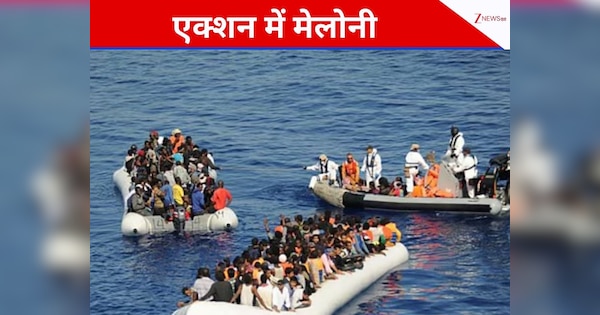
Italy\'s Unyielding Stance: Meloni Embraces \"Yogi Model\" to Tackle Illegal Immigration, Navy Bolstered with New Capabilities
Rome, Italy – A seismic shift is underway in Italy\'s approach to combating illegal immigration, a persistent and complex challenge that has long strained the nation\'s social fabric and security apparatus. Prime Minister Giorgia Meloni, a staunch advocate for stricter immigration policies, has signaled a decisive move towards a more robust and proactive strategy, drawing inspiration from what is being termed the \"Yogi Model.\" This approach, widely associated with Uttar Pradesh Chief Minister Yogi Adityanath\'s firm stance on law and order and his administration\'s efforts to curb illegal activities, suggests a departure from more lenient past policies towards a more assertive and data-driven enforcement. Coupled with this, the Italian Navy is set to receive a significant enhancement in its capabilities, granting it a pivotal role in bolstering national security and enforcing these new immigration directives.
The stark realities underpinning this policy pivot are laid bare by alarming statistics. While illegal immigrants constitute approximately 9% of Italy\'s total population, their involvement in criminal activities is disproportionately high, accounting for a staggering 35% of all reported crimes. This alarming trend is further underscored by the fact that over the past two years, a significant 35% of all arrested criminals have been identified as illegal immigrants. These figures are not merely abstract numbers; they represent tangible impacts on public safety, the strain on law enforcement resources, and the erosion of public trust. The Meloni government\'s decision to adopt a more stringent approach is a direct response to these pressing concerns, aiming to restore order, enhance security, and ensure the rule of law prevails.
The Genesis of the \"Yogi Model\" in the Italian Context:
The adoption of the \"Yogi Model\" by Prime Minister Meloni is a potent symbol of her commitment to a decisive and uncompromising stance against illegal immigration. While the direct translation of policies across vastly different socio-political landscapes is complex, the core principles of this model resonate deeply with the current Italian administration\'s objectives. In India, Chief Minister Adityanath\'s approach has been characterized by:
* Zero Tolerance for Crime: An unwavering commitment to tackling criminal elements, regardless of their background or status.
* Deterrence through Enforcement: Implementing visible and robust law enforcement actions to discourage illegal activities.
* Data-Driven Policing: Utilizing intelligence and data to identify and apprehend offenders.
* Focus on National Security: Prioritizing the safety and security of citizens above all else.
* Swift and Decisive Action: Emphasizing the importance of quick and effective responses to criminal incidents.
Meloni\'s government aims to translate these core tenets into tangible policies for Italy. This will likely involve a multi-pronged strategy, encompassing enhanced border control, streamlined deportation processes, intensified intelligence gathering, and a more proactive stance by law enforcement agencies. The underlying philosophy is to create an environment where illegal presence and associated criminal activities are met with swift, certain, and proportionate consequences.
Deconstructing the Alarming Crime Statistics:
The descriptive statistics provided are critical in understanding the urgency and rationale behind Italy\'s policy recalibration. Let\'s delve deeper into their implications:
* Disproportionate Criminal Involvement: The statistic that illegal immigrants, comprising 9% of the population, account for 35% of crimes is a stark indicator of a significant problem. This disparity suggests that factors beyond mere presence are at play. It could point towards socio-economic marginalization, lack of integration opportunities leading to desperation, or the presence of organized criminal networks exploiting vulnerable individuals. Regardless of the root causes, the impact on Italian society is undeniable, leading to increased crime rates and a sense of insecurity among the populace.
* Arrest Trends: The fact that 35% of all arrested criminals over the past two years have been illegal immigrants further reinforces the severity of the situation. This data suggests that law enforcement efforts are increasingly encountering individuals who are not legally present in the country. This not only places a burden on the justice system but also raises questions about the effectiveness of existing immigration controls and the mechanisms for identifying and processing individuals entering the country.
The Meloni government\'s embrace of the \"Yogi Model\" signifies a commitment to addressing these statistics head-on. It signals a move away from what might be perceived as a more passive or reactive approach, towards a proactive and enforcement-centric strategy. This could involve:
* Enhanced Border Security Measures: Investing in advanced surveillance technologies, increasing personnel at border crossings, and potentially engaging in more assertive interception efforts at sea.
* Streamlining Deportation Procedures: Revising legal frameworks and administrative processes to facilitate the swift and efficient deportation of individuals found to be in the country illegally, particularly those with criminal records.
* Intelligence Gathering and Data Analysis: Strengthening intelligence networks to identify potential criminal elements among undocumented populations and utilizing data analytics to predict and prevent crime.
* Increased Police Presence and Patrols: Deploying more law enforcement personnel in areas with higher concentrations of illegal immigrants and increased crime rates, to act as a deterrent and to facilitate prompt response to incidents.
* Focus on Criminal Networks: Targeting and dismantling organized criminal groups that may be involved in human trafficking, smuggling, and exploiting illegal immigrants for criminal purposes.
The Strategic Empowerment of the Italian Navy:
In tandem with the shift in immigration policy, the Italian Navy is poised to receive a significant boost in its operational capabilities. This empowerment is not coincidental; it is intrinsically linked to the government\'s agenda to gain greater control over its maritime borders and to play a more active role in enforcing immigration laws. The enhancement of the Navy\'s role signifies a strategic understanding that illegal immigration often originates and is facilitated through maritime routes.
The specific \"big strength\" (बड़ी ताकत) conferred upon the Navy could encompass a range of enhancements, including:
* Increased Fleet Size and Modernization: The acquisition of new, state-of-the-art vessels equipped with advanced surveillance, interception, and interdiction capabilities. This could include patrol boats, offshore patrol vessels, and potentially even larger frigates or destroyers equipped for maritime security operations.
* Advanced Surveillance and Intelligence Systems: The integration of sophisticated radar systems, thermal imaging, drones, and underwater sonar to detect and track vessels carrying illegal immigrants, even in challenging weather conditions and at significant distances. Enhanced intelligence sharing mechanisms with other national and international agencies will also be crucial.
* Improved Interception and Boarding Capabilities: Equipping naval personnel with specialized training and equipment for conducting boardings of suspicious vessels, while adhering to international maritime law and human rights standards. This includes the provision of non-lethal deterrence options and medical support capabilities.
* Enhanced Search and Rescue (SAR) Capabilities: While enforcement is a priority, the Navy will likely also see an upgrade in its search and rescue capabilities. This is a crucial aspect of maritime operations, ensuring that lives are saved at sea even as the focus shifts towards preventing illegal crossings. This could involve more capable rescue vessels, specialized medical teams, and improved coordination with civilian rescue organizations.
* Strategic Deployment and Patrol Patterns: The Navy will likely be tasked with more proactive and extensive patrol patterns along Italy\'s extensive coastline and in the Mediterranean Sea. This will involve identifying high-risk areas and deploying assets strategically to deter illegal crossings and intercept vessels before they reach Italian shores.
* Integration with Other Security Agencies: Enhanced coordination and integration between the Navy, Coast Guard, Border Police, and other relevant security agencies will be paramount. This includes the development of joint operational plans, shared command structures, and seamless information flow to ensure a cohesive and effective response.
* Potential for Offshore Operations: Depending on the scale of the enhancements, the Navy might be empowered to conduct more extensive offshore operations, potentially intercepting vessels in international waters or in collaboration with neighboring countries, within the bounds of international law.
The strategic empowerment of the Italian Navy underscores the government\'s recognition of the Mediterranean as a primary theater for the challenges posed by illegal immigration. It signals a commitment to not only react to arrivals but to proactively intercept and deter them at sea, thereby reducing the strain on land-based resources and potentially preventing dangerous journeys.
Challenges and Ethical Considerations:
While the Meloni government\'s decisive stance and the empowerment of the Navy are aimed at addressing a pressing national issue, it is crucial to acknowledge the inherent challenges and ethical considerations that such a policy shift entails.
* Humanitarian Concerns: The primary concern revolves around the humanitarian implications of a more aggressive maritime interdiction strategy. The Mediterranean Sea is a dangerous passage, and increased interception efforts could lead to more perilous situations for migrants, especially if rescue operations are not adequately prioritized and coordinated. Ensuring the safety and well-being of individuals, including vulnerable populations like women and children, must remain paramount. Adherence to international maritime law, which mandates rescue of those in distress, is non-negotiable.
* Legal Frameworks and International Law: Italy, as a member of the European Union and a signatory to various international conventions, must navigate these policy changes within a complex legal framework. The \"Yogi Model,\" if implemented in a way that disregards human rights or international legal obligations, could lead to international scrutiny and diplomatic challenges. Balancing national security interests with commitments to asylum and refugee protections is a delicate act.
* Root Causes of Migration: While enforcement is a necessary component, it does not address the underlying drivers of migration, such as poverty, conflict, and climate change in countries of origin. A comprehensive long-term strategy would ideally involve diplomatic engagement and development aid to address these root causes, though this is a more complex and protracted endeavor.
* Integration and Social Cohesion: For those who are legally admitted or who seek asylum, effective integration policies are crucial to prevent marginalization and potential future involvement in crime. This includes access to education, employment, language training, and social services. A purely enforcement-focused approach without robust integration measures could exacerbate existing social tensions.
* Resource Allocation and Efficiency: Implementing such a comprehensive strategy requires significant financial and human resources. Ensuring that these resources are allocated efficiently and effectively, and that the increased naval presence does not detract from other vital naval missions, will be a key challenge.
* Public Perception and Xenophobia: While public opinion may support stricter measures, there is a risk that an overly aggressive stance could fuel xenophobia and discrimination against immigrant communities, both legal and undocumented. Fostering a balanced public discourse that acknowledges the complexities of migration is essential.
The \"Yogi Model\" – A Closer Look:
The \"Yogi Model\" in the Indian context, particularly in Uttar Pradesh, has been lauded by supporters for its perceived effectiveness in curbing crime and maintaining law and order. However, it has also faced criticism regarding human rights concerns and the potential for overreach by law enforcement.
* Encounter Killings and Due Process: A significant aspect of the \"Yogi Model\" in India has been the increased number of \"encounter killings\" – extrajudicial killings of alleged criminals by police. While proponents argue this deters crime, critics contend it violates due process and human rights. It remains to be seen if such a severe and controversial aspect of the model will be replicated or adapted in Italy, where legal and democratic traditions are different.
* Use of Force and Surveillance: The model often involves a heavy reliance on police presence, surveillance, and the use of force. In Italy, the deployment of naval assets and the potential for increased police presence will need to be carefully managed to ensure proportionality and adherence to established legal procedures.
* Focus on Public Order: A key objective of the \"Yogi Model\" is the restoration of public order. This aligns with Meloni\'s stated goals for Italy, which has faced public concerns about safety and security in certain areas.
Navigating the Future:
Prime Minister Meloni\'s bold declaration of adopting the \"Yogi Model\" and the significant empowerment of the Italian Navy mark a definitive turning point in Italy\'s approach to illegal immigration. The government\'s stated intention is to create a more secure and orderly society, where the rule of law is paramount and the challenges posed by illegal immigration are met with decisive action.
The success of this new strategy will depend on a multitude of factors. It will require careful planning, robust implementation, and a constant recalibration to ensure that the pursuit of security does not come at the cost of fundamental human rights and legal principles. The Italian Navy\'s enhanced capabilities will undoubtedly play a crucial role in enforcing these new directives, but their effectiveness will be magnified by a comprehensive approach that also considers diplomatic solutions, humanitarian concerns, and the long-term integration of individuals within society.
The coming months and years will be critical in observing how this new paradigm unfolds. Italy stands at a crossroads, and the decisions made today will shape its future, its identity, and its place within the broader European and global landscape. The nation is embarking on a determined path, armed with new resolve and enhanced capabilities, to confront one of its most persistent and complex challenges. The world watches to see if the \"Yogi Model,\" adapted for the Italian context, will prove to be the effective solution its proponents envision, while navigating the delicate balance between security, legality, and humanity.