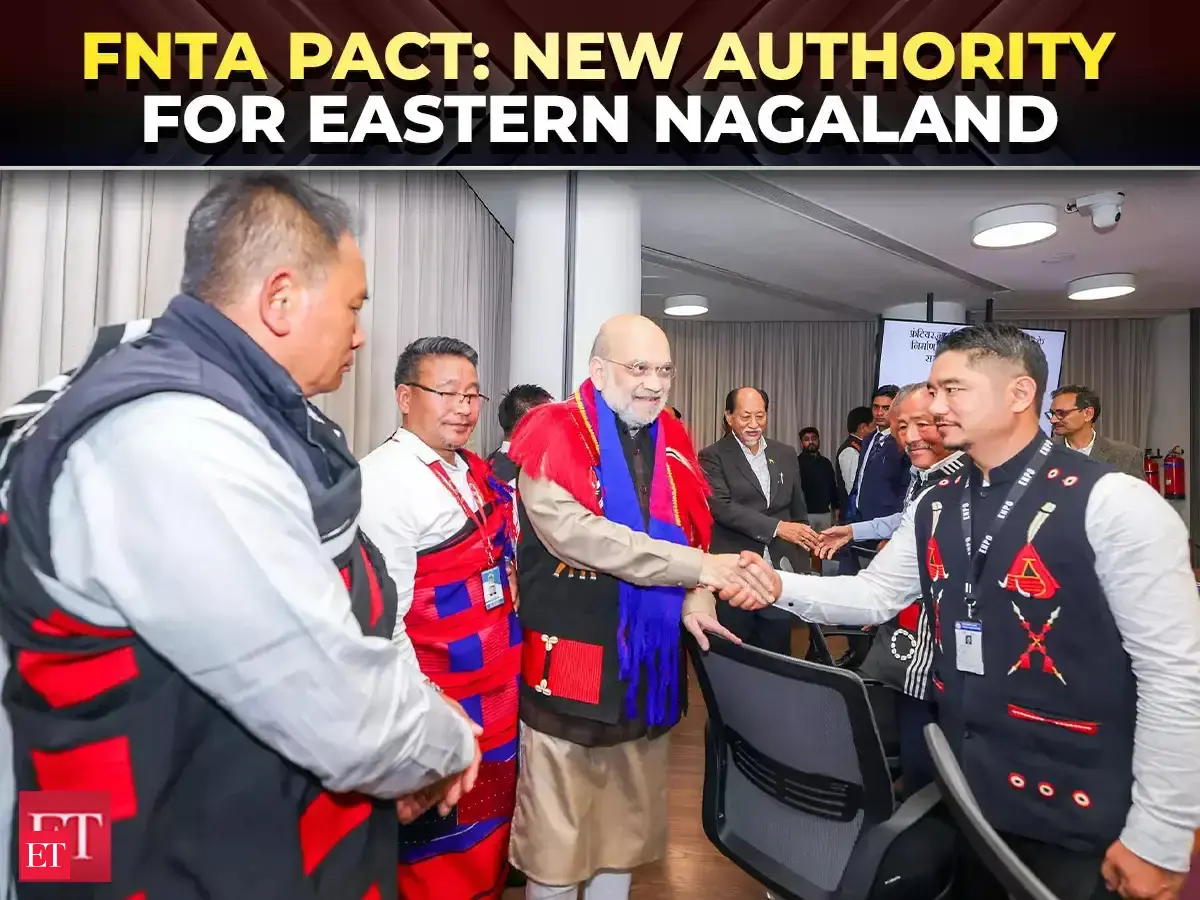
Centre, Nagaland, ENPO Reach Accord on "Frontier Nagaland" Body: A New Era for Eastern Nagaland?
Kohima, Nagaland: A significant development has emerged from protracted negotiations between the Union government, the Nagaland state government, and the Eastern Nagaland Peoples' Organisation (ENPO). After months of discussions and intense deliberations, all three parties have reached an agreement in principle for the formation of a new administrative entity, tentatively named "Frontier Nagaland." This accord, a culmination of years of aspirations and demands from the eastern Naga tribes, promises to usher in a new chapter for the region, though the precise contours and immediate impact of this pact remain a subject of keen observation.
The ENPO, an apex body representing six eastern Naga tribes – Chang, Khiamniungan, Konyak, Phom, Sangtam, and Yimchunger – has long advocated for greater autonomy and development for the region, which they argue has been historically neglected and marginalized. Their primary demand revolved around the creation of a separate administrative unit that would allow for more focused development initiatives and a greater say in governance for the eastern districts.
The Genesis of the "Frontier Nagaland" Idea:
The demand for a distinct administrative entity in Eastern Nagaland is not new. For decades, the region has grappled with developmental deficits, perceived discrimination, and a feeling of being an afterthought in the broader developmental landscape of Nagaland. The ENPO has consistently highlighted disparities in infrastructure, healthcare, education, and employment opportunities compared to the western and central districts.
The idea of "Frontier Nagaland" gained significant traction in recent years, fueled by a growing sense of regional identity and a desire for self-determination in development. The ENPO's persistent advocacy, coupled with the political will demonstrated by the Union and state governments to find a resolution, has finally led to this breakthrough agreement.
Key Aspects of the FNTA Pact (Tentative):
While the official details of the agreement are yet to be fully disclosed and formalized, reports suggest that the pact focuses on establishing a new administrative arrangement that grants a degree of autonomy and dedicated development mechanisms for the eastern districts. Key aspects likely include:
* Dedicated Development Council/Authority: The core of the agreement appears to be the establishment of a distinct body, potentially a Frontier Nagaland Development Council or Authority, with its own mandate and resources. This entity would be tasked with planning, implementing, and monitoring development projects specifically tailored to the needs of Eastern Nagaland.
* Enhanced Financial Allocation: It is anticipated that the pact will ensure a dedicated and possibly enhanced financial allocation from both the Union and state governments for the development of the region. This would be crucial for addressing the infrastructural and socio-economic gaps.
* Decentralized Governance Mechanisms: The agreement might involve decentralizing certain administrative powers and decision-making processes to the Frontier Nagaland body, allowing for greater local participation and responsiveness.
* Representation and Voice: The pact is expected to provide a more robust platform for the eastern Naga tribes to voice their concerns and priorities at both state and national levels.
What Changes with the FNTA Pact?
The FNTA pact, once fully implemented, has the potential to bring about significant changes in Eastern Nagaland:
* Accelerated Development: The primary objective of the pact is to accelerate development in the region. With dedicated focus, resources, and a tailored approach, the hope is to see tangible improvements in infrastructure, education, healthcare, and economic opportunities.
* Empowerment of Eastern Tribes: The agreement aims to empower the eastern Naga tribes by giving them a greater stake in their own governance and development. This could foster a stronger sense of ownership and accountability.
* Reduced Sense of Marginalization: By addressing historical grievances and perceived neglect, the pact could help alleviate the sense of marginalization felt by the communities in Eastern Nagaland, fostering greater integration and unity within the state.
* Political Stability: The resolution of a long-standing demand from a significant section of the state's population is likely to contribute to greater political stability in Nagaland.
* Model for Other Regions: The success of the "Frontier Nagaland" model could potentially serve as a template for addressing similar regional aspirations and developmental imbalances in other parts of the country.
Challenges and the Road Ahead:
While the agreement is a historic milestone, the path to full implementation will likely present its own set of challenges.
* Formalization and Legal Framework: The exact legal framework and administrative structure of "Frontier Nagaland" will need to be meticulously defined and legislated.
* Resource Mobilization and Allocation: Ensuring the consistent and adequate flow of funds, as promised, will be critical. Transparent and efficient utilization of these resources will also be paramount.
* Coordination and Collaboration: Effective coordination between the Frontier Nagaland body, the Nagaland state government, and the Union government will be essential for seamless execution of plans.
* Addressing Local Dynamics: The internal dynamics within the eastern Naga tribes and their respective expectations will need to be carefully managed to ensure inclusivity and prevent any inter-tribal friction.
* Measuring Impact: Robust mechanisms for monitoring and evaluating the impact of the new administrative arrangement on the lives of the people in Eastern Nagaland will be necessary.
The agreement between the Centre, Nagaland government, and ENPO on "Frontier Nagaland" represents a significant step towards addressing the aspirations of the eastern Naga tribes and fostering more equitable development within the state. The success of this pact will ultimately be measured by its ability to translate promises into tangible progress and to usher in an era of prosperity and empowerment for the people of Eastern Nagaland. All eyes will now be on the meticulous implementation of this historic accord.