Iran\'s Fury: ‘Big Lies’ Unleashed as Tehran Accuses Trump of ‘Professional Lying’ Over Nuclear Threat and Protest Deaths
The volatile geopolitical landscape of the Middle East has once again been ignited, this time by a fiery denunciation from Iran following US President Donald Trump’s 2026 State of the Union address. Tehran has vehemently rejected remarks made by the American leader, accusing Washington of disseminating “big lies” regarding its nuclear and missile programs, as well as its handling of domestic protests. The sharp retorts, spearheaded by Iranian Foreign Ministry spokesperson Esmaeil Baghaei, have not only condemned Trump’s rhetoric as mere propaganda but have also cast a dark shadow over the prospect of upcoming diplomatic negotiations. With renewed talks slated for Geneva, the escalating war of words threatens to derail any potential for de-escalation and stability, sending tremors of anxiety through the already precarious region.
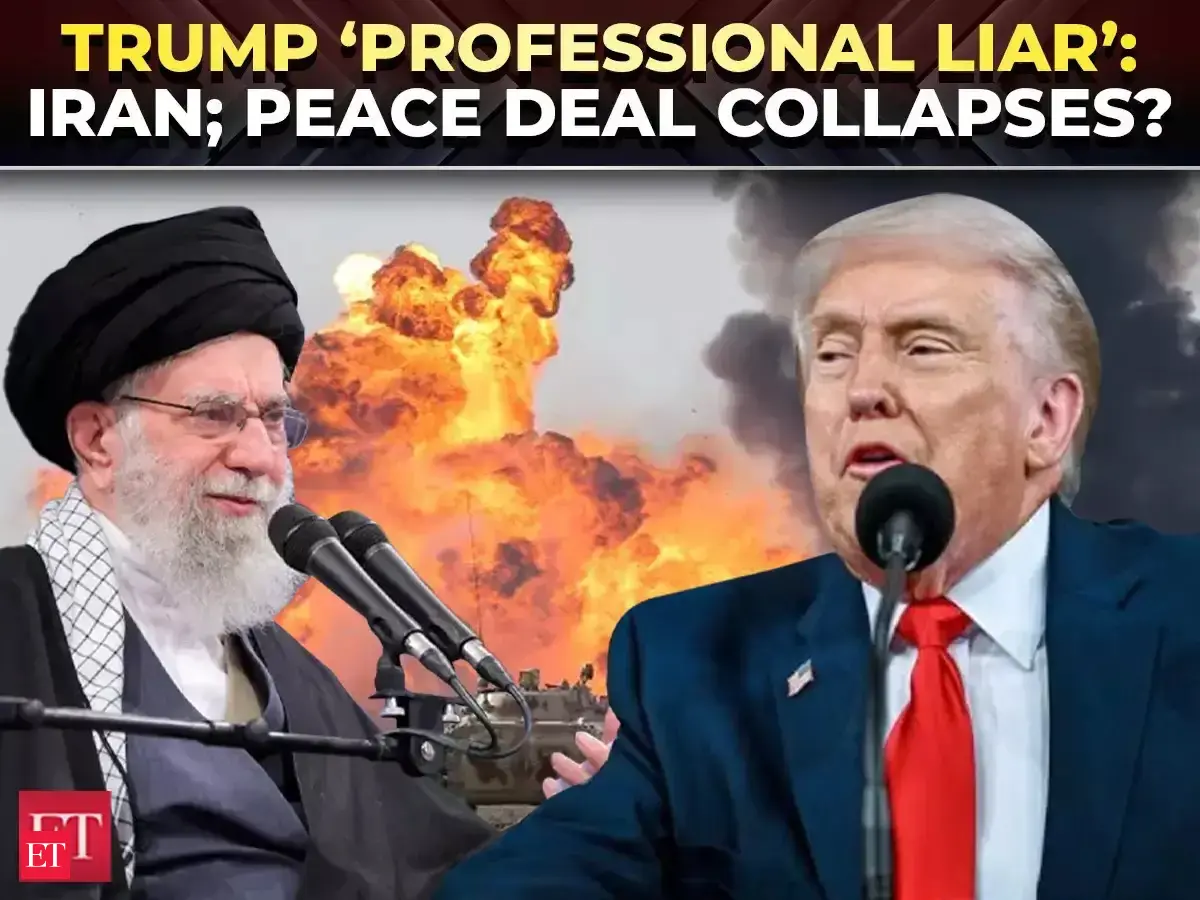
The air of apprehension is palpable. As the dust settles from President Trump\'s pronouncements, Iran\'s official response has been swift, unambiguous, and deeply critical. The accusation of \"professional lying\" leveled at the US President signifies a profound breakdown in trust and a hardening of positions just as the international community hopes for a breakthrough in fraught diplomatic efforts. This escalating rhetorical battle is not merely a war of words; it is a significant indicator of the deep-seated animosity and strategic maneuvering that defines the US-Iran relationship, with potentially far-reaching consequences for regional and global security.
A Deep Dive into the Contentious Claims: Unpacking Iran\'s Accusations
At the heart of Iran\'s outrage lie President Trump\'s specific allegations concerning its nuclear and missile programs, and the handling of internal dissent. The Iranian government insists that these claims are not only inaccurate but are deliberate fabrications designed to demonize Tehran and justify potential aggressive actions.
The Nuclear Program: A Long-Standing Point of Contention
For years, Iran\'s nuclear program has been a focal point of international concern and diplomatic wrangling. While Iran maintains that its program is solely for peaceful energy purposes, the United States and its allies have harbored suspicions of a clandestine weapons development agenda. President Trump\'s rhetoric in his State of the Union address, as interpreted by Tehran, has reignited these long-standing fears and accusations.
* Iran\'s Official Stance: Tehran has consistently asserted its right to enrich uranium for civilian energy needs, adhering to the Nuclear Non-Proliferation Treaty (NPT). They point to the extensive inspections and monitoring conducted by the International Atomic Energy Agency (IAEA) as proof of their transparency and commitment to peaceful nuclear technology. Iranian officials argue that any suggestions of weaponization are baseless propaganda designed to isolate and pressure the country.
* US Concerns and Trump\'s Rhetoric: The US, under the Trump administration, has expressed profound skepticism about Iran’s intentions. President Trump, known for his assertive and often confrontational approach, has frequently characterized Iran\'s nuclear activities as an existential threat. His State of the Union address, according to Iranian interpretations, likely reiterated these concerns, possibly in more forceful terms, implying a direct path to nuclear weapons or a refusal to cooperate with international safeguards. This perceived threat is a cornerstone of US policy and a justification for sanctions and diplomatic pressure.
* The JCPOA Legacy: The Joint Comprehensive Plan of Action (JCPOA), or Iran nuclear deal, signed in 2015, was a landmark agreement aimed at curbing Iran\'s nuclear program in exchange for sanctions relief. The US withdrawal from the JCPOA under the Trump administration in 2018 significantly heightened tensions and led Iran to gradually reduce its compliance with certain provisions. Iran\'s current position is that the US’s withdrawal and subsequent re-imposition of sanctions have made any future deal exceedingly difficult and have pushed them further from the deal\'s original framework.
The Missile Program: A Dual-Use Technology Debate
Iran\'s ballistic missile program is another area of significant friction. While Iran views its missile capabilities as a necessary deterrent and a matter of national security, the international community, particularly the US, sees it as destabilizing and a potential delivery system for non-conventional weapons.
* Iran\'s Defense Justification: Iran argues that its missile program is purely defensive, designed to protect its borders and sovereignty in a volatile region surrounded by hostile actors. They emphasize that these missiles are conventional and not designed to carry nuclear warheads, asserting that such claims are unfounded and inflammatory.
* US Perceptions of Threat: The US and its allies have repeatedly called on Iran to halt its ballistic missile development, citing concerns about their range, payload capacity, and potential to be integrated with a nuclear weapons program. President Trump\'s statements likely echoed these concerns, perhaps framing the missile program as an aggressive expansionist tool rather than a defensive measure.
Protest Deaths and Human Rights: A Sensitive Domestic Issue
The accusation of \"big lies\" also extends to President Trump\'s alleged remarks concerning the deaths of protesters within Iran. This points to a sensitive domestic issue that the Iranian government views as an internal matter, while the US often uses human rights concerns as a tool for international criticism and pressure.
* Iran\'s Narrative: The Iranian government typically attributes protest-related deaths to rioting and violence instigated by external actors or elements seeking to destabilize the country. They often emphasize the limited nature of such incidents and the efforts taken to restore order. The official narrative tends to downplay or deny systemic repression, framing any fatalities as regrettable but necessary consequences of maintaining security.
* US Human Rights Scrutiny: The US, and indeed many international human rights organizations, have consistently criticized Iran\'s record on human rights, particularly its suppression of dissent and the treatment of protesters. President Trump, known for his direct and often critical commentary on human rights issues in other countries, may have highlighted specific incidents or statistics related to protest deaths, framing them as evidence of severe human rights abuses. Iran’s vehement rejection suggests that these accusations, if made, were perceived as exaggerated, politically motivated, or based on inaccurate information.
The Geopolitical Chessboard: Why This Matters
The escalating verbal sparring between Iran and the United States is not an isolated incident; it is a symptom of a complex and deeply entrenched geopolitical rivalry that has significant implications for regional and global stability.
* The Stakes in the Middle East: The Middle East is a region grappling with a multitude of conflicts and proxy wars. Any escalation in US-Iran tensions has the potential to destabilize already fragile states, embolden extremist groups, and disrupt crucial energy markets. The Abraham Accords, a series of normalization agreements between Israel and several Arab nations, have sought to recalibrate regional alliances, but heightened US-Iran friction could undermine these efforts and reignite long-standing rivalries.
* The Nuclear Proliferation Dilemma: The future of Iran\'s nuclear program remains a critical concern for the international community. If diplomatic avenues remain blocked or are perceived to be futile, Iran could be pushed further towards acquiring nuclear weapons, a scenario that would trigger a nuclear arms race in the Middle East and pose an unprecedented threat to global security.
* The Impact on Global Diplomacy: The hardening of positions and the accusations of \"professional lying\" signal a decline in the effectiveness of diplomatic channels. For any meaningful dialogue to occur, a foundational level of trust, or at least a willingness to engage in good faith, is essential. When prominent leaders resort to such strong condemnations, it becomes exceedingly difficult to find common ground and pursue peaceful resolutions.
Key Players and Their Motivations
Understanding the motivations of the various stakeholders involved is crucial to grasping the full complexity of this confrontation.
* The United States (Trump Administration):
* \"Maximum Pressure\" Campaign: The Trump administration pursued a policy of \"maximum pressure\" against Iran, aiming to cripple its economy through sanctions and force it to abandon its nuclear and missile programs and its regional activities.
* Domestic Political Considerations: Trump\'s rhetoric often appeals to a domestic base, and taking a hard line against Iran has historically resonated with certain segments of the American electorate.
* Regional Allies: The US has strong alliances with countries like Israel and Saudi Arabia, which view Iran as a primary threat. Trump\'s stance often aligns with the security concerns of these allies.
* Iran:
* National Sovereignty and Deterrence: Iran views its nuclear and missile programs as essential for its national security and as a deterrent against external aggression.
* Economic Survival: The crippling sanctions have severely impacted Iran\'s economy, and the government seeks sanctions relief to improve the lives of its citizens and regain economic stability.
* Regional Influence: Iran seeks to maintain and expand its influence in the region, often through its support for proxy groups, which is a major point of contention with the US and its allies.
* Domestic Legitimacy: The government\'s response to perceived external threats often serves to bolster domestic legitimacy and rally nationalist sentiment.
* International Community (e.g., UN, EU, Russia, China):
* De-escalation and Stability: Most international actors prefer de-escalation and stability in the Middle East. They often advocate for diplomatic solutions and adherence to international law.
* Non-Proliferation: There is a broad international consensus on preventing the proliferation of nuclear weapons.
* Economic Interests: Many countries have economic ties with Iran and are impacted by sanctions and regional instability.
A Timeline of Escalation: From SOTU to Geneva
The harsh exchanges did not emerge in a vacuum. They are the culmination of a series of events and policies that have defined the US-Iran relationship.
The Context Leading Up to the 2026 State of the Union:
* Post-JCPOA Tensions: The US withdrawal from the JCPOA in 2018 and the subsequent re-imposition of stringent sanctions created a deep chasm in US-Iran relations. Iran responded by gradually increasing its nuclear activities beyond the limits set by the deal.
* Regional Incidents: The period leading up to the address was likely marked by ongoing regional proxy conflicts, naval skirmishes in the Persian Gulf, and continued cyber warfare between the two nations. These incidents constantly fuel mutual suspicion and animosity.
* Internal Iranian Dynamics: Iran may have been experiencing internal political shifts or economic pressures, which could influence its negotiating stance and its reaction to external criticism. Conversely, the US administration might be facing its own domestic challenges, influencing its foreign policy pronouncements.
* Pre-Negotiation Posturing: The upcoming negotiations in Geneva serve as a critical backdrop. Both sides likely engaged in a pre-negotiation phase of posturing and rhetoric to solidify their positions and signal their red lines to the other party and to international observers.
The State of the Union Address and Immediate Aftermath:
* Trump\'s Accusations: President Trump, in his 2026 State of the Union address, likely reiterated his administration\'s long-standing grievances against Iran, focusing on its nuclear ambitions, ballistic missile program, and alleged human rights abuses. The description specifies accusations related to \"nuclear threat\" and \"protest deaths,\" implying specific and pointed remarks.
* Iran\'s Swift Condemnation: Within hours or days of the address, Iran\'s Foreign Ministry, through its spokesperson Esmaeil Baghaei, issued a strong and public condemnation. The use of terms like \"big lies\" and \"professional liar\" indicates a direct and highly critical response, rejecting the veracity of Trump\'s claims outright.
* Social Media Blitz: The use of social media by Baghaei signifies a modern approach to public diplomacy and propaganda, aiming to disseminate Iran\'s narrative directly to a global audience and bypass traditional media channels that might be perceived as biased.
Leading Up to Geneva Negotiations:
* Escalating Rhetoric: The period between the SOTU address and the Geneva talks is characterized by continued rhetorical escalation. Each side may release further statements, warnings, or veiled threats to assert dominance and shape the narrative.
* International Diplomatic Efforts: Other global powers, concerned about the rising tensions, might engage in their own diplomatic efforts to de-escalate the situation and encourage a constructive dialogue in Geneva.
* Sanctions and Counter-Sanctions: It is plausible that either side could impose new sanctions or take retaliatory economic measures, further complicating the negotiating environment.
The Road Ahead: Future Outlook and Implications
The current trajectory points towards a precarious future, laden with both potential pitfalls and faint glimmers of hope for diplomatic resolution.
* The Peril of Failed Negotiations: If the Geneva talks falter due to the hardened stances and entrenched mistrust, the consequences could be severe.
* Accelerated Nuclear Program: Iran might feel further compelled to accelerate its nuclear program, potentially crossing the threshold of weaponization, leading to a regional arms race and grave international security concerns.
* Increased Military Confrontation: The risk of miscalculation and accidental escalation of military conflict in the Middle East would significantly increase. This could involve direct confrontations, proxy wars, or attacks on shipping and infrastructure.
* Further Economic Devastation: Renewed or intensified sanctions would further cripple Iran\'s economy, exacerbating internal hardship and potentially leading to increased instability within the country.
* Regional Destabilization: The entire region could be plunged into further turmoil, with a ripple effect of conflicts and humanitarian crises.
* The Possibility of a Diplomatic Breakthrough: Despite the bleak outlook, the very fact that negotiations are scheduled in Geneva offers a sliver of hope.
* A Pragmatic Shift: Both sides, despite their public posturing, may recognize the immense costs of unchecked escalation and approach the negotiations with a degree of pragmatism, seeking a face-saving compromise.
* International Pressure for Diplomacy: Sustained pressure from the international community could encourage both the US and Iran to engage constructively and explore common ground.
* Focus on Specific Issues: Negotiations might begin by focusing on less contentious issues or on building confidence-building measures, gradually paving the way for discussions on more complex matters like the nuclear program and sanctions relief.
* A New Framework: The negotiations could lead to the development of a new framework that addresses Iran\'s security concerns while providing verifiable assurances regarding its nuclear activities. This might involve a more comprehensive regional security dialogue.
* The Long Game of Influence: Regardless of the immediate outcome of the Geneva talks, the US-Iran rivalry is likely to continue as a defining feature of Middle Eastern geopolitics. Both powers will seek to exert influence through diplomatic, economic, and, if necessary, military means.
Conclusion: A Crossroads for Diplomacy and Stability
The vehement rejection by Iran of President Trump\'s State of the Union address, branding his claims as \"big lies\" and labeling him a \"professional liar,\" marks a critical juncture in the already fraught relationship between Tehran and Washington. The accusations, focusing on Iran\'s nuclear and missile programs and the deaths of protesters, are not merely rhetorical jabs; they represent deeply held grievances and diametrically opposed narratives that have fueled regional instability for decades.
As the world watches with bated breath, the impending negotiations in Geneva stand as a fragile beacon of hope in a landscape clouded by distrust and animosity. The harsh exchanges have undoubtedly raised the stakes, demanding a delicate balance of assertive diplomacy and a genuine willingness to engage in good-faith dialogue. The implications of this standoff extend far beyond the bilateral relationship, threatening to reshape the security architecture of the Middle East and reverberate across the global stage. The path forward is fraught with peril, but the potential for a catastrophic escalation necessitates an unwavering commitment to diplomatic resolution, even in the face of profoundly entrenched adversarial positions. The efficacy of international pressure, the pragmatism of national interests, and the sheer will of leaders to avert war will ultimately determine whether these \"big lies\" pave the road to further conflict or, against all odds, to a more stable future.