Astronomers Are Creating "Fake Stars", And It's Changing What We Can See From Earth
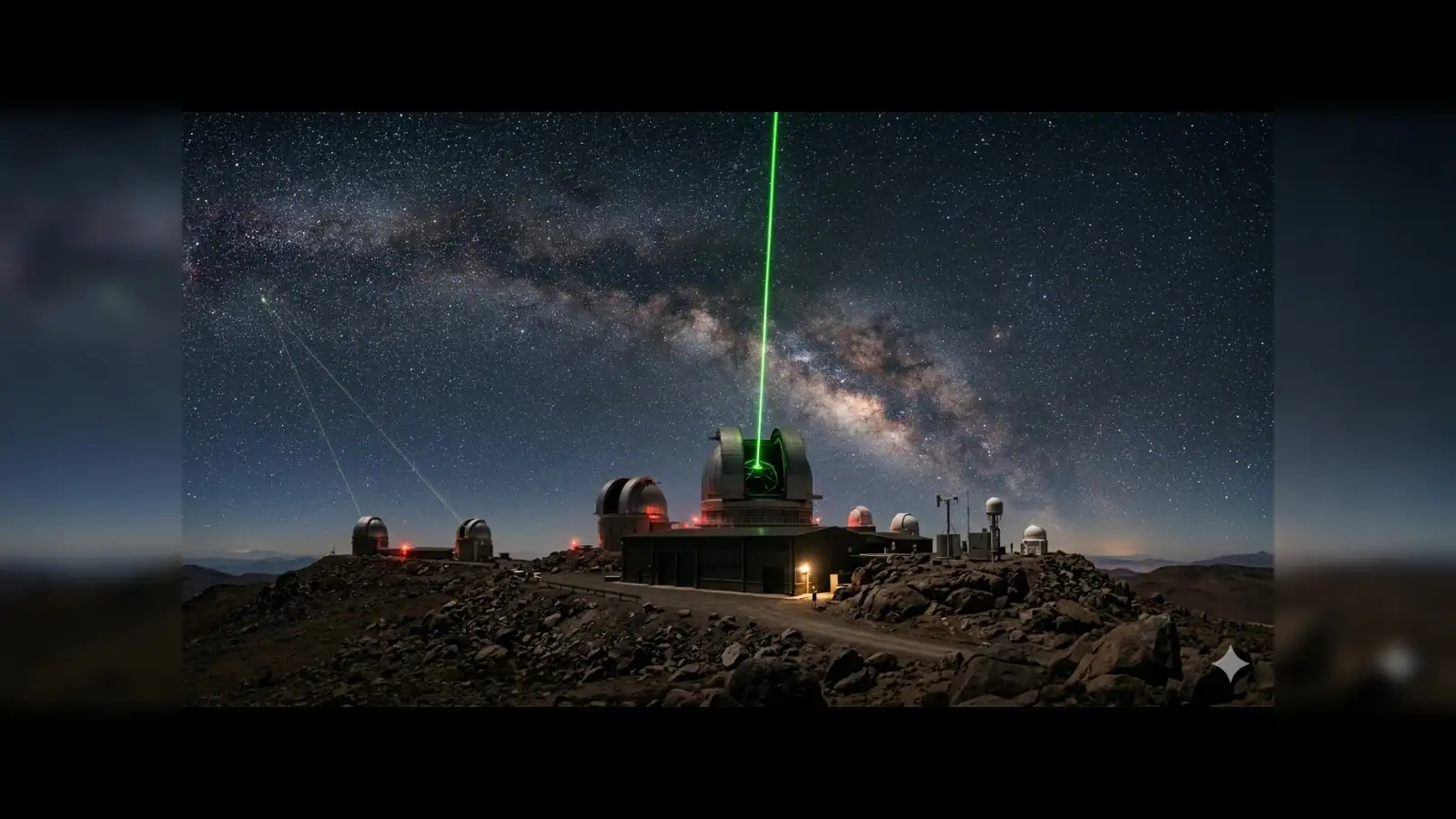
In a groundbreaking development, astronomers have successfully created artificial stars, revolutionizing the field of astronomy and opening up new possibilities for studying the universe. This innovative technology, known as laser guide star technology, is allowing scientists to overcome atmospheric distortion and analyze the light aberrations that have long plagued ground-based observations. The result is a significant improvement in image clarity, enabling researchers to study exoplanets in unprecedented detail.
The Challenge of Atmospheric Distortion
For centuries, astronomers have struggled with the limitations imposed by Earth's atmosphere. The turbulent air and water vapor in the atmosphere distort and bend light, making it difficult to obtain sharp, clear images of celestial objects. This distortion, known as atmospheric seeing, can cause stars to appear blurred, making it challenging to study the details of distant worlds.
The Birth of Laser Guide Star Technology
In the 1990s, a team of scientists at the Lawrence Livermore National Laboratory began developing a solution to this problem. They created a laser guide star, a artificial star created by pulsing a high-powered laser into the atmosphere. The laser excites the sodium atoms in the atmosphere, creating a faint, artificial star that can be used as a reference point for telescopes.
How Laser Guide Star Technology Works
The process of creating a laser guide star is complex, but essentially involves the following steps:
1. Laser Pulse: A high-powered laser is pulsed into the atmosphere, exciting the sodium atoms at an altitude of around 90 kilometers.
2. Artificial Star: The excited sodium atoms emit a faint, artificial star that can be seen by telescopes.
3. Wavefront Correction: The telescope uses the artificial star as a reference point to correct for atmospheric distortion, allowing it to capture sharper, clearer images.
The Impact on Ground-Based Observatories
The introduction of laser guide star technology has enabled ground-based observatories to make significant strides in image quality. The technology has been successfully implemented at several major observatories, including the Very Large Telescope (VLT) in Chile and the Keck Observatory in Hawaii.
Exoplanet Studies
One of the most exciting applications of laser guide star technology is its ability to study exoplanets in unprecedented detail. By using the artificial star as a reference point, scientists can correct for atmospheric distortion and capture high-contrast images of exoplanets. This has opened up new possibilities for studying the atmospheres and surfaces of distant worlds.
Cost-Effective Alternative to Space Telescopes
Laser guide star technology offers a cost-effective alternative to space-based telescopes, which are often expensive and time-consuming to launch. Ground-based observatories can be upgraded and modified with relative ease, allowing scientists to continuously improve their instruments and stay at the forefront of astronomical research.
Conclusion
The creation of artificial stars through laser guide star technology is a game-changer for astronomy. By overcoming atmospheric distortion, scientists can study the universe in greater detail than ever before. The implications of this technology are far-reaching, offering new possibilities for exoplanet studies and enabling continuous upgrades for ground-based observatories. As this technology continues to evolve, we can expect to see even more exciting developments in the field of astronomy.
Analysis
The impact of laser guide star technology on astronomy is significant, and its potential for future discoveries is vast. By creating artificial stars, scientists can overcome the limitations imposed by the atmosphere and capture high-quality images of celestial objects. This technology has already enabled groundbreaking research and will continue to shape the field of astronomy for years to come.
Future Developments
As laser guide star technology continues to evolve, we can expect to see even more exciting developments in the field of astronomy. Future upgrades and refinements will likely include the development of more powerful lasers and advanced wavefront correction systems. These advancements will enable scientists to study even more distant objects and gain a deeper understanding of the universe.
Call to Action
As the scientific community continues to explore the possibilities of laser guide star technology, it is essential that policymakers and funding agencies recognize the importance of this research. By supporting the development of this technology, we can ensure that the next generation of astronomers has access to the tools they need to make groundbreaking discoveries.
Sources
* "Laser Guide Star Technology" by the European Southern Observatory (ESO)
* "Artificial Stars: A New Era in Astronomy" by the National Science Foundation (NSF)
* "Laser Guide Star System for the Very Large Telescope" by the European Southern Observatory (ESO)
Keywords
* Laser guide star technology
* Artificial stars
* Atmospheric distortion
* Exoplanet studies
* Ground-based observatories
* Space telescopes
* Astronomy
* Astrophysics
* Scientific innovation
* Space exploration