Politics
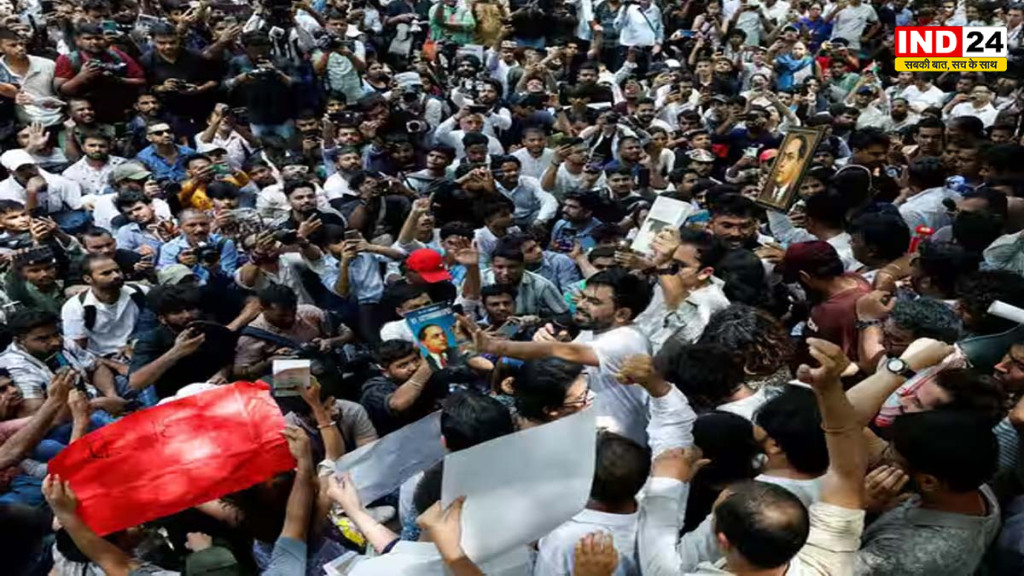
धरना-प्रदर्शनों का नया कारोबार: लोकतंत्र की आड़ में आखिर किसके हित साधे जा रहे हैं?
October 10, 2026
1,612 views
_20260126082258_original_image_35.webp)
In a powerful address to the Lok Sabha, Prime Minister Narendra Modi has issued a clarion call for unity across party lines to support the long-awaited women’s reservation bill. Modi emphasized that the time for action is now, highlighting the decades-long struggle for women's empowerment in India. His remarks come in the wake of growing tensions in the Lok Sabha, where the opposition has been vocal in protesting various legislative amendments, particularly those related to delimitation and reservations.
For more than 30 years, the women’s reservation bill has been a topic of heated debate in Indian politics. Originally proposed in the 1990s, this bill aims to reserve 33% of seats in the Lok Sabha and state legislative assemblies for women. Despite its introduction, numerous hurdles, including political opposition and lack of consensus among parties, have delayed its passage. Prime Minister Modi underscored the importance of this bill, stating that women’s representation in governance is not just a matter of equity but essential for the holistic development of society.
During his speech, Modi called for cross-party collaboration, stressing that the issue transcends political affiliations. “This is not about winning or losing; it’s about justice for half of our population,” he proclaimed. His plea comes at a time when the Lok Sabha is witnessing significant division over various legislative proposals, with the opposition vehemently protesting against certain amendments. Modi's statement that “opponents of the women’s quota will pay a price” serves as a stark warning to those who continue to resist the bill.
The Lok Sabha has recently been tumultuous, with opposition parties staging protests against the government’s handling of key legislative matters, including the delimitation bill, which seeks to redraw the boundaries of electoral constituencies. Critics argue that this bill could disenfranchise certain communities and lead to imbalanced representation. Modi’s government, however, maintains that delimitation is necessary for fair representation as the population dynamics change over time. The ongoing protests have raised questions about the government's ability to navigate the legislative process effectively.
Modi's advocacy for the women’s reservation bill is rooted in the belief that empowering women through representation will lead to more inclusive and effective governance. By ensuring that women have a seat at the table, the government can address issues that disproportionately affect women, such as health care, education, and safety. The Prime Minister argued that women bring unique perspectives and solutions to the political arena, which are critical in crafting policies that benefit all citizens.
The Prime Minister's call for women’s reservation has resonated with many in the public, with various women's rights organizations voicing their support for the bill. Social media campaigns advocating for women’s empowerment have gained momentum, further pressuring lawmakers to reconsider their stances. As the government prepares to push forward with legislative agendas, the question remains: will the opposition rally behind a cause that could redefine the political landscape in India?
As the Lok Sabha session progresses, the fate of the women’s reservation bill hangs in the balance. The Prime Minister's urgent appeal for cross-party support highlights the critical need for collaboration to pass this transformative legislation. However, the ongoing protests and political divisions present significant obstacles. The coming weeks will be pivotal in determining whether India will finally take a historic step towards gender equality in political representation.
PM Modi’s declaration in the Lok Sabha serves as a reminder of the importance of women’s representation in governance. The women’s reservation bill is not merely a legislative issue; it is a fundamental question of justice and equity. As the nation watches closely, the government and opposition must put aside their differences to embrace a future where women are equally represented in the political sphere. The time for action is now, and the price of inaction could be steep.


Loading more news...
You've reached the end of our news feed. Check back later for more updates!