Politics
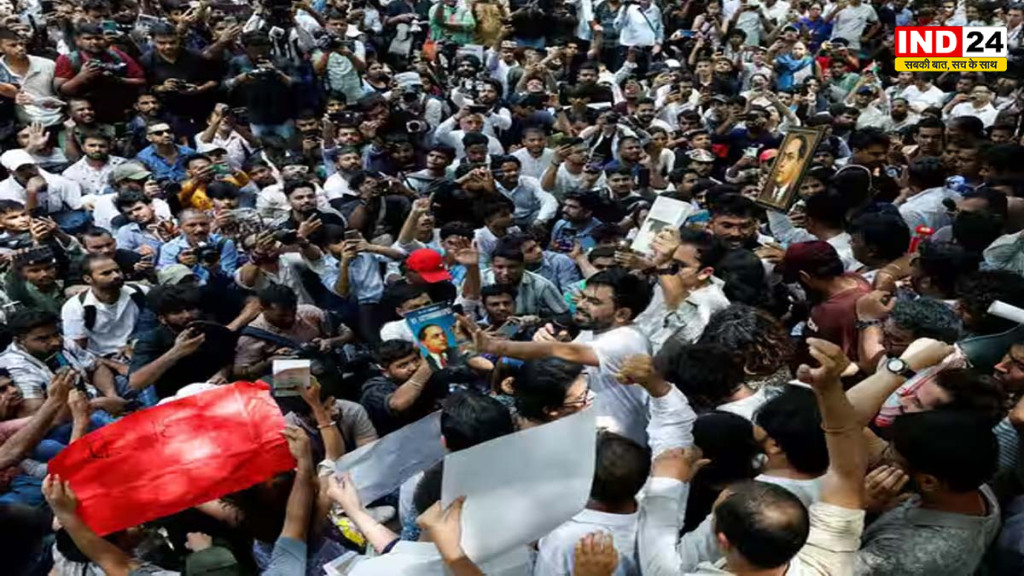
धरना-प्रदर्शनों का नया कारोबार: लोकतंत्र की आड़ में आखिर किसके हित साधे जा रहे हैं?
October 10, 2026
1,612 views

In a recent video that has sparked significant debate and discussion, renowned actor Mukesh Khanna has proposed that “Vande Mataram,” a song that has long been associated with the Indian independence movement, should take the place of “Jana Gana Mana” as the national anthem of India. This assertion has reignited conversations about the historical context of India's anthems and their relevance in contemporary society.
Khanna's comments were made during an interview where he expressed his belief that "Jana Gana Mana" was composed during the period of British colonial rule in India. He raised questions regarding the anthem's reference to a ruler, suggesting that it might not embody the spirit of the nation as effectively as “Vande Mataram.” The actor stated, “We need an anthem that truly represents the soul of India, and I believe Vande Mataram does that more profoundly.”
“Jana Gana Mana,” written by Rabindranath Tagore in 1911, was originally composed in Bengali and later adopted as the national anthem in 1950. Critics of Khanna's assertion argue that the song’s lyrics celebrate the unity and diversity of India, making it a fitting representation of the nation’s ethos. However, Khanna and others who support his stance contend that the anthem’s origins during a time of colonial oppression may undermine its significance in independent India.
“Vande Mataram,” on the other hand, was penned by Bankim Chandra Chatterjee in the late 19th century and later set to music by Rabindranath Tagore. This song played a pivotal role in the Indian independence struggle, rallying people against British rule. Khanna's advocacy for this song as the national anthem is rooted in its emotional resonance and historical importance for many Indians, particularly those who view it as a symbol of resistance and national pride.
Khanna’s argument taps into a larger sentiment among certain groups that seek to re-evaluate India's cultural icons and historical narratives. For many, “Vande Mataram” evokes feelings of patriotism and sacrifice, echoing the struggles faced by freedom fighters. The song’s refrain, which translates to “I bow to thee, Mother,” has ingrained itself into the national consciousness, making it a powerful alternative to the current anthem.
The public's reaction to Khanna's statement has been mixed. Social media platforms have been flooded with opinions both in support of and against his views. While some netizens laud his courage to speak on such a contentious issue, others criticize him for potentially undermining a song that has been an integral part of India's identity for decades. The debate has also attracted attention from historians and cultural critics who are weighing in on the merits of both anthems.
Supporters of Khanna's proposal argue that it is time for India to embrace symbols that reflect its struggle for freedom and independence. They see “Vande Mataram” as a more authentic representation of the country’s heritage. Conversely, opponents caution against changing a long-standing national symbol, emphasizing the importance of continuity and tradition in a nation as diverse as India. They argue that “Jana Gana Mana” embodies the unity of the country’s myriad cultures and languages, thus serving as a better representation of the contemporary Indian state.
The discourse surrounding national anthems is not merely about music; it also encapsulates the broader themes of identity, heritage, and unity. National symbols like anthems, flags, and mottos play a crucial role in fostering national pride and a sense of belonging among citizens. In India, a country with a rich tapestry of cultures and languages, the choice of a national anthem is particularly significant as it must resonate with a diverse population.
As discussions around Khanna's comments continue, it poses an important question: Should India consider re-evaluating its national symbols to better reflect its historical journey and contemporary realities? While change can be a powerful catalyst for growth and unity, it also requires careful consideration and respect for the sentiments attached to existing symbols. The debate may serve as an opportunity for deeper engagement with India’s cultural heritage and the stories that shape its national identity.
Mukesh Khanna’s call for “Vande Mataram” to replace “Jana Gana Mana” has opened the floodgates for a much-needed discussion on the relevance of national anthems in modern India. Whether this will lead to a shift in the national anthem or merely remain a topic of public discourse, one thing is clear: the conversation around India’s national identity is ongoing and multidimensional, reflecting the complexities of a nation that is continuously evolving.


Loading more news...
You've reached the end of our news feed. Check back later for more updates!