Title: \"Present Everywhere with Energy and Vigor\": Shivanand Tiwari Rises in Support of Pappu Yadav, Questioning His Arrest Amidst Political Turmoil in Bihar
Introduction:
The political landscape of Bihar is currently abuzz with intense activity following the arrest of Purnea Member of Parliament (MP) Pappu Yadav. The detention of the prominent leader, known for his energetic approach and widespread presence, has ignited a significant political storm across the state. While the Congress party has vehemently opposed the arrest, another influential voice has emerged in defense of Yadav: Shivanand Tiwari, a seasoned senior leader and a respected socialist thinker of Bihar. Tiwari, through his public statements and questioning, has not only expressed solidarity with Pappu Yadav but has also raised pertinent questions regarding the law and order situation and the circumstances surrounding the MP\'s apprehension. This detailed report delves into the intricacies of this developing political saga, exploring the reasons behind the uproar, the arguments presented by Pappu Yadav\'s supporters, Tiwari\'s specific concerns, and the broader implications for Bihar\'s political dynamics.
The Arrest and Immediate Aftermath:
The arrest of Pappu Yadav, a figure who has carved a distinct niche for himself in Bihar\'s political discourse, was met with immediate shock and condemnation from his supporters and a section of the political fraternity. While the precise legal grounds for his arrest were initially subject to varying interpretations and official statements, the swiftness and the nature of the detention triggered a widespread outcry. Reports suggest that the arrest was related to certain alleged cases, the specifics of which have become a focal point of debate.
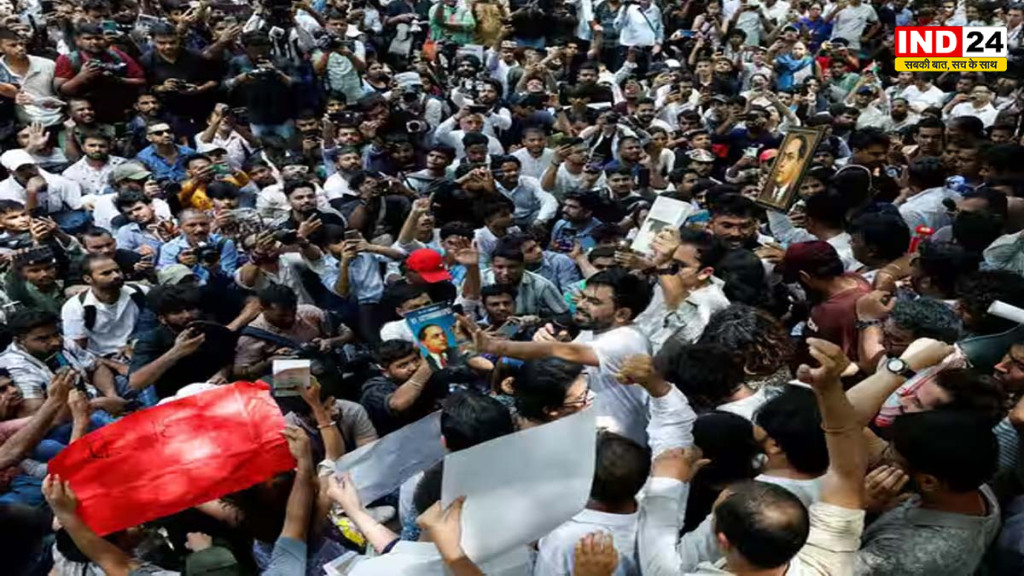
The immediate aftermath saw a surge of political activity. Supporters of Pappu Yadav, both within and outside his party, took to the streets, organizing protests and demonstrations to express their dissent. Social media platforms were flooded with messages of support and outrage, amplifying the reach of their discontent. The arrest transcended the boundaries of his immediate political affiliation, resonating with those who view Yadav as a champion of the common people and a voice for the marginalized.
The Congress\'s Opposition:
The Congress party, a significant political force in Bihar, has been vocal in its opposition to Pappu Yadav\'s arrest. Their stance is rooted in several factors, including the perceived political motivations behind the action and the broader implications for democratic principles. The Congress\'s official statements have often characterized the arrest as an attempt to silence a dissenting voice and to stifle political opposition. They have argued that such actions undermine the spirit of democracy and create an environment of fear, particularly for leaders who actively challenge the ruling establishment.
The Congress\'s support for Pappu Yadav, even though they are not directly aligned in a formal electoral pact, highlights a potential convergence of interests in certain political battles. Their opposition is not just about Pappu Yadav but also about the broader narrative of political repression that they believe is gaining traction in the state. By aligning with those who feel targeted, the Congress aims to strengthen its position as a defender of democratic values and to consolidate its support base among voters who are disillusioned with the current political climate.
Shivanand Tiwari\'s Intervention: A Socialist Stalwart\'s Concerns:
The entry of Shivanand Tiwari into the fray, lending his considerable weight and experience in support of Pappu Yadav, has added a significant dimension to the unfolding political drama. Tiwari, a veteran socialist leader and a thinker with a deep understanding of Bihar\'s socio-political fabric, brings a unique perspective to the issue. His intervention is not merely a perfunctory expression of solidarity but a pointed critique of the prevailing law and order situation and the perceived misuse of legal machinery for political ends.
Tiwari\'s primary concern appears to revolve around the integrity of the legal process and the potential for it to be influenced by political considerations. He has, in his public pronouncements, raised questions about the transparency and fairness of Pappu Yadav\'s arrest. His emphasis on the \"law and order\" situation suggests a deeper concern about how the state apparatus is functioning and whether it is upholding justice impartially.
Detailed Examination of Tiwari\'s Arguments and Concerns:
To fully grasp the significance of Shivanand Tiwari\'s stance, it is crucial to dissect his arguments and the underlying concerns he has articulated.
* Questioning the Circumstances of Arrest: Tiwari\'s questioning of the arrest likely stems from a perceived lack of clarity or a dubious rationale behind the detention. In a democratic society, arrests are expected to be based on solid evidence and due process. When prominent figures are arrested, especially on grounds that are not immediately apparent or widely understood, it raises suspicions. Tiwari\'s questioning suggests that he believes these circumstances warrant scrutiny, implying that the arrest might be more politically motivated than legally justified. He might be alluding to the possibility that the charges, while presented as legal, are being leveraged for political purposes.
* The \"Energetic and Everywhere Present\" Image of Pappu Yadav: The title of the article, \"ऊर्जा और फुर्ती के साथ हर जगह मौजूद\" (Present Everywhere with Energy and Vigor), is crucial here. This description captures a defining characteristic of Pappu Yadav – his dynamism, his active engagement with constituents, and his ability to be a visible presence across various regions and issues. Tiwari\'s support, framed within this context, suggests that he sees Pappu Yadav as a genuinely engaged and active politician, whose arrest might be an attempt to curtail such robust political activity. The implication is that a vibrant and energetic opposition is essential for a healthy democracy, and actions that stifle such energy can be detrimental.
* Law and Order Concerns: A Broader Critique: When Tiwari raises questions about the \"law and order\" situation, it is likely not just about Pappu Yadav\'s specific case but about a broader trend he perceives in Bihar. He might be suggesting that the state\'s law enforcement machinery is being used selectively, targeting political opponents while perhaps neglecting other pressing issues or exhibiting bias. A socialist thinker like Tiwari would naturally be concerned with issues of justice, fairness, and the equitable application of laws. If he perceives a deviation from these principles, his criticism would extend beyond the immediate arrest.
* Potential for Political Vendetta: Given Bihar\'s often tumultuous political history, the accusation of political vendetta is a recurring theme. Tiwari\'s questioning could be interpreted as an implicit suggestion that Pappu Yadav\'s arrest is a result of political rivalry or an attempt by the ruling establishment to weaken a perceived threat. Socialists have historically been at the forefront of advocating for the rights of the common man and challenging oppressive power structures. Tiwari\'s stance aligns with this tradition, suggesting that he views Pappu Yadav as someone who is speaking truth to power, and whose arrest is a reprisal for that.
* The Role of Socialists in Challenging the Status Quo: Shivanand Tiwari\'s background as a socialist thinker places his support for Pappu Yadav in a broader ideological context. Socialists often champion the cause of the downtrodden, advocate for social justice, and are critical of concentrations of power. If Tiwari perceives Pappu Yadav as embodying these principles, his support becomes a defense of these ideals against what he might see as an authoritarian drift. He might be drawing parallels between Pappu Yadav\'s activism and the historical struggles of socialist movements to uplift the masses and ensure equitable distribution of resources and opportunities.
* Impact on Democratic Discourse: Tiwari\'s intervention also implicitly raises concerns about the impact of such arrests on democratic discourse in Bihar. When prominent political figures are apprehended under controversial circumstances, it can have a chilling effect on free speech and political expression. Leaders might become more hesitant to voice dissent for fear of facing similar repercussions. Tiwari, as a senior statesman, would be acutely aware of the importance of open and robust debate in a democracy, and his questioning of the arrest can be seen as an effort to protect this vital element of democratic functioning.
* Specific Legal Questions: While the general descriptions are important, it is also possible that Tiwari has specific legal questions in mind. Without direct quotes or detailed statements from Tiwari, it\'s speculative, but he might be questioning:
* The legality of the FIR (First Information Report) that led to the arrest.
* The procedures followed during the arrest and detention.
* The evidence presented against Pappu Yadav.
* The proportionality of the action taken.
* Whether Pappu Yadav was given adequate opportunity to present his defense before or during the arrest.
The Broader Political Context in Bihar:
Pappu Yadav\'s arrest and the subsequent political reactions unfold against a complex and often volatile political backdrop in Bihar.
* The Role of Pappu Yadav: Pappu Yadav is a unique political figure in Bihar. He has a history of winning elections based on his personal connect with the electorate, often appealing to rural and working-class voters. His activism, which often involves direct intervention in local issues and vociferous criticism of government policies, has earned him a significant following. He has also been associated with controversies in the past, but his supporters often view him as a man of action who cuts through bureaucratic red tape. His presence, often described as energetic and pervasive, makes him a significant factor in state politics, capable of influencing electoral outcomes and shaping public discourse.
* The Ruling Alliance and Opposition Dynamics: The political landscape in Bihar is currently dominated by a complex interplay between the ruling alliance and a fragmented opposition. The ruling coalition, often a shifting alliance of parties, faces the constant challenge of maintaining its majority and addressing public grievances. The opposition, on the other hand, seeks to exploit any perceived weaknesses or missteps by the government. Pappu Yadav, with his independent appeal, can sometimes be a complicating factor for both the ruling and opposition blocs, as he draws support from a segment of the electorate that might otherwise align with established parties.
* The Congress\'s Strategy: The Congress party in Bihar is seeking to reassert its relevance and challenge the existing power structures. Their support for Pappu Yadav, in this instance, can be seen as a strategic move to align with a popular leader who is currently facing adversity, thereby signaling their willingness to stand up against perceived injustices and to rally diverse political forces against the ruling establishment. This approach can help them broaden their appeal and position themselves as a more assertive opposition force.
* The Legacy of Socialist Politics in Bihar: Bihar has a rich history of socialist movements and leaders who have championed the cause of the common people and advocated for social and economic reforms. Figures like Jayaprakash Narayan and Ram Manohar Lohia have left an indelible mark on the state\'s political consciousness. Shivanand Tiwari, as a torchbearer of this legacy, brings to the current debate a historical perspective and an ideological grounding. His concerns about law and order and potential political victimization resonate with the traditional socialist emphasis on justice, fairness, and the protection of civil liberties.
Possible Implications and Future Trajectory:
The arrest of Pappu Yadav and the vociferous response, particularly from senior leaders like Shivanand Tiwari, have several potential implications for Bihar\'s political future.
* Consolidation of Opposition Unity (or Disunity): While the Congress\'s support for Pappu Yadav might suggest a potential for opposition unity, the political landscape is often characterized by complex allegiances and rivalries. This event could either foster greater coordination among disparate opposition groups who feel targeted by the current regime, or it could exacerbate existing divisions. Pappu Yadav\'s independent standing means he doesn\'t neatly fit into traditional party structures, making any alliance a nuanced affair.
* Increased Scrutiny of Law and Order: Shivanand Tiwari\'s explicit questioning of the law and order situation could lead to increased public and political scrutiny of how the state machinery is functioning. This might put pressure on the authorities to ensure transparency and fairness in their actions. If the perception of bias or political motivation persists, it could erode public trust in the institutions.
* Strengthening Pappu Yadav\'s Image: For Pappu Yadav\'s supporters, this arrest and the ensuing political support can solidify his image as a victim of political persecution and a fighter for the rights of the common people. This could potentially boost his popularity and electoral prospects, especially if the narrative of injustice gains wider traction.
* The Congress\'s Political Gain: The Congress might benefit from being seen as a party that stands with leaders who are perceived to be under attack. This can help them in their efforts to project themselves as a credible and assertive opposition force, capable of mobilizing support for various causes.
* Future Political Alignments: The current political developments might also influence future political alignments in Bihar. The dynamics that have emerged in response to Pappu Yadav\'s arrest could shape the strategies and alliances that political parties adopt in the run-up to future elections.
Conclusion:
The arrest of Pappu Yadav has undoubtedly plunged Bihar into a political storm, with senior leader Shivanand Tiwari emerging as a prominent voice in his support. Tiwari\'s intervention, steeped in socialist ideology and a deep concern for democratic principles, transcends a mere political endorsement. He has articulated crucial questions about the transparency of the legal process and the integrity of the law and order machinery, suggesting a potential for political motivation behind the arrest.
The Congress\'s opposition further amplifies the narrative of dissent, positioning them as defenders of democratic freedoms. As this political saga unfolds, the attention will remain on the legal proceedings, the responses from the ruling establishment, and the broader implications for political discourse and democratic health in Bihar. Shivanand Tiwari\'s assertion that Pappu Yadav is \"present everywhere with energy and vigor\" serves as a powerful reminder of the importance of robust political engagement and the potential consequences when such energy is perceived to be stifled. The coming days will reveal the true impact of this event on the complex and ever-evolving political tapestry of Bihar.