
Politics
जहां प्रधान की जीत तय, वहीं जिला परिषद के दो वार्ड गंवाए, मतदाताओं ने अलग-अलग प्राथमिकताएं तय की
November 24, 2026
1,700 views
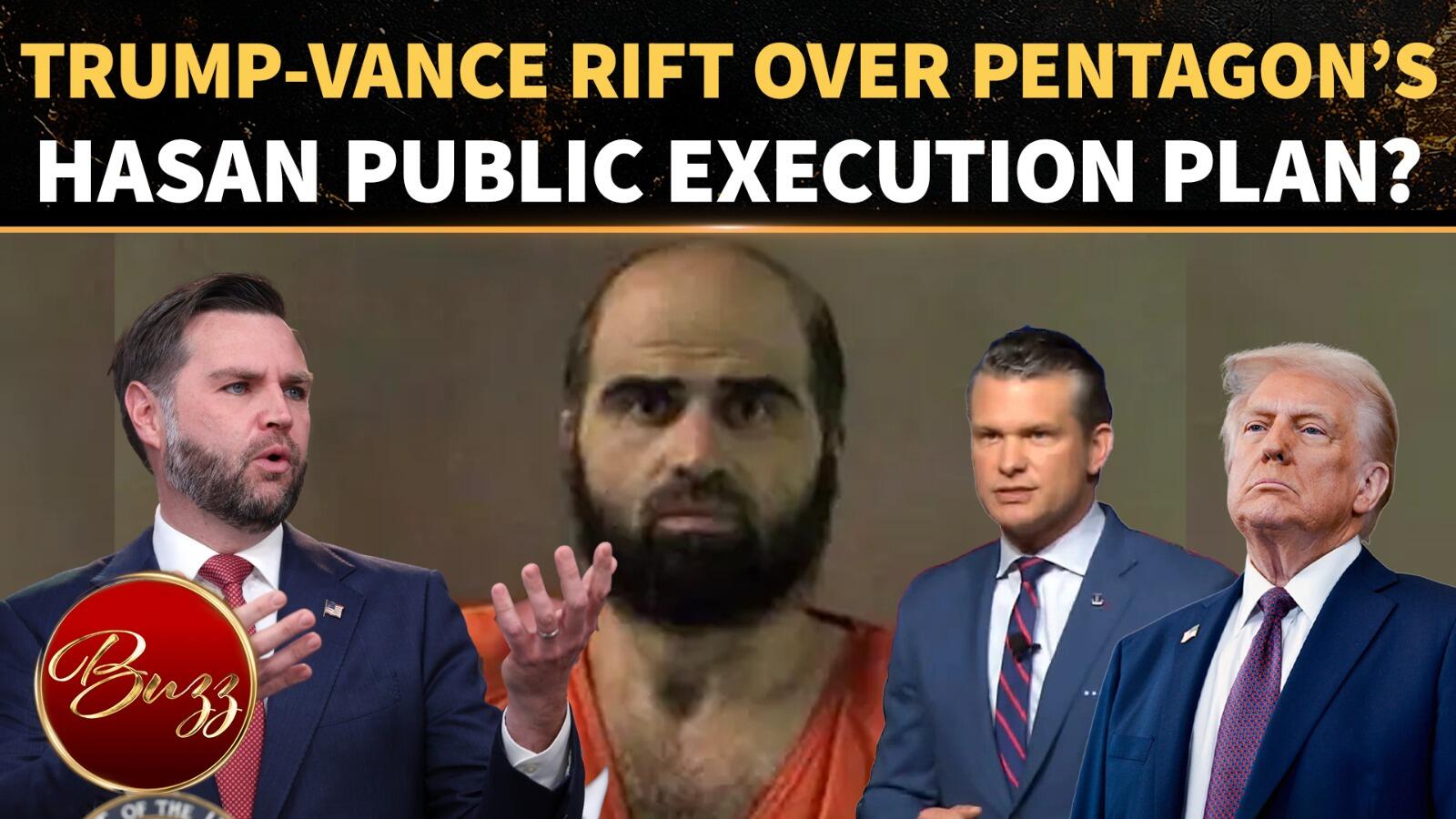
In a surprising turn of events, a potential rift seems to be developing between US President Donald Trump and Vice President JD Vance regarding the Pentagon's controversial proposal to livestream the execution of Nidal Malik Hasan, the convicted Fort Hood shooter. This proposal has ignited a heated debate both in the United States and around the world, raising ethical, moral, and legal questions. President Trump has firmly endorsed Hasan's death sentence, declaring that the shooter "deserves it," while Vice President Vance has expressed skepticism about the feasibility and morality of broadcasting such an event.
The stark differences in opinion between Trump and Vance highlight a significant ideological divide within the current administration. Trump, who has long advocated for strong measures against those who commit acts of terror, views Hasan's execution as a necessary step towards justice for the victims of the 2009 Fort Hood shooting that left 13 people dead and many others injured. His assertive stance underscores a broader narrative of retribution that has been a hallmark of his political rhetoric.
On the other hand, Vice President Vance's reluctance to support the livestreaming of the execution reveals a more cautious and reflective approach. Vance's statement that he “would not watch it” if the plan goes ahead indicates a belief that such a spectacle would not only be ethically questionable but could also violate the dignity of the individuals involved, including the victims and their families. This divergence raises important questions about the nature of justice and the role of public spectacle in legal proceedings.
The proposed livestreaming of Hasan's execution has drawn fierce criticism from various sectors, including religious organizations and international bodies. The head of the U.S. Conference of Catholic Bishops has publicly condemned the Pentagon's plan, arguing that it trivializes the sanctity of life and undermines the moral fabric of society. Similarly, the United Nations has labeled the plan as "abhorrent," expressing concerns that it could be seen as a violation of protocols against torture and inhumane treatment.
Human rights advocates have also voiced their disapproval, suggesting that the livestream could set a dangerous precedent for how societies handle capital punishment. The act of broadcasting such a graphic event could desensitize viewers to violence and suffering, leading to a societal normalization of brutality as entertainment. This potential for desensitization raises significant moral questions about the implications of using modern technology in the administration of justice.
The public's reaction to the idea of livestreaming an execution has been mixed, with some supporting the transparency it could bring to the justice system, while others vehemently oppose it on moral grounds. Polling data indicates that a significant portion of the population is uncomfortable with the idea of witnessing an execution in real-time, viewing it as a violation of human dignity. This sentiment reflects a broader societal struggle over the ethics of capital punishment itself, as debates continue about its effectiveness as a deterrent and its moral justification.
The stark differences in opinion between Trump and Vance also reflect the broader ideological divides in American politics regarding issues of justice, punishment, and human rights. As the administration grapples with this controversial proposal, the implications could reverberate beyond the immediate context of Hasan's execution, influencing future policies related to capital punishment and the treatment of convicted criminals. The outcome of this internal conflict may also impact the administration's standing with various voter demographics, particularly those who prioritize ethical governance and human rights.
As discussions surrounding the execution of Nidal Malik Hasan continue, the potential livestreaming has sparked a renewed examination of capital punishment in the United States. Advocates for the abolition of the death penalty are seizing this moment to push for reforms, arguing that the spectacle of an execution undermines the very principles of justice and rehabilitation. In contrast, proponents of capital punishment argue for its necessity in cases of extreme violence and terrorism, asserting that it serves as a means of delivering justice for heinous crimes.
The debate is likely to intensify in the coming weeks as more voices join the conversation. With the administration facing scrutiny from both sides of the aisle, the resolution of this internal conflict will be closely monitored. As President Trump and Vice President Vance navigate these treacherous waters, the implications of their decisions could have lasting effects on the nature of justice in America and the role of the government in administering punishment.


Loading more news...
You've reached the end of our news feed. Check back later for more updates!