Politics
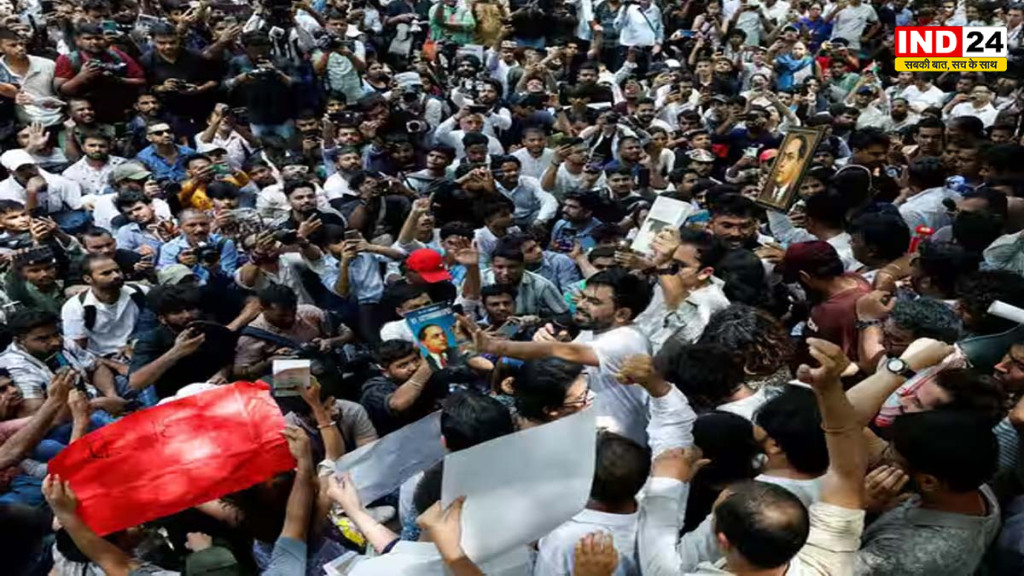
धरना-प्रदर्शनों का नया कारोबार: लोकतंत्र की आड़ में आखिर किसके हित साधे जा रहे हैं?
October 10, 2026
1,612 views

In a recent statement that has stirred debate across educational and political circles, DMK’s IP Senthil Kumar made headlines by asserting that the three-language policy proposed by the central government is not suitable for the state of Tamil Nadu. This remark comes amidst ongoing discussions and concerns regarding language education in schools and its implications for local culture and identity.
The three-language formula, which suggests that students learn three languages—typically their mother tongue, Hindi, and English—has been a topic of contention in various states in India. In Tamil Nadu, where the local language, Tamil, holds a significant place in the cultural and social fabric, the introduction of Hindi into the educational curriculum has faced resistance. Senthil Kumar's comments reflect a long-standing sentiment among many Tamilians who believe that the imposition of a three-language system could undermine the importance of Tamil.
During a press conference held in Chennai, IP Senthil Kumar emphasized that the three-language policy is not only impractical but also detrimental to the state’s linguistic heritage. He argued that the government should prioritize the promotion of Tamil over the imposition of Hindi, which many perceive as a move to promote a uniform national identity at the expense of regional diversity. Kumar stated, “Language is not just a means of communication; it is a reflection of our identity and culture. Tamil Nadu must safeguard its linguistic heritage.”
The DMK, which has a strong base in Tamil Nadu, has historically championed the cause of preserving and promoting the Tamil language. This stance is rooted in the party's foundation, which arose from the Dravidian movement that sought to empower local identities against perceived cultural hegemony from the North. Kumar’s remarks can be seen as a reaffirmation of the party’s commitment to maintaining Tamil's prominence in education and public life.
The reaction to Senthil Kumar's statement has been mixed among the public and various political factions. Supporters of the DMK have praised the party for standing firm against what they view as an encroachment on regional languages. “It’s important for the youth of Tamil Nadu to feel proud of their language,” said a local education activist. On the other hand, proponents of the three-language policy argue that promoting a multilingual education system is essential for fostering national integration and equipping students for a globalized world. They believe that knowledge of Hindi and English can provide students with better opportunities in higher education and employment.
The debate surrounding the three-language policy raises essential questions about the future of education in Tamil Nadu. Advocates for a single-language curriculum argue that focusing solely on Tamil could enhance literacy rates and ensure that students have a strong command of their mother tongue. Conversely, critics contend that a lack of exposure to Hindi and English could limit students' prospects in a competitive job market. “We must strike a balance between preserving our culture and preparing our students for the world,” remarked an educational consultant.
The central government has yet to provide a comprehensive response to the backlash against the three-language policy. However, Education Minister Dharmendra Pradhan previously defended the initiative, asserting that it aims to create a cohesive framework for language learning across the country. He emphasized that the policy is not meant to replace regional languages but to complement them, fostering a sense of unity among the diverse linguistic populations of India.
As discussions continue, it remains to be seen how the government will address the concerns raised by figures like IP Senthil Kumar. The DMK’s unwavering commitment to promoting Tamil could lead to significant changes in the state’s educational policies if they gain enough public support. Furthermore, the outcome of this debate could set a precedent for other states grappling with similar issues regarding language and education.
In conclusion, the assertion by DMK’s IP Senthil Kumar that the three-language policy is unsuitable for Tamil Nadu has ignited a crucial discourse on language, culture, and education in the state. As the debate unfolds, it is vital for all stakeholders—educators, policymakers, and the public—to engage in constructive dialogue to ensure that the linguistic rights and cultural identities of all communities are respected and preserved.


Loading more news...
You've reached the end of our news feed. Check back later for more updates!