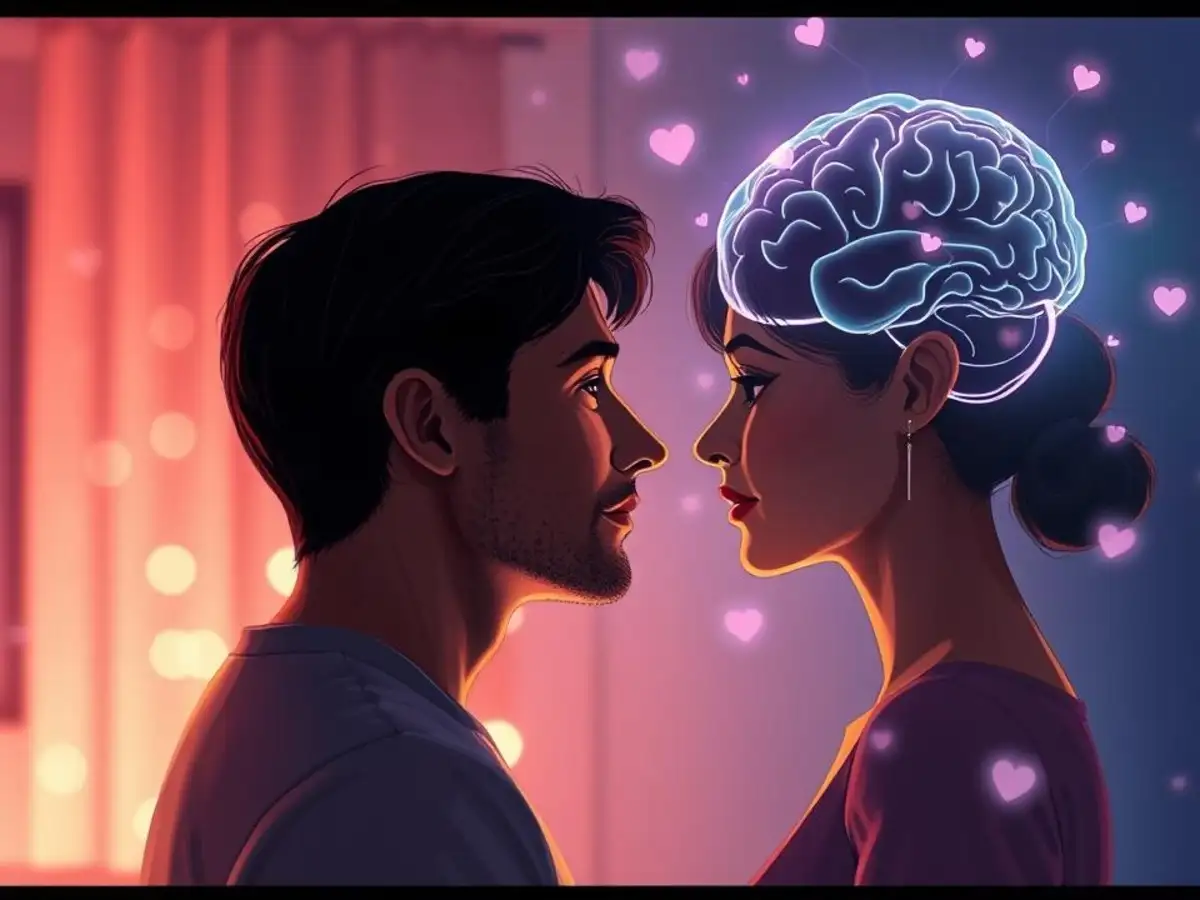
The Enigmatic Alchemy of Affection: Deconstructing \"Love at First Sight\" – Is It Genuine Human Connection or a Neurological Illusion?
Introduction: The Enduring Allure of an Instantaneous Spark
The concept of \"love at first sight\" has been a cornerstone of romantic narratives for centuries, woven into the fabric of literature, poetry, and folklore. From Shakespearean sonnets to contemporary romantic comedies, the idea of an immediate, profound connection, an undeniable recognition of a soulmate upon the very first encounter, has captivated the human imagination. This romantic ideal suggests a destiny preordained, a moment where two individuals, seemingly strangers, are instantaneously bound by an irresistible force, a feeling so potent it transcends logic and time. It speaks to a primal human desire for belonging, for a predetermined purpose in the grand tapestry of existence, and for the thrilling possibility of a love that is both effortless and eternal.
In the modern era, this enduring fascination persists. Surveys and anecdotal evidence consistently reveal a significant portion of the population, particularly in Western cultures like the United States, professing belief in this phenomenon. They recall vivid moments, charged with an inexplicable intensity, where an ordinary encounter transformed into an extraordinary revelation. This widespread acceptance, however, invariably sparks a critical question, one that resonates with both the romantics and the skeptics: Is this powerful, often overwhelming, initial attraction truly a nascent form of love, or is it a sophisticated biological and psychological deception, a clever trick orchestrated by our own brains? This extensive exploration will delve into the scientific underpinnings of this captivating experience, dissecting the intricate interplay of neurochemistry, evolutionary psychology, and cognitive biases that contribute to the perception of \"love at first sight.\" While acknowledging the undeniable reality of the powerful initial spark, we will critically examine its relationship to the enduring, multifaceted nature of long-term, committed love, ultimately seeking to understand if this potent reaction is a genuine, albeit fleeting, human experience or merely a dazzling, albeit temporary, neurological illusion.
The Neurological Symphony: Unraveling the Brain\'s Role in Instantaneous Attraction
At the heart of understanding \"love at first sight\" lies a deep dive into the intricate workings of the human brain. When we encounter someone who ignites this immediate spark, our brains are far from passive observers. Instead, they engage in a rapid, complex cascade of chemical and electrical activity, a symphony of neurotransmitters and hormones that create the intense emotional and physiological sensations we associate with this phenomenon.
Dopamine: The \"Feel-Good\" Neurotransmitter and the Reward Pathway:
One of the primary architects of this initial enchantment is dopamine. This neurotransmitter, famously associated with pleasure, reward, and motivation, plays a crucial role in the brain\'s reward pathway. When we experience something novel, exciting, or pleasurable, dopamine levels surge, reinforcing the behavior or stimulus that triggered it. In the context of \"love at first sight,\" the sight of a potentially attractive individual can activate this pathway. The unexpectedness of the encounter, coupled with perceived desirable traits, can trigger a significant dopamine release. This surge creates a feeling of euphoria, excitement, and an intense desire to pursue further interaction. It\'s this dopamine rush that can lead to a sense of exhilaration, a feeling of being \"high\" on the person, and a potent motivator to seek out their company again. This is not unique to romantic attraction; dopamine is also released when we engage in activities like eating delicious food, winning a game, or using addictive substances, highlighting its fundamental role in driving us towards rewarding experiences.
Norepinephrine (Adrenaline): The \"Fight-or-Flight\" Hormone and the Physiological Arousal:
Complementing the dopamine surge is the activation of the sympathetic nervous system, leading to the release of norepinephrine, also known as adrenaline. This hormone is intrinsically linked to the \"fight-or-flight\" response, preparing the body for action in the face of perceived threat or excitement. In the context of attraction, this translates into a heightened state of physiological arousal. Our hearts begin to pound faster, our palms may sweat, our pupils dilate, and we might experience a general sense of heightened alertness and energy. This physiological stirring is often misattributed solely to romantic passion. Instead, it\'s a broader response to an intensely stimulating event, and the presence of an attractive person can certainly serve as such a powerful stimulus. This heightened arousal can create a sense of urgency and intensity, amplifying the perceived significance of the encounter. It\'s the physical manifestation of our bodies responding to something that has captured our attention and triggered a significant neurological event.
Oxytocin and Vasopressin: The \"Bonding\" Hormones – A Hint of Future Potential?
While dopamine and norepinephrine are primarily associated with the initial rush, other hormones, like oxytocin and vasopressin, may also subtly play a role, albeit more speculatively in the \"first sight\" scenario. Oxytocin, often dubbed the \"love hormone\" or \"bonding hormone,\" is released during social bonding, intimacy, and childbirth. Vasopressin is also implicated in pair bonding and social behavior. In the very initial stages of attraction, the brain might be priming these hormones for future potential bonding, even if their significant release and impact are more evident in developing relationships. The mere anticipation of connection, the nascent stages of positive regard, might trigger subtle releases, laying a subconscious groundwork for future attachment. However, it\'s crucial to emphasize that the primary drivers of the immediate \"love at first sight\" experience are likely the more potent and rapidly acting neurotransmitters like dopamine and norepinephrine.
The Role of the Amygdala and Prefrontal Cortex:
Beyond specific neurotransmitters, the interaction of key brain regions is also vital. The amygdala, the brain\'s emotional processing center, is likely involved in rapidly assessing the emotional valence of the encountered individual, quickly tagging them as \"positive\" or \"intriguing.\" Simultaneously, the prefrontal cortex, responsible for higher-level cognitive functions like decision-making and impulse control, may be temporarily \"hijacked\" or influenced by the surge of emotion. This can lead to a less rational, more emotionally driven response, where initial positive impressions are amplified and potential drawbacks are overlooked. The brain is essentially prioritizing the immediate emotional reward over a thorough, logical assessment.
In summary, the neurological underpinnings of \"love at first sight\" are rooted in a powerful and rapid neurochemical cocktail. The sudden influx of dopamine creates feelings of pleasure and motivation, while norepinephrine induces physiological arousal. These chemical reactions, orchestrated by specific brain regions, generate the intense, almost overwhelming, sensation that leads many to believe they have experienced something extraordinary.
The Evolutionary Imperative: Why We\'re Wired to Be Attracted
The human capacity for rapid attraction is not merely a quirk of modern brain chemistry; it is deeply rooted in our evolutionary history. From an evolutionary perspective, the ability to quickly assess potential mates and form bonds was crucial for survival and reproduction. \"Love at first sight,\" or at least the rapid assessment of attraction, can be viewed as a highly efficient evolutionary mechanism.
Mate Selection: A Shortcut for Survival and Procreation:
In ancestral environments, the ability to quickly identify desirable mates was a significant advantage. Traits associated with good health, genetic fitness, and reproductive potential – such as clear skin, symmetrical features, and a certain posture – were likely perceived as attractive. Our brains evolved to be highly adept at scanning for these cues, even subconsciously, to make rapid assessments. A visually appealing individual might signal good genes, increasing the likelihood of producing healthy offspring. This \"first sight\" reaction can be seen as an evolutionary shortcut, bypassing lengthy evaluation processes and initiating a potential connection that could lead to procreation and the continuation of the species. The intense feeling of attraction serves as a powerful motivator to pursue this potential reproductive partner.
The Halo Effect and Cognitive Biases:
Evolutionary pressures also contribute to the influence of cognitive biases, such as the halo effect. This psychological phenomenon occurs when our overall impression of a person influences our feelings and thoughts about their specific traits. If we find someone physically attractive (a strong evolutionary cue), we are more likely to unconsciously assume they possess other desirable qualities, such as intelligence, kindness, or humor. This is a form of mental shorthand, where a positive initial impression in one area (physical appearance) leads to a positive assumption in others. This can significantly amplify the feeling of instant connection, as we are not just attracted to their looks but also projecting a host of other positive attributes onto them.
The Role of Pheromones (A Controversial but Potentially Influential Factor):
While the scientific evidence for human pheromones playing a direct and conscious role in romantic attraction is still debated and largely inconclusive, it\'s a factor that warrants mention. Pheromones are chemical signals released by animals that can trigger specific behaviors in others of the same species. Some researchers hypothesize that humans might also produce and respond to subtle chemical signals that influence attraction, although this remains a complex and under-researched area. If such subtle signals exist, they could contribute to an unconscious, instinctual sense of \"rightness\" or chemistry with another person, further bolstering the \"love at first sight\" experience.
The \"Mating Dance\" and Social Signaling:
In a broader evolutionary context, attraction also plays a role in the complex social dynamics of mating. The initial spark can be seen as the beginning of a \"mating dance,\" where individuals signal their interest and availability. The intensity of the \"love at first sight\" reaction could be interpreted as a strong signal of interest, designed to capture the attention of the potential partner and encourage further interaction.
In essence, our evolutionary past has equipped us with a powerful set of biological and psychological tools that facilitate rapid attraction. These mechanisms, designed to optimize mate selection for survival and reproduction, can manifest as the intense, immediate feeling of \"love at first sight,\" driven by subconscious cues and cognitive shortcuts that have served us for millennia.
The Cognitive Appraisal: How We Interpret the Spark
While biology lays the groundwork for attraction, our cognitive appraisal – how we interpret and make sense of these biological signals – is equally crucial in defining the experience as \"love at first sight.\" It\'s not just what our brains are doing chemically; it\'s also what our minds are making of it.
The Power of Narrative and Cultural Conditioning:
We are constantly bombarded with narratives of \"love at first sight\" through media, literature, and societal discourse. These stories create a cultural framework for understanding intense romantic encounters. When we experience a strong, sudden attraction, our minds are primed to interpret it through this pre-existing narrative. We might unconsciously seek out confirmation of this romantic ideal, attributing meaning and significance to feelings that might otherwise be interpreted differently. The cultural emphasis on finding \"the one\" can lead us to believe that any intense, immediate connection must be a sign of destiny.
Attribution Theory and the Misattribution of Arousal:
Attribution theory suggests that we strive to understand the causes of our own and others\' behavior and emotions. When experiencing the physiological arousal associated with attraction (pounding heart, sweaty palms), we try to find an explanation for it. If we are in the presence of a person we find attractive, we are likely to attribute this arousal to romantic feelings for them. This is known as the misattribution of arousal. Imagine being on a shaky suspension bridge; your heart rate will be elevated. If you meet someone on that bridge, you might misattribute your heightened arousal to attraction to them, rather than the fear-inducing environment. Similarly, the excitement of a new encounter, a shared glance, or a captivating smile can be interpreted as the sole cause of our physiological response, leading us to believe it\'s a direct result of love.
Confirmation Bias and Selective Memory:
Once we begin to believe we\'ve experienced \"love at first sight,\" confirmation bias can set in. We tend to seek out and interpret information in a way that confirms our existing beliefs. This means we might selectively remember the positive aspects of the encounter, overlooking any less favorable observations. We might also pay more attention to behaviors from the other person that seem to validate our initial impression, while downplaying contradictory evidence. Our memory itself can be malleable, often reconstructing past events to fit our current understanding.
The Role of Imagination and Idealization:
\"Love at first sight\" often involves a significant degree of imagination and idealization. When we are instantly captivated by someone, our minds can fill in the blanks, projecting our desires, expectations, and fantasies onto them. We create an idealized version of the person, attributing to them all the qualities we seek in a partner. This idealized image can be incredibly powerful, making the initial connection feel profound and deeply significant, even if the reality of the person is yet to be fully explored.
The Experience of \"Knowing\": Intuition vs. Interpretation:
Many who believe they have experienced \"love at first sight\" describe a feeling of \"knowing\" or an intuitive certainty. This feeling of certainty is often the result of a powerful emotional and physiological response that is interpreted through a romantic lens. While intuition can play a role in human connection, in this context, it is heavily influenced by the biological and cognitive factors discussed. The brain, having processed rapid cues and activated reward pathways, generates a strong feeling that our conscious mind then labels as an infallible intuition.
In essence, our cognitive appraisal transforms the raw biological signals of attraction into the narrative of \"love at first sight.\" Cultural conditioning, psychological biases, and our capacity for imagination all contribute to shaping this initial spark into a perceived profound connection. The intensity of the feeling is undeniable, but its interpretation is heavily influenced by our internal frameworks and expectations.
The Chasm Between Spark and Sustained Love: A Critical Analysis
While the initial spark of \"love at first sight\" is a genuine and powerful human experience, it is crucial to differentiate it from the multifaceted and enduring nature of long-term, committed love. The intense rush of dopamine and norepinephrine that characterizes the initial encounter, while exhilarating, is fundamentally different from the deep, nuanced connection built over time.
The Fleeting Nature of Neurochemical Highs:
The neurochemical cocktail that fuels the initial \"love at first sight\" experience is, by its very nature, temporary. Dopamine and norepinephrine surges are not sustainable. As the initial novelty wears off and familiarity sets in, these chemical levels naturally decrease. This is not a sign of failure, but rather a natural progression. The intense euphoria of the initial phase is replaced by a more stable, albeit less dramatic, emotional state. Relying solely on the \"love at first sight\" feeling to sustain a relationship would be akin to trying to subsist on pure sugar – it provides an initial rush but lacks the sustained nourishment required for long-term well-being.
The Foundation of Long-Term Love: Beyond Physical Attraction:
True, enduring love is built on a far more complex foundation than initial physical attraction and a neurochemical high. It involves:
* Shared Values and Beliefs: A deep understanding and alignment of core values, life goals, and fundamental beliefs are essential for navigating life\'s challenges together and building a shared future.
* Mutual Respect and Admiration: Beyond physical appeal, long-term love requires respect for each other\'s individuality, achievements, and character. Admiration for the person\'s qualities beyond the superficial is vital.
* Trust and Security: The development of profound trust, built through consistent reliability, honesty, and vulnerability, is a cornerstone of lasting relationships. This creates a sense of security and safety.
* Effective Communication and Conflict Resolution: The ability to communicate openly, honestly, and constructively, even during disagreements, is paramount. Learning to navigate conflicts in a healthy way strengthens the bond.
* Shared Experiences and Growth: Couples who grow together, sharing life\'s joys and sorrows, supporting each other\'s personal growth, and creating a shared history, forge a deep and resilient connection.
* Empathy and Compassion: The ability to understand and share the feelings of another, offering support and comfort, is crucial for navigating the inevitable difficulties of life.
* Commitment and Effort: Long-term love is not a passive state; it requires active effort, dedication, and a conscious choice to nurture the relationship through all its stages.
The Danger of Mistaking Infatuation for Love:
The intensity of \"love at first sight\" can easily be mistaken for true love, leading to unrealistic expectations and potential disappointment. When the initial rush subsides, individuals who believed they had found \"the one\" might question their feelings or the relationship itself, not realizing that the initial experience was primarily infatuation – a powerful, but often short-lived, state of intense admiration and desire. Infatuation can be a stepping stone to love, but it is not love itself.
The \"Destiny\" Myth:
The idea of \"love at first sight\" often carries with it a sense of destiny or fate. While it can be comforting to believe that our romantic encounters are preordained, this belief can be limiting. It can discourage individuals from putting in the work required to build and maintain relationships, as they may passively wait for destiny to unfold. Moreover, it can lead to disappointment if a seemingly \"fated\" connection doesn\'t evolve into a lasting, fulfilling partnership. True connection often requires active choice, effort, and adaptation, rather than simply waiting for fate.
The Positive Aspect: A Catalyst for Connection:
Despite the differences, the initial spark of \"love at first sight\" is not without its merits. It can serve as a powerful catalyst for connection, igniting interest and motivating individuals to engage and explore a potential relationship. The intense initial attraction can provide the momentum needed to overcome initial shyness or hesitation, prompting people to take the first steps towards getting to know each other. It can also be a joyful and exhilarating experience in itself, adding a touch of magic and romance to life.
Conclusion: The Genuine Experience, Not Necessarily Destiny
In conclusion, the phenomenon of \"love at first sight\" is a complex interplay of biological predispositions, neurological processes, and cognitive interpretations, all shaped by our evolutionary past and cultural conditioning. The intense emotional and physiological sensations experienced are undeniably real. The surge of dopamine and norepinephrine creates a powerful, exhilarating rush that can feel like an instantaneous, profound connection. This is not a mere illusion but a genuine, albeit potent, human experience.
However, it is crucial to distinguish this initial spark from the deep, multifaceted nature of long-term, committed love. While the initial attraction can be a powerful catalyst, it lacks the depth, resilience, and complexity that are cultivated through shared experiences, mutual respect, effective communication, and a conscious commitment to nurturing a relationship over time.
Therefore, while \"love at first sight\" is a genuine experience, it is not necessarily destiny. It is a testament to the intricate workings of our brains and bodies, and our innate human capacity for connection and attraction. It is a powerful reminder of the allure of the unknown and the thrilling possibility of instant chemistry. But for love to truly flourish and endure, it requires more than just a fleeting glance; it demands the cultivation of a profound understanding, unwavering support, and a shared journey of growth and discovery. The science behind \"love at first sight\" reveals a beautiful, intricate dance between biology and psychology, a dance that, while often leading to captivating beginnings, ultimately requires conscious effort and dedication to blossom into a lasting and meaningful union.