
Business
Invetech & MeMed win 2026 Good Design Award Gold for MeMed Key™
October 9, 2026
2,539 views
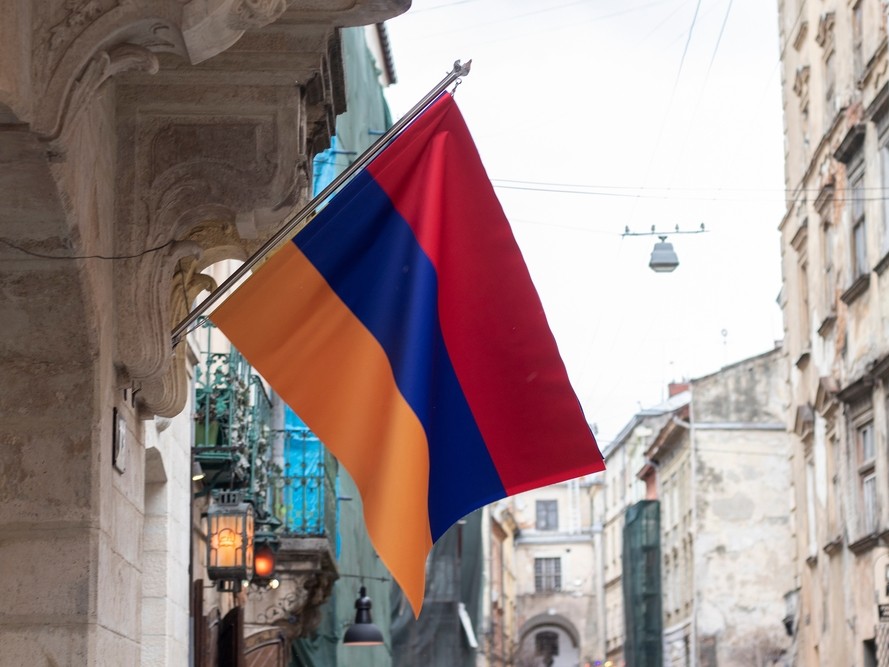
The results of Armenia’s parliamentary election in June dealt Russia’s bid to reassert its grip on the South Caucasus a serious blow, and the reverberations are not confined to Moscow, Washington, and Brussels. For Beijing and Tokyo, both of which have quietly built stakes in the region as an overland bridge between Asia and Europe, the election’s outcome, which reaffirmed Prime Minister Nikol Pashinyan’s authority, carries real geoeconomic weight. Pashinyan’s decisive victory represents a clear popular rejection of Moscow’s influence, signaling a pivotal shift in the geopolitical landscape of Eurasia.
The South Caucasus, strategically located at the crossroads of Europe and Asia, has long been a region of contest among major powers. With Armenia emerging as a focal point in this ongoing struggle, the recent elections have set the stage for a reconfiguration of alliances. Pashinyan’s government has been vocal about its aspirations to strengthen ties with the West while navigating a complex relationship with its neighbor, Azerbaijan, and the historic rival, Turkey.
As Armenia pivots towards Europe, the implications for trade routes are profound. The historic Silk Road is being revitalized, with new rail and road links being established to facilitate commerce between the East and West. This transformation is not merely theoretical; it represents a tangible shift in logistics and supply chains that could redefine economic power dynamics in the region.
The implications of Armenia’s political landscape extend beyond its borders. For China, the Belt and Road Initiative (BRI) is at stake. The BRI aims to enhance connectivity across Asia and Europe, and Armenia’s strategic positioning is vital for this grand vision. Beijing has invested heavily in infrastructure projects in the region, seeking to create a reliable corridor for its goods and services. The reaffirmation of Pashinyan's government may facilitate further Chinese investment, allowing for the expansion of rail networks and highways that enhance trade routes through Armenia.
On the other hand, Japan’s interest in the region has been more subdued but equally significant. Tokyo has been looking to diversify its supply chains and reduce reliance on traditional routes that are increasingly vulnerable to geopolitical tensions. As Armenia strengthens its ties with Western nations, Japan may find an opportunity to bolster its economic footprint in the region, positioning itself as a key player in the emerging trade landscape.
Russia, traditionally seen as the dominant power in the South Caucasus, faces a growing challenge as Armenia embraces a more Western-oriented approach. The loss of influence in Armenia is a significant blow to Moscow’s regional ambitions, particularly as it grapples with its own internal issues and external pressures from the West. The Kremlin’s attempts to maintain a foothold in Armenia through military alliances and economic dependency may become increasingly difficult in the face of popular dissent against Russian intervention.
Moreover, the situation is further complicated by the unresolved conflicts in the region, particularly the ongoing tensions between Armenia and Azerbaijan over Nagorno-Karabakh. Any escalation in this conflict could derail the potential for new trade routes and destabilize the region, prompting a reevaluation of strategic partnerships and alliances.
Despite the challenges, the current power vacuum presents unique opportunities for economic growth and cooperation among nations in the region. Countries like Iran, Georgia, and Turkey are also eyeing the shifting dynamics in the South Caucasus, exploring ways to enhance their trade relations with Armenia and beyond. The potential for a new economic corridor that links Central Asia with Europe is becoming increasingly plausible, driven by a shared interest in stability and prosperity.
As Armenia embraces its newfound autonomy and redefines its foreign policy, the possibility of a collaborative approach to trade and security could emerge. Regional cooperation, potentially involving various stakeholders, could lead to a more integrated economic framework that benefits all parties involved. This collaborative spirit might not only stabilize the region but also foster a climate of mutual trust and shared prosperity.
In conclusion, the recent political developments in Armenia mark the beginning of a new era for trade routes across Eurasia. With a clear shift away from Russian influence and a stronger orientation towards Europe and Asia, Armenia stands at the forefront of a geoeconomic transformation. The involvement of major powers like China and Japan, coupled with the potential for regional cooperation, could reshape the economic landscape of the South Caucasus and beyond. As these dynamics continue to evolve, the world will be watching closely to see how Armenia navigates its path forward in this complex geopolitical environment.


Loading more news...
You've reached the end of our news feed. Check back later for more updates!