The Revolutionary Odour-Tracking Robot: How Japan's Scientists are Using Silkworms to Save Lives
Innovative Disaster Management Technology
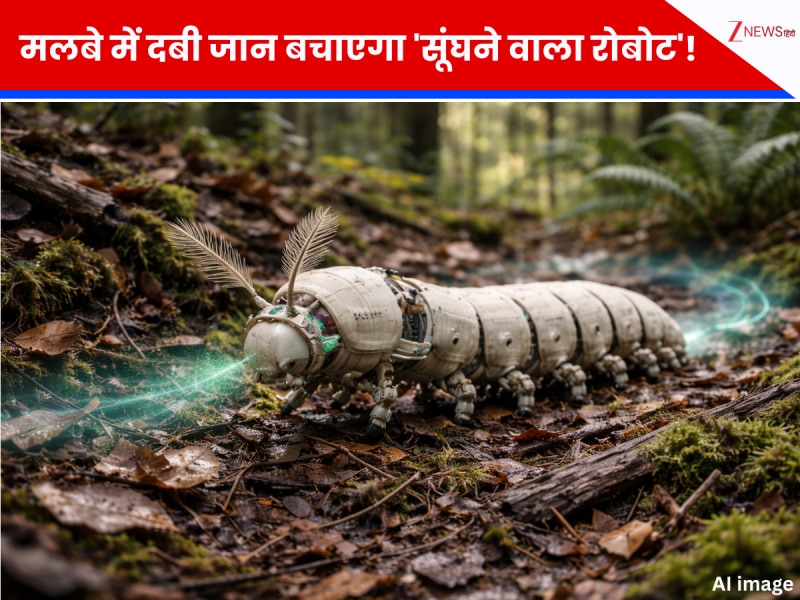
In the aftermath of natural disasters, rescue teams face a daunting task - locating survivors trapped under debris. The search process is often time-consuming, labor-intensive, and often results in tragic losses. However, a team of Japanese scientists has made a groundbreaking discovery that could change the face of disaster management forever. Meet the Odour-Tracking Robot, a revolutionary device that uses the incredible sense of smell of silkworms to identify the location of survivors buried under rubble.
The Power of Silkworms
Silkworms are known for their remarkable ability to detect and track pheromones, chemical signals that help them locate their mates. Japanese scientists have harnessed this unique ability to create a robot that can detect the scent of human survivors trapped under debris. The robot, equipped with a specialized device that mimics the silkworm's sense of smell, can identify the exact location of survivors, even in the most challenging environments.
How it Works
The Odour-Tracking Robot is designed to be deployed in disaster-stricken areas, where it can navigate through rubble and debris to locate survivors. The robot is equipped with a sensitive sensor that detects the unique scent of human sweat, which is emitted by survivors even in the most inhospitable environments. Once the robot detects the scent, it uses its advanced algorithms to pinpoint the exact location of the survivor, allowing rescue teams to target their search efforts.
Breaking New Ground
The Odour-Tracking Robot is not just a remarkable innovation, but also a game-changer in the field of disaster management. Traditional search and rescue methods often rely on visual cues, which can be limited in areas affected by natural disasters. The robot's ability to detect scent, however, allows it to operate in areas where visibility is zero, making it an invaluable tool in the search for survivors.
Real-Life Applications
The Odour-Tracking Robot has already been tested in simulated disaster scenarios, with impressive results. In one test, the robot was able to locate a survivor buried under 10 feet of debris in just 10 minutes, a feat that would have taken human search teams hours or even days to achieve. The robot's potential applications are vast, from responding to natural disasters such as earthquakes and hurricanes to searching for missing persons in urban environments.
The Future of Disaster Management
The Odour-Tracking Robot is a testament to human ingenuity and our ability to innovate in the face of adversity. As the world grapples with the increasing threat of natural disasters, it is innovations like this that will help us build a safer, more resilient future. With its ability to detect scent and locate survivors, the Odour-Tracking Robot is poised to become a vital tool in the fight against disaster, saving countless lives and reducing the impact of natural disasters on communities around the world.
Conclusion
The Odour-Tracking Robot is a revolutionary innovation that has the potential to transform the way we respond to natural disasters. By harnessing the incredible sense of smell of silkworms, Japanese scientists have created a device that can detect the scent of human survivors, even in the most challenging environments. As the world continues to grapple with the threat of natural disasters, the Odour-Tracking Robot is a beacon of hope, a reminder that even in the darkest of times, human ingenuity and innovation can lead to a brighter, safer future.