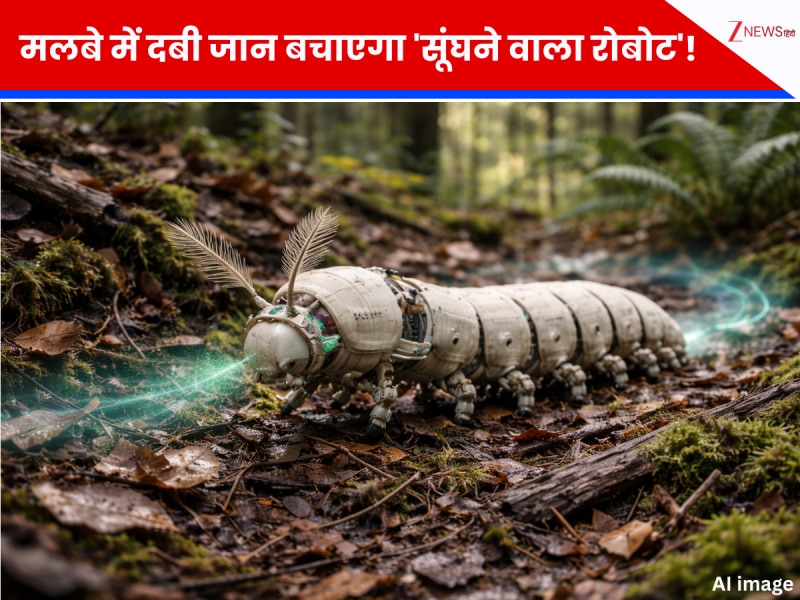
The Odour-Tracking Robot: A Revolutionary Breakthrough in Disaster Management
Innovative Technology to Save Lives
In the aftermath of a natural disaster, the most critical challenge facing rescue teams is locating and extracting survivors trapped beneath the rubble. The search and rescue process is often slow, laborious, and fraught with risks. However, a team of Japanese scientists has developed a revolutionary new robot that harnesses the incredible sense of smell of silkworms to identify the scent of trapped people and pinpoint their location. This groundbreaking technology has the potential to revolutionize disaster management and save countless lives.
The Odour-Tracking Robot: How it Works
The Odour-Tracking Robot, developed by a team of researchers at the University of Tokyo, is designed to navigate through rubble and debris to locate survivors. The robot's unique feature is its ability to detect the scent of human sweat, which is released by survivors trapped beneath the rubble. The robot's sensory system is based on the incredible sense of smell of silkworms, which are capable of detecting minute concentrations of pheromones.
The robot's nose is equipped with a specialized sensor that can detect the chemical compounds emitted by human sweat. This sensor is connected to a sophisticated algorithm that can identify the scent of human sweat and pinpoint its source. The robot can then use this information to map the location of survivors, allowing rescue teams to target their efforts more efficiently.
Advantages Over Conventional Methods
The Odour-Tracking Robot offers several advantages over conventional methods used in disaster response. Conventional methods rely on acoustic sensors, thermal imaging, and physical searches, which can be time-consuming and often result in false positives. In contrast, the Odour-Tracking Robot can quickly and accurately detect the scent of human sweat, reducing the risk of false positives and allowing rescue teams to focus their efforts on the most promising locations.
Pilot Studies and Future Applications
The Odour-Tracking Robot has undergone successful pilot studies in simulated disaster scenarios, demonstrating its ability to detect the scent of human sweat and pinpoint the location of survivors. The robot has also been tested in real-world disaster scenarios, including the aftermath of a recent earthquake in Japan. The results have been promising, with the robot successfully detecting the scent of survivors and guiding rescue teams to their location.
The potential applications of the Odour-Tracking Robot are vast. The technology could be used in a variety of disaster scenarios, including earthquakes, hurricanes, and floods. It could also be used in search and rescue operations in collapsed buildings, mines, and other confined spaces.
Conclusion
The Odour-Tracking Robot is a revolutionary new technology that has the potential to save countless lives in the aftermath of a disaster. By harnessing the incredible sense of smell of silkworms, the robot can quickly and accurately detect the scent of human sweat and pinpoint the location of survivors. As the world continues to grapple with the challenges of disaster management, the Odour-Tracking Robot offers a new and innovative solution to this critical problem. With further development and refinement, this technology could become a vital tool in the search and rescue process, saving lives and reducing the impact of disasters.
Key Takeaways
* The Odour-Tracking Robot uses the incredible sense of smell of silkworms to detect the scent of human sweat and pinpoint the location of survivors.
* The robot's sensory system is based on a specialized sensor that can detect the chemical compounds emitted by human sweat.
* The Odour-Tracking Robot offers several advantages over conventional methods used in disaster response, including reduced risk of false positives and increased accuracy.
* The technology has been successfully tested in simulated and real-world disaster scenarios, demonstrating its potential to save lives.
* The potential applications of the Odour-Tracking Robot are vast, including search and rescue operations in a variety of disaster scenarios.