Politics
धरना-प्रदर्शनों का नया कारोबार: लोकतंत्र की आड़ में आखिर किसके हित साधे जा रहे हैं?
October 10, 2026
1,612 views
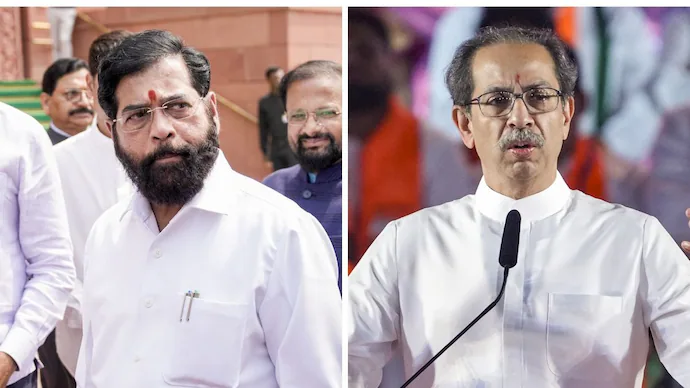
In a significant ruling, the Supreme Court of India has declared that the Shiv Sena party, traditionally known for its democratic framework, has transitioned towards a concentration of power within a single leader. This assertion was made during deliberations regarding the legitimacy of the faction headed by Uddhav Thackeray, which is currently embroiled in a contentious power struggle with the rival faction led by Eknath Shinde. The Court's observations have far-reaching implications not only for the internal dynamics of the Shiv Sena but also for the broader political landscape in Maharashtra.
The conflict within the Shiv Sena arose following the 2019 Maharashtra Assembly elections, which saw a split within the party. The faction led by Eknath Shinde broke away, aligning with the Bharatiya Janata Party (BJP), leading to a government formation that sidelined Uddhav Thackeray's group. This schism has resulted in ongoing legal battles over the party's legitimacy and the control of its symbols and assets. The Supreme Court's ruling highlights the fundamental issues at play regarding leadership, party structure, and democratic representation.
During the proceedings, the Supreme Court emphasized that the Shiv Sena's current operational model, which appears to prioritize the authority of a single leader, strays from its foundational democratic ethos. The Court noted that such a shift could undermine the principles of representation and accountability that are crucial in a democratic setup. The judges observed that the party's original constitution advocated for a more collective decision-making process, which has been overshadowed by the dominance of individual leadership.
This ruling opens up critical discussions regarding the future of the Shiv Sena. The party has been a significant player in Maharashtra's political arena, and its internal strife could affect its electoral prospects. The Supreme Court's emphasis on democratic principles may push party members to reconsider their allegiance and the structure of power within the organization. If the faction led by Uddhav Thackeray can effectively regain control and reestablish democratic norms, it may strengthen its position ahead of upcoming elections.
The Supreme Court's decision has sparked varied reactions across the political spectrum. Supporters of Uddhav Thackeray view this ruling as a validation of their claim to the party's legacy and principles. They argue that the Court's findings reinforce the need for a return to democratic practices within the party. Conversely, Eknath Shinde's faction may interpret this ruling as an opportunity to consolidate their position and challenge the legitimacy of Thackeray's claim to party leadership.
This ruling is not only pivotal for the Shiv Sena but could also set a precedent for other political parties grappling with similar issues of leadership and democratic representation. In a country where political dynasties often dominate, the Supreme Court's emphasis on maintaining democratic structures within parties could encourage reforms across the political landscape. This could lead to a more equitable distribution of power and a renewed focus on accountability in party politics.
The Supreme Court's declaration concerning the Shiv Sena's shift from a democratic structure to a single-leader model has far-reaching implications. As the party navigates this internal conflict, it must grapple with the need to restore its democratic values while addressing the challenges posed by factionalism. The outcome of this power struggle will not only determine the fate of the Shiv Sena but could also influence the political dynamics in Maharashtra and beyond.


Loading more news...
You've reached the end of our news feed. Check back later for more updates!