Politics
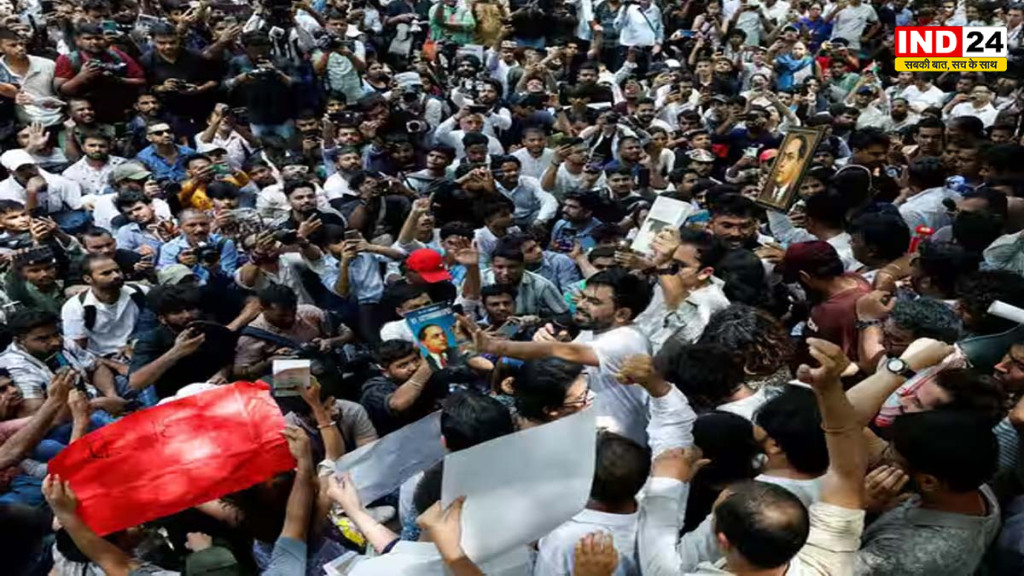
धरना-प्रदर्शनों का नया कारोबार: लोकतंत्र की आड़ में आखिर किसके हित साधे जा रहे हैं?
October 10, 2026
1,612 views

In a significant ruling, the Supreme Court of India has clarified its earlier order regarding the use of land adjacent to a Dargah for Friday prayers. The bench emphasized that the Muslim community should be permitted to offer namaz on Fridays from 1-3 pm at the site designated as Khasra No 596, which is identified as Dargah land. This decision has been met with mixed reactions, reflecting the complex social and religious dynamics in the region.
The issue of land use for religious purposes in Dhar has been a point of contention for many years. The Bhojshala, a historical site that draws both Hindu and Muslim pilgrims, has been at the center of a long-standing dispute. The Supreme Court's ruling comes after various appeals and public outcry from the Muslim community, who have sought recognition of their right to perform prayers in a space that is traditionally linked to their faith.
The Supreme Court's clarification is crucial as it not only allows for the Friday prayers but also highlights the importance of maintaining communal harmony. The court noted that the land in question has a separate access road, making it a suitable location for the prayers without disrupting the Dargah's activities. This decision underscores the court's intent to facilitate a peaceful coexistence between different religious communities in the area.
The ruling has garnered varying reactions from the local communities. Many in the Muslim community have expressed relief and gratitude for the Supreme Court's decision, viewing it as a step towards justice and recognition of their religious rights. “This is a historic moment for us,” said a local community leader, emphasizing the significance of having a designated space for prayers.
Conversely, some members of the Hindu community have voiced concerns about the ruling. They argue that the Bhojshala is primarily a Hindu site and fear that allowing prayers on adjacent land may lead to further disputes. Local leaders have called for dialogue and understanding to address these concerns while maintaining peace.
This ruling highlights the ongoing debate surrounding religious freedom in India. The Supreme Court's decision is a reminder of the country's constitutional commitment to uphold the rights of all religious communities. It emphasizes that while historical contexts may complicate land use issues, the principles of justice and equality must prevail.
Legal experts have pointed out that the court's clarification could set a precedent for similar cases across the country, where religious practices often clash with existing land use regulations. “This ruling may pave the way for more inclusive policies that respect the rights of all religious groups,” said a legal scholar.
As the Muslim community prepares to observe Friday prayers at the newly designated site, the focus will remain on fostering an atmosphere of mutual respect and understanding among the diverse groups in Dhar. The Supreme Court's ruling is not just about land; it's a testament to the enduring spirit of coexistence and the fundamental right to practice one's faith freely. It serves as a reminder that in a pluralistic society like India, dialogue and compromise are essential in resolving conflicts and building a harmonious community.


Loading more news...
You've reached the end of our news feed. Check back later for more updates!