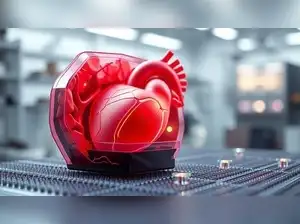
A Microscopic Marvel: Canadian Scientists Engineer a Living 3D \'Heart-on-a-Chip\' to Revolutionize Cardiovascular Disease Research and Treatment
Title: A Living Blueprint of the Human Heart: Canadian Scientists Unveil Revolutionary 3D \'Heart-on-a-Chip\' for Unlocking the Secrets of Cardiovascular Disease and Paving the Way for Precision Medicine
Description: In a monumental leap forward for cardiovascular research, a team of pioneering Canadian scientists has successfully engineered a sophisticated, living 3D \'heart-on-a-chip.\' This groundbreaking technology, meticulously crafted from lab-grown beating heart tissue, promises to transform our understanding of drug responses and accelerate the development of personalized, precision health strategies for combating deadly heart disease.
Introduction: The Unseen Enemy Within – The Pervasive Threat of Heart Disease
Cardiovascular diseases (CVDs) represent a silent, yet relentless, global pandemic. They are the leading cause of death worldwide, claiming millions of lives annually and imposing an immense burden on healthcare systems and economies. From the insidious progression of atherosclerosis to the sudden, catastrophic event of a heart attack, the intricate and vital organ we call the heart is vulnerable to a complex array of debilitating conditions. For decades, medical science has striven to unravel the intricate mechanisms underpinning these diseases, to develop effective therapeutic interventions, and ultimately, to prevent the suffering and loss they inflict. Yet, despite significant advancements, the path to truly effective and personalized treatments remains fraught with challenges.
The very nature of the human heart, a dynamic, multi-cellular, and intricately interconnected organ, presents a formidable obstacle to comprehensive study. Traditional research methods, while invaluable, often fall short of replicating the full physiological complexity of the living heart. Animal models, while providing insights, can differ significantly from human physiology, leading to unpredictable translational outcomes. Studying human heart tissue directly is ethically challenging and technically demanding. Furthermore, the vast heterogeneity of heart disease, with its diverse causes, mechanisms, and individual patient responses, necessitates a more nuanced and individualized approach to treatment – the very essence of precision medicine.
It is within this landscape of persistent challenge and urgent need that the groundbreaking work of Canadian scientists emerges as a beacon of hope. Their creation of a living, 3D \'heart-on-a-chip\' represents a paradigm shift, offering a tangible and dynamic model that brings us closer than ever to understanding, treating, and ultimately conquering the devastating impact of heart disease. This article will delve deep into the intricacies of this revolutionary technology, exploring its scientific underpinnings, its potential applications, and the profound implications it holds for the future of cardiovascular health.
The Genesis of a Miniature Heart: From Cells to a Functional System
The concept of \'organ-on-a-chip\' technology, first pioneered in the early 2000s, has rapidly evolved from a theoretical aspiration to a tangible reality. These microfluidic devices aim to recreate the function of human organs in vitro, offering a more accurate and ethical alternative to traditional research models. The Canadian team, building upon this foundation, has achieved a remarkable feat by successfully engineering a *living, 3D heart-on-a-chip*. This is not merely a static representation of cardiac tissue; it is a dynamic, beating construct capable of mimicking key physiological processes of the human heart.
The journey begins with cellular sourcing and differentiation. The core of this \'heart-on-a-chip\' is derived from human induced pluripotent stem cells (iPSCs). These remarkable cells, reprogrammed from readily available adult cells (such as skin or blood cells), possess the extraordinary ability to differentiate into any cell type in the body. For cardiac research, iPSCs are coaxed into becoming cardiomyocytes – the specialized muscle cells responsible for the heart\'s rhythmic contractions. This process requires precise biochemical cues and growth factors, meticulously controlled by the researchers to ensure the generation of healthy, functional cardiac cells.
Once a sufficient population of cardiomyocytes is generated, the next critical step is three-dimensional self-assembly. Unlike simpler 2D cell cultures, which represent cells growing in a flat layer, the Canadian team has engineered their system to promote the formation of a three-dimensional cellular architecture. This is crucial because the heart\'s function relies heavily on the spatial organization and electrical coupling of its cells in three dimensions. The researchers employ specialized biomaterials and microfabrication techniques to guide the cardiomyocytes into forming intricate, interconnected networks that mimic the structure of native cardiac tissue. This often involves creating scaffolds or matrices that provide physical support and directional cues for cellular growth and alignment. The goal is to create a tissue construct that recapitulates the layered structure and anisotropic properties (direction-dependent properties) characteristic of real heart muscle.
The microfluidic architecture of the chip itself plays a pivotal role in maintaining the viability and functionality of the engineered cardiac tissue. These chips, typically made from biocompatible polymers like polydimethylsiloxane (PDMS), contain an intricate network of microchannels. These channels are designed to deliver essential nutrients and oxygen to the cells, mimicking the role of blood vessels in supplying the heart. They also allow for the removal of waste products, preventing cellular toxicity and maintaining a homeostatic environment. Furthermore, the flow of fluids through these channels can be precisely controlled, enabling researchers to simulate physiological conditions, such as blood flow dynamics, pressure gradients, and mechanical stresses that the heart naturally experiences.
The most captivating aspect of this \'heart-on-a-chip\' is its ability to exhibit spontaneous and synchronized beating. Through careful optimization of cell density, composition, and electrical stimulation, the engineered cardiac tissue begins to contract rhythmically, much like a real heart. This beating is not random; it is a testament to the successful electrical coupling between the cardiomyocytes, allowing signals to propagate throughout the tissue and coordinate contractions. The frequency and force of these contractions can be monitored and manipulated, providing invaluable real-time data on the tissue\'s response to various stimuli.
Unlocking the Secrets of Drug Efficacy and Toxicity: A New Frontier in Pharmacology
The implications of a living, beating 3D heart model for drug discovery and development are nothing short of revolutionary. Traditional drug testing, which often relies on animal models or simple 2D cell cultures, faces significant limitations in predicting human response. Animal models, as previously mentioned, can exhibit species-specific differences in drug metabolism and receptor expression, leading to misleading results. 2D cell cultures, while useful for initial screening, fail to capture the complex 3D architecture and cellular interactions that are critical for drug efficacy and toxicity in real cardiac tissue.
The 3D \'heart-on-a-chip\' offers a powerful solution to these challenges. It provides a platform for high-throughput drug screening with unprecedented accuracy and relevance. Pharmaceutical companies can now test candidate drugs on this human-relevant cardiac model at an early stage of development. This allows for the identification of promising therapeutics that are more likely to be effective in humans, while simultaneously flagging potential toxicities that might have been missed by previous methods.
Specifically, the \'heart-on-a-chip\' enables researchers to:
* Assess Drug Efficacy: By exposing the engineered cardiac tissue to different drug concentrations, scientists can measure parameters like contractility, beating rate, and electrophysiological properties to determine how well a drug strengthens the heart, regulates its rhythm, or improves its pumping function. This allows for the identification of optimal drug dosages and therapeutic targets.
* Predict Cardiotoxicity: A significant challenge in drug development is identifying compounds that can cause unintended harm to the heart. The \'heart-on-a-chip\' provides a direct way to assess the cardiotoxic potential of new drugs. Researchers can observe for signs of cellular damage, impaired contractility, or abnormal electrical activity that indicate potential heart problems. This early detection can prevent the progression of potentially harmful drugs through the development pipeline, saving time, resources, and, most importantly, preventing future patient harm.
* Study Drug Metabolism and Pharmacokinetics: While the \'heart-on-a-chip\' primarily focuses on cardiac tissue, its microfluidic design can be expanded to incorporate other cell types, such as liver cells, to better model drug metabolism. This allows for a more comprehensive understanding of how a drug is processed by the body and how its active metabolites reach the heart, providing insights into both efficacy and toxicity.
* Investigate Mechanism of Action: The ability to observe real-time cellular and tissue-level responses to drugs provides invaluable information about their underlying mechanisms of action. Scientists can visualize how a drug interacts with specific cellular components, alters signaling pathways, or influences electrical propagation, leading to a deeper understanding of how these medications work at a fundamental level.
* Develop Personalized Therapies (Precision Medicine): This is where the \'heart-on-a-chip\' truly shines in its potential to revolutionize treatment. By utilizing iPSCs derived from individual patients, researchers can create personalized \'heart-on-a-chip\' models. This means that a drug that is effective and safe for one patient might be tested on their specific cardiac model to predict its efficacy and identify potential side effects *before* it is administered. This personalized approach can dramatically improve treatment outcomes, minimize adverse drug reactions, and usher in a new era of precision medicine for heart disease.
Beyond Drug Discovery: Unraveling the Complexities of Heart Disease
The applications of this 3D \'heart-on-a-chip\' extend far beyond drug discovery. It serves as a powerful research tool for unraveling the intricate pathogenesis of various heart diseases.
* Modeling Specific Heart Conditions: Scientists can engineer specific disease states within the \'heart-on-a-chip\' by introducing genetic mutations associated with hereditary heart conditions (like hypertrophic cardiomyopathy or long QT syndrome) or by mimicking the environmental factors that contribute to acquired heart diseases (such as ischemia-reperfusion injury following a heart attack). This allows for the study of disease progression at a cellular and tissue level, offering insights into the molecular and cellular mechanisms that drive these conditions.
* Studying Cardiac Fibrosis: Fibrosis, the excessive accumulation of scar tissue in the heart, is a common consequence of chronic heart disease and can lead to impaired function. The \'heart-on-a-chip\' can be used to study the development and progression of fibrosis, and to test potential therapeutic agents that target this process.
* Investigating Arrhythmias: The precise monitoring of electrical activity in the beating \'heart-on-a-chip\' makes it an ideal model for studying the underlying causes of cardiac arrhythmias – irregular heartbeats. Researchers can investigate how genetic defects or environmental insults disrupt normal electrical conduction and trigger arrhythmias, and explore novel anti-arrhythmic strategies.
* Understanding Age-Related Cardiac Changes: As we age, the heart undergoes physiological changes that can increase the risk of cardiovascular disease. The \'heart-on-a-chip\' can be used to study these age-related alterations at a cellular and tissue level, potentially leading to interventions that promote healthier cardiac aging.
* Regenerative Medicine and Cardiac Repair: The potential for the \'heart-on-a-chip\' to contribute to regenerative medicine is immense. Researchers can explore the use of stem cells and biomaterials to repair damaged cardiac tissue. By studying how engineered cardiac patches integrate with existing tissue and restore function in the \'heart-on-a-chip\' model, scientists can pave the way for future cell-based therapies for heart regeneration.
The Canadian Scientific Prowess: A Testament to Innovation and Collaboration
The development of this sophisticated \'heart-on-a-chip\' is a testament to the ingenuity and collaborative spirit of Canadian scientists. While the article focuses on the general breakthrough, it\'s important to acknowledge the multidisciplinary nature of such an undertaking. This likely involves the expertise of:
* Biomedical Engineers: Responsible for the design and fabrication of the microfluidic devices, ensuring biocompatibility and optimal fluid dynamics.
* Stem Cell Biologists: Specialists in iPSC reprogramming, differentiation protocols, and maintaining the pluripotency and differentiation potential of these crucial cells.
* Cardiologists and Cardiac Physiologists: Providing the crucial biological understanding of heart function, disease mechanisms, and the physiological parameters that need to be replicated.
* Pharmacologists: Guiding the drug screening and toxicity assessment aspects, ensuring the biological relevance and interpretability of the results.
* Material Scientists: Contributing to the development of advanced biomaterials for scaffolds and coatings that promote cell growth, alignment, and functionality.
This project exemplifies Canada\'s commitment to fostering cutting-edge research in the life sciences and its dedication to addressing global health challenges. The translation of such fundamental research into tangible clinical applications is a long and complex process, but breakthroughs like this lay the essential groundwork for future medical advancements.
Challenges and Future Directions: Pushing the Boundaries of a Miniature Heart
Despite the extraordinary progress, the journey of the \'heart-on-a-chip\' is not without its challenges and ongoing areas of development.
* Increasing Complexity and Functionality: While the current \'heart-on-a-chip\' replicates beating cardiac tissue, further enhancing its complexity to include other essential cardiac cell types, such as endothelial cells (lining blood vessels), fibroblasts (providing structural support), and immune cells, will provide a more comprehensive model for studying disease interactions and drug responses.
* Integration with Other Organ Systems: For a truly holistic understanding of drug effects and disease progression, the \'heart-on-a-chip\' needs to be integrated with other \'organ-on-a-chip\' models (e.g., liver, kidney, lung) to create a \"multi-organ system-on-a-chip.\" This would allow researchers to study systemic drug responses and the interconnectedness of organ failures in complex diseases.
* Long-Term Viability and Stability: Ensuring the long-term viability and stable function of the engineered cardiac tissue is crucial for extended drug testing and disease modeling. Further research is needed to optimize nutrient delivery, waste removal, and to mitigate cellular senescence (aging) within the chip.
* Standardization and Reproducibility: For widespread adoption and reliable translation of findings, there is a need for standardization of protocols, materials, and experimental procedures across different research institutions. Ensuring the reproducibility of results is paramount for scientific validation.
* Clinical Translation and Regulatory Approval: Bridging the gap between laboratory research and clinical application requires rigorous validation and regulatory approval. Collaborations between academic researchers, pharmaceutical companies, and regulatory bodies will be essential to bring \'heart-on-a-chip\' technologies into mainstream clinical practice.
Conclusion: A Beating Hope for a Healthier Future
The creation of a living, 3D \'heart-on-a-chip\' by Canadian scientists represents a pivotal moment in the fight against cardiovascular disease. This sophisticated technology moves beyond the limitations of traditional research models, offering a dynamic, human-relevant platform for understanding the intricate mechanisms of heart disease, accelerating drug discovery, and paving the way for personalized, precision medicine.
As this technology continues to evolve, it promises to unlock new therapeutic avenues, reduce the incidence of adverse drug reactions, and ultimately, offer hope to millions suffering from the burden of heart disease. The microscopic marvel engineered in Canadian laboratories is not just a scientific achievement; it is a testament to human innovation and a powerful harbinger of a healthier future for us all. The relentless beating of this miniature heart is a rhythm of progress, signaling a new era in our ability to understand, treat, and conquer the deadliest of diseases. The future of cardiovascular research is, quite literally, on a chip, and it is beating with the promise of a healthier tomorrow.