
Science
Henri Kagan wins Nobel Prize at 95: Check out his contributions to chemistry and pharmacy
October 9, 2026
2,834 views
Saturn’s Ocean Moon Keeps ‘Leaking’ Into Space: Scientists Just Discovered It Is Losing Far Less Than Expected
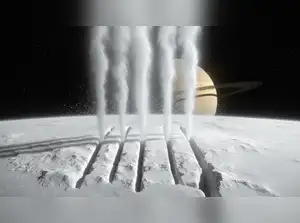
Recent advancements in supercomputer simulations have unveiled groundbreaking insights regarding Enceladus, one of Saturn's most intriguing moons. These simulations indicate that Enceladus is losing significantly less material through its plumes than scientists previously estimated—by a margin of 20-40%. This revelation has profound implications for our understanding of the moon's subsurface ocean and its potential to host life.
For years, researchers believed that the plumes of Enceladus were a major source of material loss from its subsurface ocean. The new simulations suggest that this loss is far less dramatic than previously thought. Instead of the significant outflow once estimated, the moon's plumes are now believed to be more stable, leading to a reassessment of the dynamics of its icy surface. This stability is crucial as it suggests that the conditions under which the subsurface ocean exists are more favorable for sustaining life.
The implications of these findings extend beyond mere numbers; they touch upon one of the most profound questions of our time: does life exist beyond Earth? The revised understanding of Enceladus's subsurface ocean, combined with laboratory experiments and data collected from past spacecraft missions, suggests that the moon possesses the necessary conditions to potentially support microbial life. The presence of a stable ocean beneath its icy crust, coupled with the chemical ingredients necessary for life, makes Enceladus a prime candidate for astrobiological studies.
To further substantiate these findings, researchers have conducted a series of laboratory experiments that mimic the conditions expected in Enceladus's ocean. These experiments reveal that the ocean's chemical composition could support various forms of microbial life. Furthermore, data from spacecraft such as NASA's Cassini orbiter, which studied Enceladus during its mission, provides critical evidence of the moon's geysers and the composition of materials they eject into space.
As scientists continue to analyze the new data, the future of exploration on Enceladus looks promising. NASA's upcoming missions, including the proposed Europa Clipper mission, aim to gather more information about icy moons in our solar system, with a particular focus on their potential habitability. The renewed interest in Enceladus and its subsurface ocean could pave the way for future missions aimed specifically at its exploration, allowing researchers to delve deeper into the mysteries of this enigmatic moon.
The new supercomputer simulations and their implications for Enceladus mark a significant milestone in our quest to understand the potential for life beyond Earth. With the moon's plumes losing less material than previously thought, scientists are optimistic that Enceladus's subsurface ocean remains a stable environment capable of supporting microbial life. As researchers continue to explore this icy world, we may be one step closer to answering the age-old question: Are we alone in the universe?


Loading more news...
You've reached the end of our news feed. Check back later for more updates!