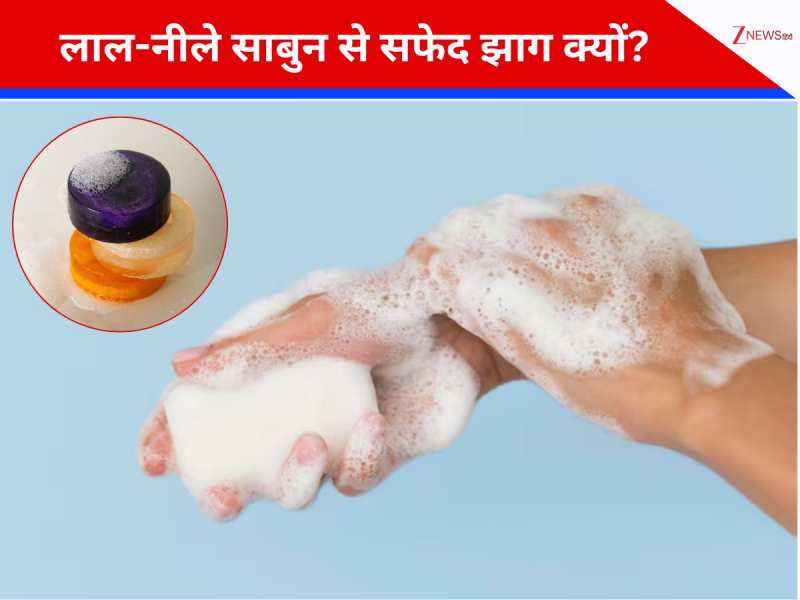
Why is Soap Foam White: Unveiling the Science Behind the Enigma
As we go about our daily lives, there are many things that we take for granted, and the soap foam that we see when we wash our hands is one such example. The soap foam, regardless of the color of the soap, always appears white. This may seem like a mere coincidence, but there is more to it than meets the eye. In this article, we will delve into the fascinating science behind the white foam and explore the reasons why it is always white.
The Chemistry of Soap Foaming
Soap is a mixture of fatty acids and sodium hydroxide (NaOH) or potassium hydroxide (KOH). When we mix soap with water, the fatty acids and NaOH or KOH react to form a complex mixture of molecules. This mixture is responsible for the creation of the foam.
The foam is created when the soap molecules are subjected to mechanical stress, such as agitation or rubbing. This stress causes the soap molecules to break down into smaller particles, releasing the soap's surface-active agents. These agents, also known as surfactants, are responsible for reducing the surface tension of water, allowing the foam to form.
The Role of Surfactants in Foam Formation
Surfactants are molecules that have both hydrophobic (water-repelling) and hydrophilic (water-attracting) ends. When surfactants are present in a solution, they are able to reduce the surface tension of water, making it easier for the foam to form.
In the case of soap, the surfactants are responsible for creating the foam by reducing the surface tension of the water and allowing the soap molecules to break down into smaller particles. The hydrophobic ends of the surfactants are attracted to the soap molecules, causing them to cluster together and form a film on the surface of the water.
Why is the Foam Always White?
So, why is the foam always white, regardless of the color of the soap? The answer lies in the way that the surfactants interact with the soap molecules.
When we mix soap with water, the surfactants are able to reduce the surface tension of the water, allowing the foam to form. However, the surfactants are not able to completely eliminate the surface tension of the water, which means that the foam is not pure white.
The reason why the foam appears white is due to the way that the light interacts with the foam. When light hits the foam, it is scattered in all directions, creating a white appearance. This is known as Mie scattering, and it is the same effect that causes the sky to appear blue.
Conclusion
In conclusion, the white foam that we see when we wash our hands is not just a coincidence, but rather a result of the complex chemistry and physics involved in the formation of soap foam. The surfactants in the soap are responsible for reducing the surface tension of the water, allowing the foam to form, and the way that the light interacts with the foam is responsible for the white appearance.
As we go about our daily lives, it is easy to take things for granted, but by understanding the science behind the soap foam, we can gain a new appreciation for the complex and fascinating world around us.
Nishkarsh:
In conclusion, the white foam that we see when we wash our hands is not just a coincidence, but rather a result of the complex chemistry and physics involved in the formation of soap foam. Understanding the science behind the soap foam can help us appreciate the world around us and gain a new perspective on the everyday things that we often take for granted.
Search Engine Optimization (SEO) Keywords:
* Soap foam
* Surfactants
* Surface tension
* Mie scattering
* Soap chemistry
* Foam formation
* Science behind soap foam