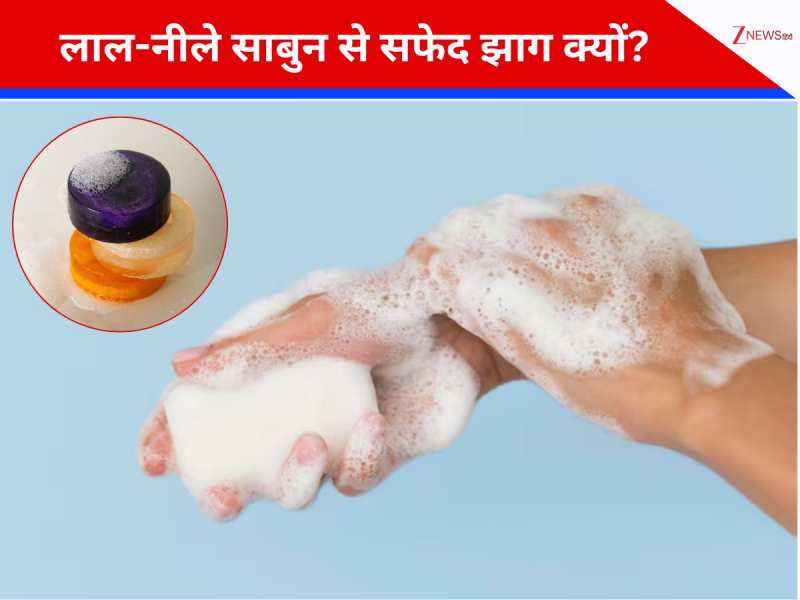
Why is Soap Foam White? Unveiling the Fascinating Science Behind
As we go about our daily lives, we often take for granted the seemingly mundane things around us. The soap foam, for instance, is something we use regularly, yet rarely give it a second thought. Or do we? The color of soap foam is a fascinating phenomenon that has puzzled many, but few have stopped to wonder why it's always white, regardless of the color of the soap itself. In this article, we'll delve into the science behind this intriguing observation and uncover the secrets that lie beneath the surface.
The Science of Soap Foam
Soap foam is created when soap is agitated with water, causing it to release tiny bubbles of air. These bubbles are made up of a thin film of soap molecules, water, and air. The soap molecules are amphipathic, meaning they have both hydrophobic (water-repelling) and hydrophilic (water-attracting) properties. This unique property allows soap molecules to bind to both water and air, creating the perfect conditions for foam formation.
The Color of Soap Foam
So, why does soap foam always appear white? The answer lies in the way light interacts with the soap molecules. When light hits the soap foam, it encounters the tiny bubbles of air and the soap molecules. The soap molecules scatter the light in all directions, giving the appearance of whiteness. This phenomenon is known as Tyndall scattering, named after the British physicist John Tyndall, who first described it in the 19th century.
The Role of pH
Another crucial factor that affects the color of soap foam is pH level. Soap is typically alkaline, with a pH level between 9 and 10. When soap is mixed with water, the pH level of the mixture can affect the color of the foam. In alkaline conditions, the soap molecules are more likely to form a stable film around the air bubbles, resulting in a whiter appearance. Conversely, acidic conditions can disrupt this film, leading to a less white or even colored foam.
The Exceptions
While the majority of soap foams appear white, there are some exceptions. Certain types of soap, such as those containing natural ingredients like oatmeal or charcoal, can produce colored foams. Additionally, some soaps may be designed to produce colored foams, such as those used in decorative or artistic applications.
Conclusion
In conclusion, the color of soap foam is not just a coincidence, but rather the result of a fascinating interplay between science, chemistry, and physics. The unique properties of soap molecules, the scattering of light, and the pH level of the mixture all contribute to the characteristic whiteness of soap foam. Whether you're a scientist, a soap enthusiast, or simply someone who appreciates the beauty of the everyday, the science behind soap foam is a captivating topic that is sure to leave you with a newfound appreciation for the mundane.