
Politics
Bihar: Over 50 held in protest against Mata Sita women’s university
October 10, 2026
1,707 views
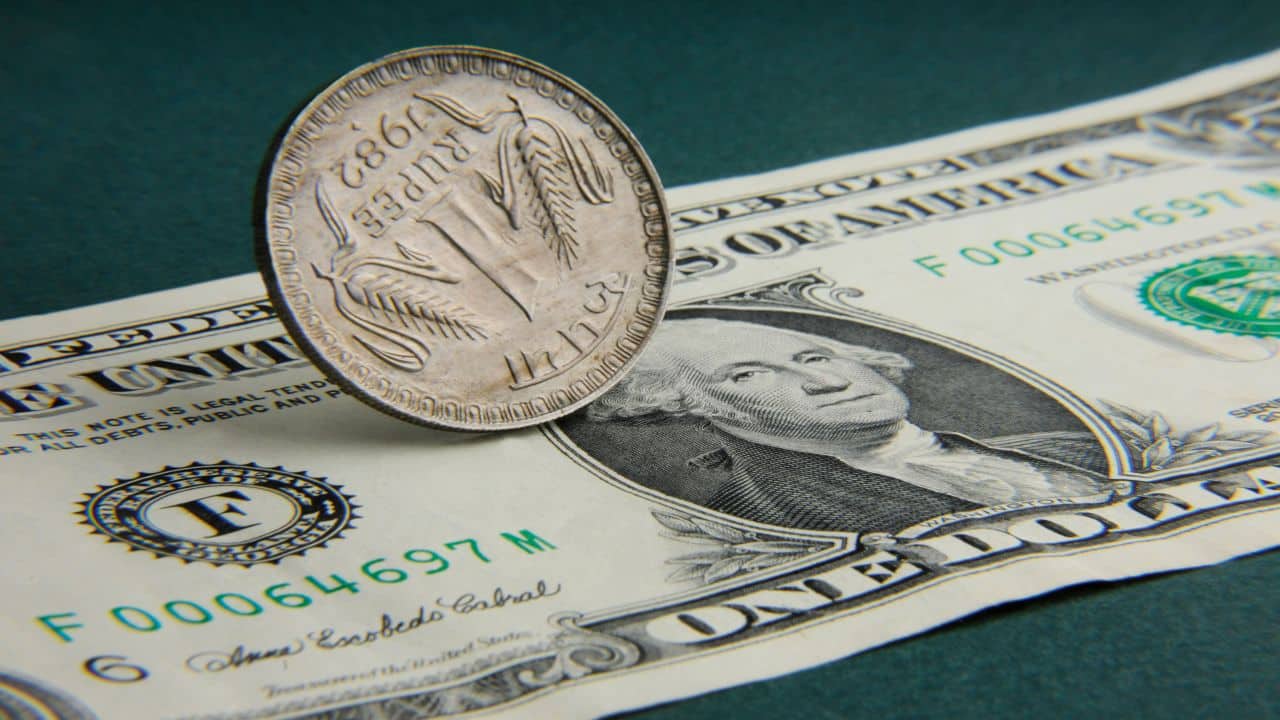
In an unsettling turn of events for the Indian economy, the Indian Rupee has commenced trading at 96.37 against the US Dollar, marking a decline of 2 paise. This dip positions the Rupee precariously close to its all-time low, stirring concerns among economists and investors alike. The currency's performance is being closely monitored as it reflects broader economic trends and challenges faced by the nation. With the Rupee hovering near historic lows, stakeholders are left to ponder the implications this may have on trade, inflation, and foreign investments.
The depreciation of the Rupee against the Dollar can be attributed to several interlinked factors. Firstly, the persistent rise in global crude oil prices has put immense pressure on India's trade balance, as the country is a significant importer of oil. Higher oil prices increase the import bill, leading to a greater outflow of dollars and consequently weakening the Rupee.
In addition, the recent tightening of monetary policy by the US Federal Reserve has led to a stronger Dollar. As the Fed raises interest rates, it attracts foreign investments into US assets, creating a capital outflow from emerging markets like India. This shift in investment patterns adds further downward pressure on the Rupee.
Moreover, domestic economic indicators also play a crucial role. The ongoing challenges related to inflation, which has been considerably high due to rising commodity prices, continue to erode purchasing power and investor confidence. Such economic conditions contribute to a lack of foreign direct investment, which is essential for stabilizing the currency.
The implications of a weak Rupee are manifold, affecting various sectors of the economy. One of the most immediate effects is on inflation. As the Rupee weakens, the cost of imports rises, leading to increased prices for goods and services. This can create a vicious cycle where higher inflation leads to reduced consumer spending, further slowing economic growth.
Additionally, a depreciating currency can significantly impact the corporate sector, especially businesses that rely on imported raw materials. Increased costs can erode profit margins and potentially lead to higher prices for consumers. In contrast, exporters may benefit from a weaker Rupee as their products become more competitively priced in international markets. However, the net effect on the economy remains uncertain, as the challenges faced by import-dependent sectors may outweigh the benefits realized by exporters.
In light of the Rupee's recent performance, both the Indian government and the Reserve Bank of India (RBI) are under mounting pressure to intervene. The RBI may consider implementing measures to stabilize the currency, such as adjusting interest rates or directly intervening in the foreign exchange market. Historically, the central bank has employed various strategies to curb excessive volatility in the currency markets, including selling dollars to support the Rupee.
Moreover, the government may need to address underlying structural issues within the economy that contribute to currency depreciation. This could involve initiatives aimed at boosting domestic production, reducing reliance on imports, and enhancing export competitiveness. Strengthening the economy's fundamentals will be crucial in restoring confidence among investors and stabilizing the Rupee.
The current state of the Rupee has created a sense of unease within financial markets. Investors are closely watching developments, and market sentiment appears to be cautious. Many analysts predict further volatility in the currency, particularly in light of ongoing geopolitical tensions and economic uncertainties globally. As the situation evolves, it will be imperative for investors to stay informed about both domestic and international economic indicators that may influence the Rupee's trajectory.
Looking forward, the outlook for the Rupee will largely depend on a combination of external factors, such as the performance of the Dollar and global oil prices, as well as internal economic policies. A concerted effort by policymakers to address inflation, stimulate growth, and attract foreign investment will be essential in navigating these turbulent waters. The resilience of the Indian economy will be tested in the coming months, with the currency's performance serving as a barometer for broader economic health.
The Indian Rupee's opening at 96.37 against the US Dollar, down by 2 paise, signifies a critical moment for the Indian economy. As it hovers near its all-time low, the challenges ahead are formidable. Policymakers must act decisively to stabilize the currency, while businesses and consumers brace for the potential impacts of a weaker Rupee. The journey towards economic stability and growth will require careful navigation of both domestic and global challenges.


Loading more news...
You've reached the end of our news feed. Check back later for more updates!