Politics
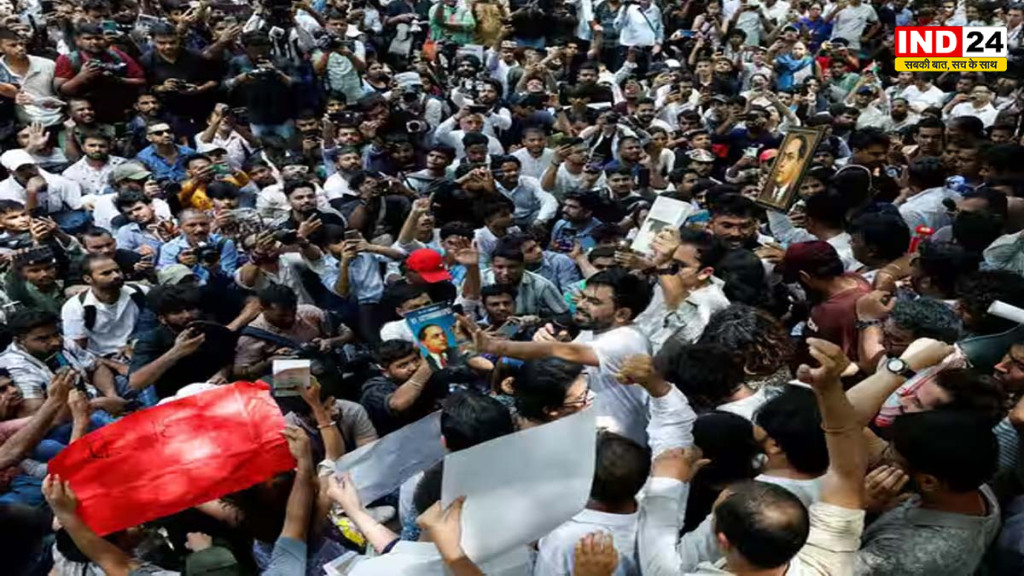
धरना-प्रदर्शनों का नया कारोबार: लोकतंत्र की आड़ में आखिर किसके हित साधे जा रहे हैं?
October 10, 2026
1,612 views

In a recent controversy surrounding India's national symbols, renowned actor Mukesh Khanna has ignited a debate by advocating for the replacement of the national anthem "Jana Gana Mana" with the patriotic song "Vande Mataram." His remarks have not only stirred public sentiment but also reignited discussions about the historical context of India's national anthems and their significance in modern India.
The controversy began when Khanna, a well-known figure in Indian cinema, expressed his views during a public event. He argued that "Jana Gana Mana," which was composed by Rabindranath Tagore, was written during the British colonial period and thus carries implications that may not align with the spirit of Indian independence. Khanna stated, "We should reconsider our national anthem and embrace 'Vande Mataram' as it reflects the true essence of our struggle for freedom and our love for the motherland."
The discussion surrounding the two anthems brings to light the rich tapestry of India's history. "Jana Gana Mana," which was officially adopted as the national anthem in 1950, is often praised for its inclusive nature, as it speaks to the diversity of India. However, critics like Khanna question its origins, suggesting that it was written in praise of the British crown, a statement that has been contested by historians and musicologists alike.
The public's reaction to Khanna's comments has been mixed. Supporters of "Vande Mataram" praise its historical significance and emotional resonance, emphasizing that it encapsulates the fervor of the freedom movement. On the other hand, advocates for "Jana Gana Mana" defend its stance as a modern anthem that represents unity and diversity, which are crucial values for contemporary India.
This controversy also raises essential questions about the role of national symbols in a diverse country like India. As a nation that prides itself on its pluralism, the challenge lies in finding common ground where all citizens feel represented. National anthems, flags, and symbols evoke a sense of pride and identity, making it crucial for them to resonate with the collective consciousness of the populace.
Mukesh Khanna's call to consider "Vande Mataram" as India's national anthem has opened up a Pandora's box of discussions about national identity, history, and representation. As India approaches another year of independence, it is crucial for citizens to engage in constructive dialogue about what their national symbols mean to them. Whether one supports "Vande Mataram" or "Jana Gana Mana," the primary goal should be to foster unity and pride in the rich tapestry of India's heritage.


Loading more news...
You've reached the end of our news feed. Check back later for more updates!