The Silent Symphony of Truth: Unpacking Galileo\'s Enduring Wisdom in the Age of Information Overload
The Echo of a Renaissance Genius: Why Galileo\'s \"All Truths are Easy to Understand Once Discovered\" Resonates Today
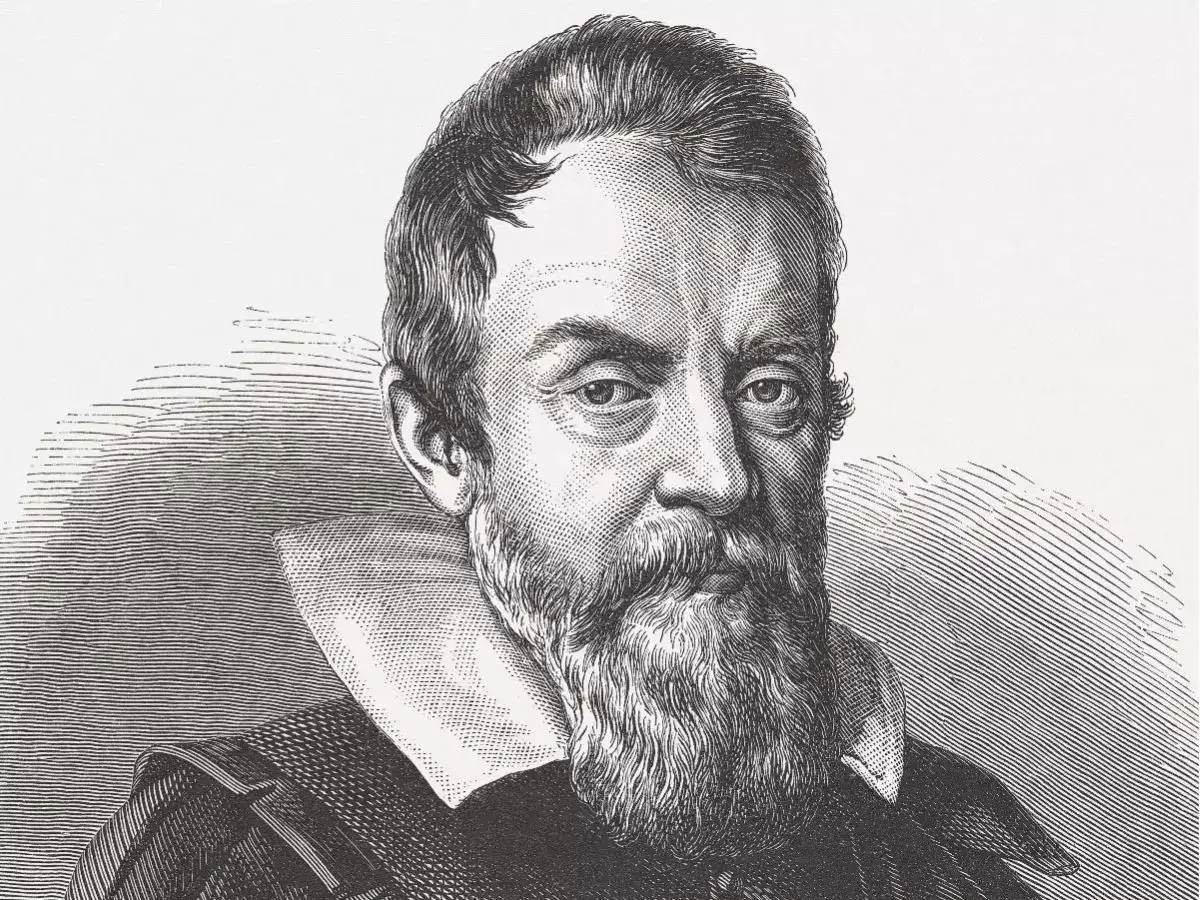
In an era saturated with information, where headlines scream for attention and \"truths\" are debated with a ferocity that often drowns out reason, the quiet wisdom of a 17th-century Italian scientist feels more potent than ever. Galileo Galilei, a name synonymous with the dawn of modern science, famously declared, \"All truths are easy to understand once they are discovered.\" This seemingly simple statement, born from a life dedicated to unraveling the universe\'s intricate mechanisms, holds a profound message for our contemporary world, a world grappling with complex challenges and the very definition of verifiable fact.
This article delves into the life and legacy of Galileo Galilei, not just as a historical figure, but as a beacon of intellectual courage and a testament to the power of observation and rational inquiry. We will explore the context of his revolutionary ideas, the seismic shifts he brought to our understanding of the cosmos, and the profound personal cost of his pursuit of truth. More importantly, we will examine why his timeless quote remains a crucial reminder in our current information landscape, offering a roadmap for navigating the complexities of knowledge, combating misinformation, and fostering a society that values genuine understanding over fleeting opinions.
The Celestial Crucible: Galileo\'s Life and the Birth of Observational Science
To truly grasp the weight of Galileo\'s declaration, we must first understand the world from which it emerged. Born in Pisa in 1564, during the twilight of the Renaissance and the burgeoning dawn of the Scientific Revolution, Galileo was a man caught between tradition and innovation. His early life was marked by a keen intellect and a restless curiosity. He initially studied medicine at the University of Pisa, a prestigious yet rigidly Aristotelian field, before his fascination with mathematics and physics took hold, steering him towards a path that would irrevocably alter the course of human knowledge.
A Mind in Motion: Early Discoveries and the Pendulum\'s Secret
Galileo’s early academic career was far from uneventful. Legend has it that while observing a lamp swinging in the Pisa Cathedral, he noticed that the time it took for the pendulum to complete each swing remained constant, regardless of the amplitude of its swing. This seemingly minor observation laid the groundwork for his understanding of isochronism, a principle that would later be crucial for the development of accurate timekeeping devices, particularly clocks, revolutionizing navigation and scientific measurement.
His academic pursuits were not confined to theoretical musings. Galileo was a brilliant inventor and engineer. He developed a hydrostatic balance, a device that could measure the specific gravity of objects, and made significant improvements to the military compass, showcasing his practical application of scientific principles. These early successes demonstrated his ability to bridge the gap between abstract scientific concepts and tangible, useful technologies.
The Aristotelian Orthodoxy: A Universe Under Scrutiny
However, Galileo\'s most profound impact stemmed from his challenge to the prevailing scientific worldview, which was largely dominated by the philosophy of Aristotle. For centuries, Aristotelian physics had painted a picture of the universe as a geocentric system, with Earth at its center and the celestial bodies revolving around it in perfect, immutable spheres. This view was not only scientifically entrenched but also deeply intertwined with theological doctrines, presenting a cosmic order that mirrored societal hierarchies and divine pronouncements.
Galileo\'s work, however, began to chip away at this seemingly unshakeable foundation. He meticulously studied the principles of motion, conducting experiments that contradicted Aristotelian notions of falling bodies. He famously (though perhaps apocryphally) dropped objects of different masses from the Leaning Tower of Pisa to demonstrate that they fell at the same rate, defying the Aristotelian belief that heavier objects fall faster. His work on projectile motion and acceleration laid the groundwork for Isaac Newton\'s later formulation of the laws of motion.
The Telescope\'s Revelation: A Universe Unveiled
The true turning point in Galileo\'s scientific journey, and arguably in human history, came with his embrace and improvement of the newly invented telescope. While he did not invent the instrument, Galileo was the first to systematically and extensively turn it towards the heavens, transforming it from a novelty into a scientific tool of unparalleled power.
Looking Up and Seeing Anew: A Symphony of Celestial Wonders
His telescopic observations, meticulously documented and shared through his writings, delivered a series of \"truths\" that were, as he later stated, \"easy to understand once they were discovered\" – though their discovery was anything but easy, and their acceptance was even harder.
* The Moon\'s Imperfect Surface: Contrary to the Aristotelian belief in perfect, unblemished celestial bodies, Galileo’s telescope revealed that the Moon was not a smooth, crystalline sphere but a rugged world with mountains, valleys, and craters, not unlike Earth. This observation demoted the Moon from its ethereal, divine status to a physical body subject to the same geological processes as our own planet.
* Jupiter\'s Wandering Moons: Perhaps his most revolutionary discovery was the existence of four moons orbiting Jupiter. This observation provided concrete evidence that not all celestial bodies orbited the Earth. The Jovian moons acted as miniature solar systems, mirroring the heliocentric model proposed by Nicolaus Copernicus, which placed the Sun at the center of the universe. This directly challenged the geocentric dogma and opened the door for a radical reinterpretation of cosmic architecture.
* The Phases of Venus: Galileo\'s observations of Venus revealed that it exhibited phases, much like the Moon. This phenomenon could only be explained if Venus orbited the Sun, further bolstering the Copernican heliocentric model and directly contradicting the Ptolemaic geocentric system that had been accepted for over a millennium.
* The Milky Way\'s Stardust: His telescope resolved the hazy band of the Milky Way into countless individual stars, revealing the vastness and complexity of the universe in a way never before imagined. It shattered the notion of a small, contained cosmos and hinted at an immensity that dwarfed human comprehension.
These observations were not merely academic curiosities. They were empirical proofs that directly contradicted the prevailing scientific and philosophical framework. Galileo’s commitment to direct observation, to gathering evidence before forming conclusions, was the cornerstone of his scientific method. He championed the idea that the Book of Nature was written in the language of mathematics and could be read through careful observation and experimentation.
The Clash of Titans: Science, Faith, and the Inquisition
Galileo’s revolutionary discoveries, while scientifically sound, posed a significant threat to the established religious and philosophical order of his time. The Catholic Church, which had integrated Aristotelian cosmology into its theological framework, viewed the heliocentric model as a direct challenge to scripture and the authority of the Church.
A Dangerous Truth: The Heliocentric Heresy
Nicolaus Copernicus’s heliocentric theory, published decades earlier, had been met with a degree of academic debate. However, Galileo’s compelling observational evidence, presented with unwavering conviction, forced a confrontation. His work, particularly his 1632 book *Dialogue Concerning the Two Chief World Systems*, became a lightning rod for controversy. In it, he presented arguments for both the geocentric and heliocentric models, but his sympathies were clearly with the latter, and his criticisms of the geocentric view were sharp and unambiguous.
The Church’s reaction was swift and severe. The Roman Inquisition, a powerful institution tasked with rooting out heresy, saw Galileo\'s work as a direct affront to religious doctrine. Galileo was summoned to Rome in 1633 and put on trial. The proceedings were fraught with political maneuvering and intellectual intimidation. Despite his arguments and appeals, Galileo was found “vehemently suspect of heresy” for holding and believing the doctrine that the Sun is the center of the world and immovable, and that the Earth is not the center of the same and moves.
The Price of Knowledge: House Arrest and Unyielding Spirit
The sentence was a humiliating recantation of his heliocentric views, followed by house arrest for the remainder of his life. He was forbidden from publishing or discussing his astronomical works. For a man who had dedicated his life to the pursuit of knowledge, this was a profound punishment.
However, even in confinement, Galileo\'s spirit of inquiry did not falter. He continued his scientific work, focusing on the mechanics of motion and the strength of materials. His final book, *Two New Sciences*, published in 1638 from his villa in Arcetri, near Florence, laid the foundation for modern physics, addressing topics like inertia, acceleration, and the behavior of falling bodies. This work, smuggled out of Italy and published in Holland, demonstrated his enduring commitment to scientific advancement, even under the suffocating weight of censorship.
Galileo’s struggle was not just a personal tragedy; it was a defining moment in the history of science and its complex relationship with authority. It highlighted the inherent tension between empirical evidence and deeply ingrained belief systems, and the courageous intellectual battles that are often necessary to advance human understanding.
The Echo in the Digital Agora: Why Galileo\'s Quote Matters Today
Galileo\'s assertion, \"All truths are easy to understand once they are discovered,\" resonates with an almost uncanny prescience in our 21st century. We live in an age of unprecedented information access, yet genuine understanding often feels elusive, obscured by a cacophony of competing narratives, deliberate misinformation, and the sheer overwhelming volume of data.
The Paradox of Information Abundance:
We have the world\'s knowledge at our fingertips, yet the process of *discovery* has become more complex than ever. The internet, while a powerful tool for dissemination, has also become a breeding ground for falsehoods, propaganda, and echo chambers that reinforce pre-existing biases. The \"truths\" that Galileo so painstakingly uncovered through observation and rigorous experimentation are now often lost in a sea of easily shareable, but often baseless, claims.
The Stakeholders in the Truth Economy:
Understanding the contemporary relevance of Galileo\'s quote requires examining the various stakeholders involved in the dissemination and reception of information:
* Scientists and Researchers: Like Galileo, they are dedicated to the rigorous process of discovery, relying on empirical evidence, peer review, and open inquiry. Their challenge is to communicate complex findings to a general audience and combat the proliferation of pseudoscience.
* Media Outlets and Journalists: Traditionally the gatekeepers of information, they are now grappling with the speed of digital news, the pressure for clicks, and the ethical dilemmas of reporting in a polarized environment. The pursuit of \"scoops\" can sometimes overshadow the pursuit of verified truth, a concern Galileo would undoubtedly recognize.
* Social Media Platforms: These powerful intermediaries have become primary sources of news for many. Their algorithms, designed for engagement, can inadvertently amplify misinformation and create filter bubbles, making it harder for users to encounter diverse perspectives and verifiable facts.
* Politicians and Policymakers: They often rely on information to guide their decisions. The politicization of science and the rise of \"alternative facts\" create an environment where evidence-based policy-making is increasingly challenging.
* The Public: We are the ultimate recipients and, increasingly, the disseminators of information. Our ability to critically evaluate what we consume, to discern fact from fiction, and to engage in respectful dialogue is paramount. The \"ease of understanding\" Galileo speaks of is directly dependent on our capacity for critical thinking and intellectual humility.
The Erosion of Trust and the Rise of Skepticism:
Galileo’s struggle with the Church highlights a historical pattern of resistance to new truths that challenge established power structures or deeply held beliefs. Today, this resistance manifests in various forms, from outright denial of scientific consensus on issues like climate change and vaccination to the embrace of conspiracy theories.
The \"easy to understand\" part of Galileo\'s quote comes *after* discovery. The *discovery* itself is often arduous, requiring dedication, critical thinking, and the willingness to question assumptions. When the discovery process is circumvented by the instant gratification of a viral meme or a sensational headline, the subsequent \"understanding\" is often superficial, flawed, or entirely fabricated.
The Deconstruction of Truth: A Chronological Descent into Misinformation
To illustrate the challenges we face in achieving Galileo\'s \"discovered truths,\" let\'s trace the journey of a piece of information (or misinformation) in the modern era, contrasting it with Galileo\'s methodical approach:
* Galileo\'s Discovery: He spent years observing the night sky, meticulously sketching, measuring, and comparing. He built his own instruments and refined them. He debated with colleagues, consulted ancient texts, and then, through repeated observation, arrived at conclusions like Jupiter\'s moons. The discovery was a process, a journey of intellectual and empirical labor.
* Modern \"Discovery\" (or Dissemination):
1. The Spark: A sensational claim, a misinterpreted study, or a deliberate fabrication emerges, often on social media or fringe websites.
2. The Amplification: Without rigorous verification, the claim is shared. Algorithms prioritize engagement, meaning emotionally charged or controversial content, regardless of its veracity, is likely to spread rapidly.
3. The Echo Chamber: Users within specific online communities encounter the claim repeatedly, reinforcing its perceived legitimacy. Counter-evidence is often dismissed or ignored.
4. The \"Expert\" Endorsement: Individuals with apparent authority (sometimes genuine, often self-proclaimed) lend their voice to the claim, further legitimizing it for their followers.
5. The Political Weaponization: The claim is adopted by political actors or groups seeking to sow division or advance a particular agenda, transforming a disputed idea into a political talking point.
6. The Public Consumption: The average person, bombarded with information from multiple, often unreliable, sources, struggles to differentiate between credible reporting and propaganda. The ease of access to information paradoxically makes critical evaluation harder.
This modern pathway starkly contrasts with Galileo\'s dedication to the arduous, yet ultimately rewarding, process of empirical discovery. The \"understanding\" that arises from the modern pathway is often not understanding at all, but rather an emotional or ideological alignment.
Navigating the Labyrinth: Why Galileo\'s Wisdom is Our Compass
Galileo\'s quote is not an endorsement of intellectual laziness, but rather an affirmation of the inherent clarity and elegance of truth once it is grasped. The difficulty lies in the discovery, not in the comprehension of what has been found. In our current landscape, this distinction is crucial.
The Call to Critical Thinking:
* Question Everything (Respectfully): Just as Galileo questioned Aristotelian dogma, we must cultivate a healthy skepticism towards information, especially that which is presented as absolute or unchallengeable. This doesn\'t mean cynicism, but a commitment to seeking evidence.
* Follow the Evidence: Like Galileo, we must prioritize empirical data and logical reasoning. When presented with a claim, ask: What is the evidence? Who is presenting it? What are their potential biases?
* Embrace Nuance: Truth is rarely black and white. Complex issues have multiple facets. Avoid the trap of simplistic narratives and acknowledge the gray areas.
* The Power of Slow Information: In an age of instant gratification, we need to champion the \"slow information\" – the meticulously researched articles, the peer-reviewed studies, the in-depth documentaries that require time and attention to fully absorb.
* The Importance of Scientific Literacy: A foundational understanding of scientific principles and methodologies is essential for navigating the modern world. Galileo\'s legacy is a call for greater public engagement with science.
Reclaiming the Scientific Method:
Galileo’s approach was not just about observation; it was a systematic method:
1. Observation: Carefully noting phenomena.
2. Hypothesis: Forming a testable explanation.
3. Experimentation: Designing and conducting tests to verify or falsify the hypothesis.
4. Analysis: Interpreting the results objectively.
5. Conclusion: Drawing findings based on the evidence.
This methodical approach, when applied to our daily consumption of information, can serve as a powerful antidote to misinformation. When we encounter a piece of information, we can ask ourselves: Has this undergone rigorous testing? Is there consensus among experts?
The Ethical Imperative:
Galileo\'s persecution serves as a stark reminder of the ethical responsibilities that come with knowledge and its dissemination. Those who hold positions of influence – scientists, educators, journalists, platform creators – have a profound obligation to promote accurate information and combat falsehoods.
The Future Horizon: A World of Discovered Truths?
The path forward is not a return to a mythical golden age of unquestioned authority, but a conscious effort to cultivate a society that values and actively pursues genuine understanding.
Potential Futures:
* A Society of Critical Consumers: If we embrace the principles of critical thinking and evidence-based reasoning, we can become more discerning consumers of information, less susceptible to manipulation. This requires ongoing education and a cultural shift towards valuing intellectual rigor.
* A Renewed Trust in Expertise: By demonstrating the value of rigorous research and transparent communication, scientists and credible institutions can rebuild trust. This involves addressing public concerns, engaging in accessible dialogue, and actively combating misinformation within their own fields.
* Technological Solutions: While technology can be a source of misinformation, it also holds potential for solutions. AI-powered fact-checking tools, improved content moderation on social media, and digital literacy initiatives can play a role in filtering out falsehoods.
* The Peril of Continued Division: Conversely, if we fail to address the current trends, we risk a future where truth becomes increasingly fragmented, where entrenched beliefs are impervious to evidence, and where societal progress is hampered by widespread misinformation.
Galileo\'s life was a testament to the power of human intellect to unravel the universe\'s mysteries. His quote, \"All truths are easy to understand once they are discovered,\" is not a passive observation but an active invitation. It calls us to embrace the challenging, often uncomfortable, journey of discovery, to champion the scientific method, and to cultivate the intellectual courage required to confront falsehoods.
Conclusion: The Enduring Light of Galileo\'s Wisdom
In the grand tapestry of human history, Galileo Galilei stands as a luminous thread, woven with the brilliance of scientific discovery and the courage of intellectual conviction. His groundbreaking work revolutionized our understanding of the cosmos, dismantling ancient assumptions and ushering in a new era of empirical inquiry. Yet, it was his profound insight, articulated in the twilight of his life, that continues to echo with unparalleled relevance today: \"All truths are easy to understand once they are discovered.\"
This statement, far from being a simplistic platitude, is a profound call to action. It acknowledges that the path to truth is arduous, marked by diligent observation, rigorous experimentation, and the willingness to challenge deeply ingrained dogma. The \"ease of understanding\" is not an inherent quality of all information, but the reward for intellectual labor and the clarity that emerges from verifiable discovery.
In our current age, awash in an unprecedented deluge of information, the discovery of truth has become a formidable challenge. The digital landscape, while offering unparalleled access to knowledge, also presents a fertile ground for misinformation, echo chambers, and the erosion of critical thinking. Galileo\'s legacy urges us to resist the siren song of superficial certainty and to recommit ourselves to the meticulous, evidence-based process that leads to genuine understanding.
The story of Galileo is not merely a historical anecdote; it is a timeless narrative about the enduring power of human curiosity, the profound relationship between science and society, and the personal sacrifices often demanded in the pursuit of knowledge. As we navigate the complexities of the 21st century, let us heed the silent symphony of truth that Galileo revealed. Let us embrace the arduous journey of discovery, for it is only through such diligent effort that we can truly unlock the elegant simplicity of truth, making it, as the great scientist promised, \"easy to understand.\" The stars, the laws of motion, and the very fabric of our understanding of reality await those brave enough to look, to question, and to discover.