The Enduring Resonance of Galileo\'s \"All Truths Are Easy to Understand Once They Are Discovered\": A Legacy of Inquiry and Conflict
Introduction: A Whisper from the Past, A Roar for the Present
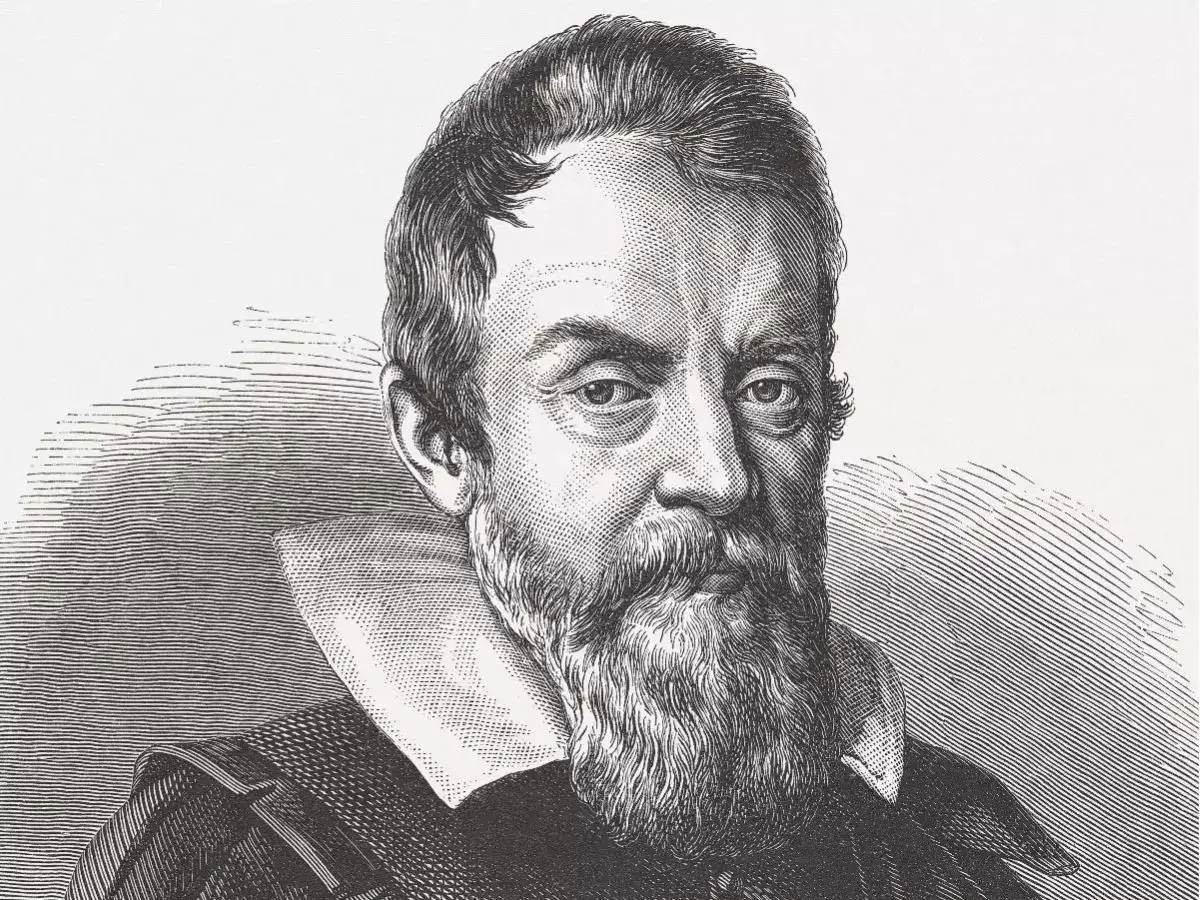
Galileo Galilei. The very name evokes images of starry nights, celestial bodies observed with newfound clarity, and a mind that dared to challenge the established cosmic order. In a world still largely tethered to ancient wisdom and religious dogma, Galileo emerged as a beacon of empirical inquiry, a titan of observational astronomy, and a relentless advocate for the scientific method. His pronouncements, etched into the annals of human thought, continue to reverberate through centuries, shaping our understanding of the universe and the very nature of knowledge itself. Among his most profound pronouncements, the simple yet potent declaration: \"All truths are easy to understand once they are discovered.\" This seemingly innocuous statement, born from a life of rigorous investigation and profound revelation, carries within it a powerful testament to the human capacity for understanding, a stark reminder of the obstacles to discovery, and a timeless message about the transformative power of truth. This article will delve into the life and legacy of Galileo Galilei, dissecting the profound implications of his quote, exploring the context of his groundbreaking work, analyzing the forces that propelled and thwarted him, and examining the enduring relevance of his pursuit of truth in our modern, information-saturated world.
Deep-Dive Background & Context: The Dawn of a New Era, the Man Who Illuminated It
To truly grasp the significance of Galileo’s quote, we must first situate him within the intellectual and societal landscape of his time. The late 16th and early 17th centuries were a period of immense transition. The Renaissance had paved the way for a renewed interest in classical learning, but the dominant worldview remained deeply entrenched in Aristotelian physics and Ptolemaic astronomy, frameworks that placed Earth firmly at the center of the universe, with celestial bodies revolving around it in perfect, divine harmony. This geocentric model was not merely a scientific hypothesis; it was intricately woven into the theological fabric of the dominant Catholic Church, aligning with scriptural interpretations and a divinely ordained hierarchy.
Born in Pisa in 1564, Galileo Galilei was the son of a renowned musician and music theorist, Vincenzo Galilei, who himself had challenged established musical conventions. This early exposure to a spirit of intellectual questioning likely left an indelible mark on the young Galileo. He initially pursued a career in medicine, as was common for those seeking intellectual pursuits, but his insatiable curiosity soon drew him towards mathematics and physics. His early academic career was marked by a keen observational ability and a talent for innovation. He famously, though perhaps apocryphally, dropped objects of different masses from the Leaning Tower of Pisa to demonstrate that they fell at the same rate, challenging the Aristotelian notion that heavier objects fell faster. This early foray into empirical experimentation foreshadowed the methodology that would define his life\'s work.
Galileo\'s academic prowess led him to professorships at the University of Pisa and later at the prestigious University of Padua. It was during his time in Padua that he began to truly blossom as a scientist and inventor. His lectures on mechanics and geometry were renowned, and he dedicated himself to rigorous mathematical analysis and systematic observation. He was not content with theoretical pronouncements; he sought to *see* and *measure* the world around him.
The true game-changer, however, arrived in 1609. News of a Dutch invention, a device that magnified distant objects, reached Galileo. With his characteristic ingenuity, he didn\'t just replicate this \"spyglass\"; he dramatically improved upon it, creating a telescope with significantly higher magnification. This was not merely a novelty; it was a revolution. The telescope, in Galileo’s hands, became an instrument of unprecedented scientific exploration, unlocking the secrets of the cosmos in a way that had been unimaginable for millennia.
Key Innovations and Discoveries:
* The Astronomical Telescope: Galileo\'s enhanced telescope allowed him to observe celestial bodies with a clarity and detail never before possible. This single invention was arguably the most significant catalyst for the Scientific Revolution.
* Observational Astronomy: His meticulous observations of the Moon, Jupiter, Venus, and the stars provided empirical evidence that challenged the prevailing geocentric model.
* The Scientific Method: Galileo’s insistence on observation, experimentation, and mathematical reasoning laid the groundwork for the modern scientific method, moving away from purely philosophical speculation towards empirical verification.
* Studies of Motion: His investigations into the laws of motion, including projectile motion and the acceleration of falling bodies, were foundational to classical mechanics, later formalized by Isaac Newton.
Galileo\'s discoveries were not abstract academic exercises; they had profound implications for humanity\'s understanding of its place in the universe. He witnessed the mountains and craters on the Moon, revealing it to be a physical body, not a perfect, unblemished celestial sphere. He observed four moons orbiting Jupiter, a miniature solar system in itself, demonstrating that not everything revolved around the Earth. He saw the phases of Venus, mirroring those of the Moon, a phenomenon that could only be explained if Venus orbited the Sun, not the Earth.
These observations, meticulously documented and disseminated through his writings, began to chip away at the foundations of the Aristotelian-Ptolemaic worldview. They provided compelling support for the heliocentric model proposed by Nicolaus Copernicus decades earlier, which posited that the Sun, not the Earth, was the center of the solar system.
Multi-faceted Analysis: Why it Matters, Who Was Involved, and the Friction it Caused
Galileo\'s statement, \"All truths are easy to understand once they are discovered,\" is more than just an aphorism; it encapsulates a fundamental principle of scientific progress and human understanding.
Why it Matters:
* The Nature of Truth: The quote suggests that truth, once unearthed and understood, possesses an inherent clarity and simplicity. It implies that complexity and confusion often arise not from the truth itself, but from our *lack* of knowledge or our adherence to falsehoods. This is a deeply optimistic view of human intellect, suggesting that our capacity for reason is ultimately capable of grasping reality.
* The Obstacles to Discovery: The implicit contrast in the statement is crucial. If truths are *easy* to understand once discovered, then the *difficulty* lies in the *discovery* itself. This highlights the arduous nature of scientific inquiry, the perseverance required, the painstaking process of observation, experimentation, and analysis that precedes the \"aha!\" moment. It speaks to the intellectual and sometimes societal barriers that impede the path to knowledge.
* The Power of Revelation: The quote underscores the transformative power of discovery. Once a truth is revealed and understood, it can fundamentally alter our perspective, simplify previously complex problems, and open up new avenues of understanding. It’s the feeling of a puzzle piece clicking into place, the fog lifting to reveal a clear landscape.
* A Call to Inquiry: For scientists and thinkers, the quote serves as a powerful motivator. It encourages them to push the boundaries of knowledge, to persevere through challenges, and to trust in the eventual clarity that discovery will bring.
The Stakeholders Involved:
Galileo’s journey was not a solitary one, but rather a complex interplay of individuals, institutions, and prevailing ideologies.
* Galileo Galilei: The protagonist of our story, a brilliant mind driven by an unyielding curiosity and a commitment to empirical evidence. His personal courage and intellectual integrity were paramount.
* The Catholic Church: As the dominant religious and intellectual authority of the time, the Church played a pivotal role. While not monolithic, its hierarchy, particularly the Inquisition, represented a powerful force that both supported and ultimately condemned Galileo’s findings. The Church’s adherence to a geocentric interpretation of scripture and its perceived threat from heliocentrism placed it in direct conflict with Galileo.
* Other Scientists and Scholars: Galileo engaged in correspondence and intellectual debates with numerous contemporaries. Some, like Johannes Kepler, who developed laws of planetary motion based on Tycho Brahe\'s data, were fellow travelers on the path of scientific discovery. Others held more traditional views.
* Patrons and Universities: Galileo relied on the support of patrons and the academic institutions that employed him. His professorships provided him with a platform and resources, though the security of his position was often precarious.
* The General Public: While the direct impact on the common person was less immediate, Galileo’s work eventually filtered down, altering fundamental understandings of the cosmos and humanity\'s place within it. The spread of printed materials played a crucial role in this dissemination.
The Friction: Science vs. Faith, Observation vs. Dogma
Galileo\'s discoveries were not met with universal acclaim. His advocacy for the Copernican system, which placed the Sun at the center of the universe, directly challenged the prevailing geocentric model, which had been accepted for over a thousand years and was deeply intertwined with theological interpretations of scripture.
The Church, at the time, saw the geocentric model as a cornerstone of its understanding of creation and humanity\'s special place within it. The Bible, interpreted literally by many, seemed to support a stationary Earth. The idea that Earth was just one planet among many, orbiting a star, was seen as demoting humanity and potentially undermining religious authority.
This conflict wasn\'t just about celestial mechanics; it was a clash between two fundamentally different ways of knowing:
* Empirical Observation (Galileo): Knowledge derived from sensory experience, experimentation, and mathematical analysis.
* Scriptural Authority and Philosophical Tradition (Church/Aristotelianism): Knowledge derived from divine revelation, established texts, and inherited philosophical frameworks.
Galileo argued that the Bible should not be interpreted as a scientific textbook. He believed that God had revealed Himself through two \"books\": the Book of Scripture and the Book of Nature. He argued that the language of scripture was often metaphorical and intended for a lay audience, while the Book of Nature was written in the language of mathematics, and its truths were revealed through observation and reason. This was a radical idea for the time, suggesting a separation of scientific inquiry from theological dogma.
Chronological Events and Detailed Breakdown: A Life Under Scrutiny
Galileo\'s life was a testament to both brilliant discovery and escalating conflict.
Early Life and Education (1564-1589):
* 1564: Born in Pisa, Republic of Pisa (now Italy).
* 1581: Begins studies at the University of Pisa, initially in medicine.
* 1583: Becomes fascinated by mathematics and physics, abandons medicine.
* 1585: Leaves the University of Pisa without a degree but with a strong foundation in mathematics.
* 1589: Appointed professor of mathematics at the University of Pisa.
Pisa and the Seeds of Innovation (1589-1592):
* Challenging Aristotle: Conducts experiments on falling bodies, challenging Aristotelian physics (though the Leaning Tower of Pisa experiment is likely apocryphal, it represents his experimental approach).
* Developing Physics Concepts: Begins to formulate theories on motion and mechanics.
* Limited Recognition: His tenure at Pisa is not entirely successful, and he faces financial difficulties.
Padua: The Golden Years of Discovery (1592-1610):
* 1592: Appointed professor of mathematics at the University of Padua, a more liberal and intellectually vibrant institution.
* Inventions: Develops a military compass and improves existing thermometers.
* Continuing Studies on Motion: Conducts experiments on inclined planes, laying the groundwork for his laws of motion.
* 1609: Hears of the Dutch invention of the telescope and rapidly builds his own, significantly more powerful version.
* 1609-1610: The Telescope Revolution:
* Observes the Moon\'s surface, revealing it to be mountainous and cratered, not a perfect sphere.
* Discovers the four largest moons of Jupiter (the \"Medicean Stars,\" named in honor of his patrons, the Medici family). This is a crucial blow to the geocentric model, as it demonstrates celestial bodies not revolving around Earth.
* Observes Venus and its phases, which are only explicable if Venus orbits the Sun.
* Observes countless stars previously unseen, suggesting the vastness of the universe.
* 1610: Publishes *Sidereus Nuncius* (Starry Messenger), detailing his telescopic observations. The book causes a sensation, eliciting both excitement and skepticism.
Return to Florence and Escalating Conflict (1610-1632):
* 1610: Returns to Florence, appointed as \"Chief Mathematician and Philosopher\" by the Grand Duke of Tuscany. This position grants him more prestige but also places him under closer scrutiny by religious authorities.
* 1611: Visits Rome, demonstrates his telescope, and engages in intellectual discourse.
* 1613: Publishes *Letters on Sunspots*, further supporting the heliocentric model. In these letters, he directly addresses the issue of reconciling scripture with scientific observations, arguing for a more nuanced interpretation of the Bible. This is a critical turning point, as it brings the conflict with the Church into sharper focus.
* 1616: The Holy Office (Inquisition) formally declares the Copernican doctrine of heliocentrism as \"foolish and absurd in philosophy, and formally heretical.\" Galileo is warned not to \"hold, teach, or defend\" this doctrine in any way. Cardinal Robert Bellarmine, a leading theologian, delivers this admonition.
* 1623: Pope Urban VIII, a former friend of Galileo\'s, is elected. Galileo hopes for a more favorable climate.
* 1632: Publishes *Dialogue Concerning the Two Chief World Systems*, a fictionalized dialogue presenting arguments for both the geocentric and heliocentric systems, but heavily favoring the heliocentric view. This work, though written in dialogue form, is widely seen as a direct challenge to the 1616 decree.
The Trial and House Arrest (1633-1642):
* 1633: Galileo is summoned to Rome by the Inquisition to stand trial for heresy.
* The Trial: Galileo is interrogated and pressured to confess. He is accused of violating the 1616 injunction.
* The Verdict: Found \"vehemently suspect of heresy,\" he is condemned.
* The Abjuration: Under duress, Galileo recants his heliocentric views. Legend has it that as he rose from his knees, he muttered, \"Eppur si muove\" (\"And yet it moves\"), a defiant declaration of his unwavering belief in the Earth’s motion.
* The Sentence: Sentenced to perpetual house arrest. He is confined to his villa in Arcetri, near Florence.
* Continued Scientific Work: Despite his confinement, Galileo continues his scientific pursuits. He dedicates himself to the study of mechanics and motion, particularly the strength of materials.
* 1638: Publishes *Discourses and Mathematical Demonstrations Relating to Two New Sciences*, a seminal work on mechanics and the strength of materials, which lays the foundation for modern physics. This book is smuggled out of Italy and published in the Netherlands.
* 1642: Dies in Arcetri at the age of 77, still under house arrest.
Future Outlook and Implications: The Unfolding of Truth, The Legacy of Inquiry
Galileo\'s life and the implications of his quote extend far beyond his own era. His struggle for the acceptance of scientific truth continues to resonate in contemporary debates.
* The Enduring Power of the Scientific Method: Galileo\'s insistence on empirical evidence and rigorous analysis is the bedrock of modern science. His legacy serves as a constant reminder that scientific understanding is built on observation, testing, and revision, not on dogma or blind faith.
* The Ongoing Tension Between Science and Dogma: While the specific context of Galileo\'s conflict was religious, the tension between scientific discovery and entrenched belief systems persists. From climate change denial to debates about evolution, humanity continues to grapple with accepting truths that challenge established narratives or vested interests.
* The Democratization of Knowledge: Galileo\'s work, disseminated through print, marked a step towards making knowledge more accessible. In the digital age, this process has accelerated exponentially, presenting both opportunities and challenges. While information is more readily available, discerning truth from misinformation has become a critical skill.
* The Importance of Intellectual Freedom: Galileo\'s fate underscores the vital importance of intellectual freedom and the protection of dissent. The suppression of scientific inquiry, for whatever reason, ultimately hinders human progress and understanding.
* The \"Easy to Understand\" Paradox: While Galileo proclaimed truths are easy to understand *once discovered*, the process of discovery itself remains challenging. This serves as a perpetual call to action for educators, researchers, and curious minds to continue the arduous but rewarding work of unraveling the universe\'s mysteries.
* The Broader Context of Scientific Revolutions: Galileo was a pivotal figure in the Scientific Revolution. His work paved the way for Isaac Newton, Albert Einstein, and countless others. Each subsequent scientific revolution has built upon the foundations laid by earlier pioneers, reinforcing the idea that progress is cumulative.
Lessons for Today:
* Critical Thinking is Paramount: In an age of abundant information, the ability to critically evaluate sources, identify bias, and distinguish fact from opinion is more crucial than ever.
* Embrace Nuance: Galileo’s plea to interpret scripture metaphorically rather than literally highlights the need to approach complex issues with nuance and an open mind.
* The Courage of Conviction: Galileo\'s unwavering commitment to his observations, even in the face of severe persecution, is an inspiration for anyone seeking to advance knowledge or challenge prevailing, but incorrect, orthodoxies.
* The Role of Education: Ensuring robust science education that emphasizes critical thinking and empirical reasoning is essential for fostering an informed citizenry capable of understanding and embracing scientific truths.
Conclusion: The Echo of a Titan, The Enduring Quest for Truth
Galileo Galilei was a man of his time, yet his insights transcended it. His declaration, \"All truths are easy to understand once they are discovered,\" is not merely a statement about the nature of knowledge; it is a profound reflection on the human journey of discovery. It acknowledges the arduous path of inquiry, the intellectual and societal barriers that obscure our vision, and the ultimate triumph of clarity and understanding when truth is unveiled.
Galileo\'s life was a dramatic illustration of this principle. His telescopic observations of the heavens, once made, made the heliocentric model demonstrably more logical and comprehensible than the convoluted epicycles of the Ptolemaic system. Yet, the *discovery* of these truths was fraught with peril, demanding immense courage and intellectual fortitude.
In a world still wrestling with misinformation, the erosion of trust in expertise, and the allure of simplistic narratives, Galileo’s legacy offers a timeless beacon. It reminds us that the pursuit of truth, though challenging, is ultimately rewarding, and that the truths we discover, however profound, often possess an inherent elegance that speaks to their validity. The echoes of Galileo\'s wisdom continue to inspire us to look up at the stars with wonder, to question with diligence, and to embrace the liberating power of knowledge, for in the discovery of truth lies the ultimate ease of understanding. His journey, marked by both brilliant illumination and harsh suppression, stands as an enduring testament to the indomitable human spirit and its ceaseless quest for comprehension.