
Politics
धरना-प्रदर्शनों का नया कारोबार: लोकतंत्र की आड़ में आखिर किसके हित साधे जा रहे हैं?
October 10, 2026
1,612 views
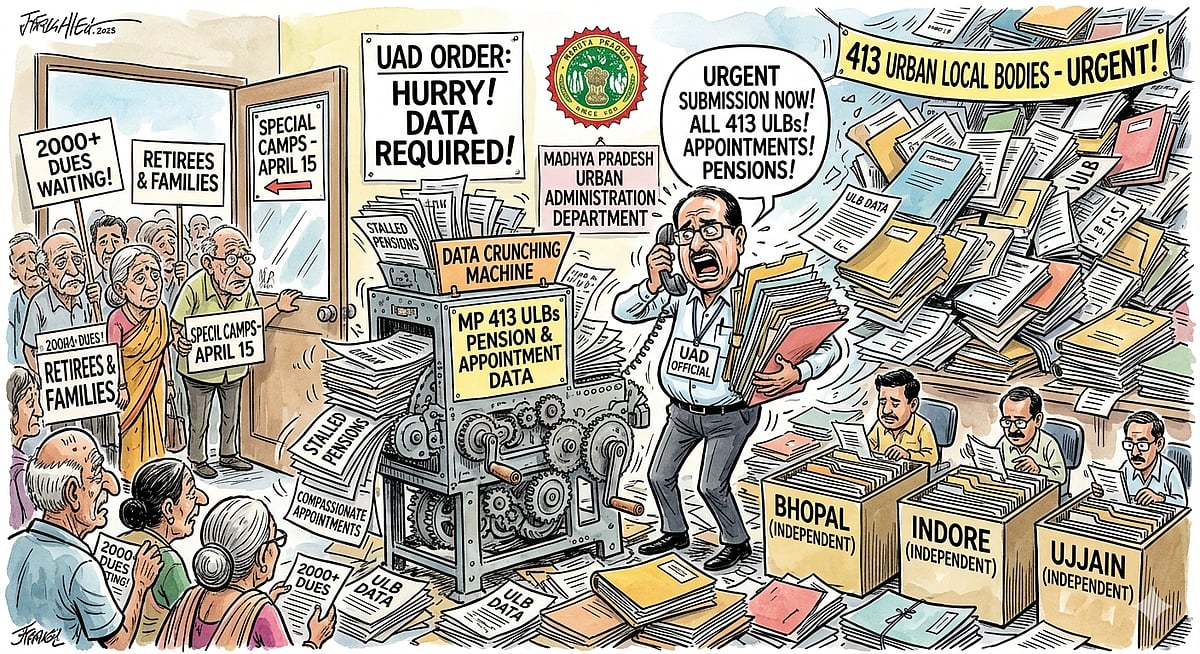
In a significant development for public sector employees and their families, the Urban Administration Department (UAD) of Madhya Pradesh has recognized the pressing issue of delayed pension disbursals and compassionate appointment cases affecting over 2,000 retirees. These delays have caused considerable distress among the affected individuals and their families, leading to urgent calls for action. The UAD's recent directive mandates the immediate collection and submission of data concerning these stalled cases across 413 Urban Local Bodies (ULBs) in the state.
The delay in pension payments and compassionate appointments arises from various administrative bottlenecks within the Urban Local Bodies. Retirees, who have dedicated their lives to public service, are now finding themselves in a precarious financial situation, unable to meet their basic needs. Moreover, families of deceased employees awaiting compassionate appointments are experiencing emotional and financial strain, exacerbating their already challenging circumstances. The UAD's intervention indicates a recognition of these issues and a commitment to resolving them expeditiously.
To alleviate the plight of those affected, the UAD has announced the organization of special camps scheduled for April 15. These camps aim to directly address grievances related to stalled pension payments and the processing of compassionate appointments. During these camps, retirees and their families will have the opportunity to present their cases and receive assistance from officials who will be on hand to provide guidance and support.
The ramifications of delayed pension payments extend far beyond mere financial inconvenience. For many retirees, pensions represent their primary source of income, critical for maintaining their standard of living. The delay in these payments can lead to an inability to pay for essential expenses such as healthcare, housing, and daily necessities. In addition, families awaiting compassionate appointments often face uncertainty regarding their future employment and financial stability, further compounding the stress of their loss.
The UAD's proactive approach in addressing the backlog of pension and compassionate appointment cases is commendable and necessary. However, it is essential that this initiative leads to systemic changes that prevent such delays from occurring in the future. Streamlining processes, enhancing communication between ULBs and retirees, and implementing technology-driven solutions could significantly improve the efficiency of pension disbursal and appointment processes.
In conclusion, the stalled pension and compassionate appointment cases in Madhya Pradesh underscore a critical issue that requires immediate attention. The UAD's efforts to gather data and organize special camps signify a commitment to resolving these challenges. However, long-term solutions and reforms will be crucial in ensuring that such delays do not recur, ultimately safeguarding the welfare of retirees and their families.


Loading more news...
You've reached the end of our news feed. Check back later for more updates!