The Science Behind Echoes in Empty Rooms: Why Your Voice Bounces Back
Have you ever walked into an empty room and suddenly heard your voice echoing back at you? It's a peculiar phenomenon that has puzzled many of us. As we speak, our voices seem to bounce back from the walls, creating an eerie silence. But what's behind this mystical experience? Is it a ghostly presence or something more scientific? In this report, we'll delve into the fascinating world of acoustics to uncover the secrets of how walls play with our voices.
The Basics of Sound Waves
To understand the science behind echoes, let's start with the basics of sound waves. Sound is a form of energy that travels through the air as a series of pressure waves. When we speak, our vocal cords vibrate to produce these pressure waves, which then travel through the air to reach our ears. The speed of sound is approximately 343 meters per second (m/s) at room temperature and humidity.
Echo Formation
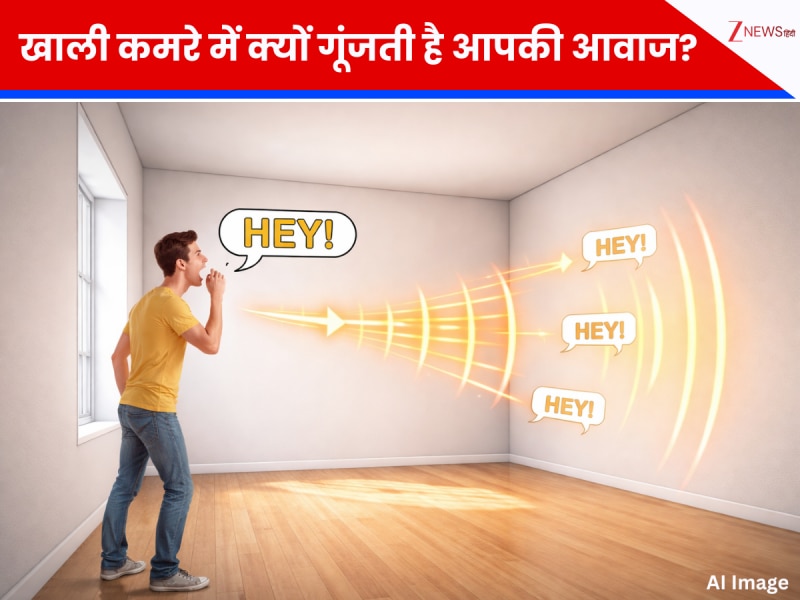
When we speak in an empty room, our voice is emitted as a series of pressure waves. These waves travel through the air and bounce off the walls, floor, and ceiling. The distance between the source of the sound (our voice) and the surface that reflects it determines the intensity of the echo. The closer the surface, the stronger the echo.
The Role of Reflection
Reflection is a crucial process in echo formation. When a sound wave hits a surface, it bounces back, creating a reflected wave. The angle of incidence (the angle at which the sound wave hits the surface) is equal to the angle of reflection (the angle at which the reflected wave bounces back). This is known as the Law of Reflection.
The Science of Echoes
So, why do we hear our voice echoing back in an empty room? It's because the reflected sound waves take longer to reach our ears than the direct sound waves. This delay creates the illusion of a separate sound, which we perceive as an echo. The farther the surface, the longer it takes for the reflected wave to reach us, resulting in a fainter echo.
Factors Affecting Echoes
Several factors can affect the quality and intensity of echoes in an empty room. These include:
* Room shape and size: The shape and size of the room can influence the way sound waves reflect and bounce back. For example, a room with a long corridor can create a long echo.
* Surface roughness: The roughness of the surface can scatter sound waves, reducing the intensity of the echo.
* Frequency and pitch: The frequency and pitch of our voice can also impact the echo. Higher frequencies tend to produce more intense echoes.
* Background noise: Background noise can mask or distort the echo, making it harder to perceive.
Real-Life Applications
Echoes have practical applications in various fields, including:
* Acoustics and architecture: Understanding echo formation can help architects design rooms with optimal acoustics, reducing echo and improving sound quality.
* Audio engineering: Echoes are used in music production to create a sense of space and depth.
* Medical diagnosis: Echoes can be used in medical diagnosis to detect abnormalities in the human body.
Conclusion
Echoes in empty rooms may seem mysterious, but they are a natural phenomenon governed by the laws of physics. By understanding the science behind echoes, we can appreciate the intricate dance of sound waves and the way they interact with our environment. Next time you're in an empty room, take a moment to appreciate the echoes that bounce back, and the fascinating science that makes it possible.
Key Takeaways
* Echoes are formed when sound waves bounce off surfaces in an empty room.
* The distance between the source of the sound and the surface determines the intensity of the echo.
* Reflection is a crucial process in echo formation, governed by the Law of Reflection.
* Factors such as room shape, surface roughness, frequency, and pitch can affect the quality and intensity of echoes.
* Echoes have practical applications in acoustics, audio engineering, and medical diagnosis.
By understanding the science behind echoes, we can appreciate the beauty and complexity of the world around us.