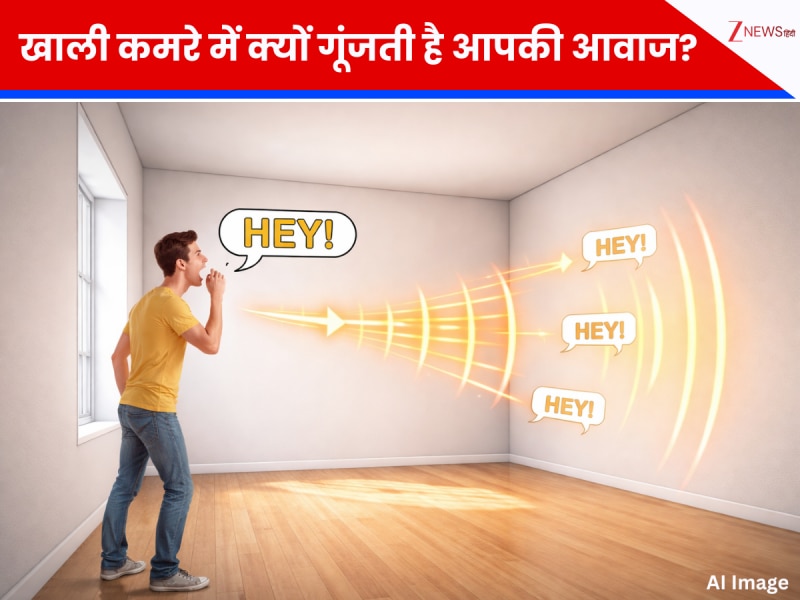
The Science Behind Echoes in Empty Rooms: Understanding the Phenomenon
As we go about our daily lives, we often encounter situations where our voices seem to bounce back to us from seemingly empty rooms. This phenomenon is known as an echo, and it's a fascinating aspect of acoustics that has puzzled people for centuries. But have you ever stopped to think about why this happens? Is it because of some supernatural force or is there a scientific explanation behind it? In this report, we'll delve into the science behind echoes in empty rooms and explore the ways in which walls seem to "play" with our voices.
What is an Echo?
An echo is a repeated sound that occurs when a sound wave is reflected back to its source after bouncing off a surface. It's a common occurrence in everyday life, and we often experience it in empty rooms, caverns, or even outdoors. Echoes can be caused by various factors, including the shape and size of the room, the type of surfaces present, and even the frequency and volume of the sound.
The Science Behind Echoes
The science behind echoes lies in the way sound waves behave when they encounter a surface. When a sound wave travels through the air, it compresses and rarefies the air molecules, creating a series of pressure waves. These pressure waves then bounce off surfaces, such as walls, floors, and ceilings, and travel back to the source of the sound.
The speed at which sound travels is approximately 343 meters per second at sea level, but it can vary depending on factors such as temperature, humidity, and air pressure. When a sound wave encounters a surface, it bounces back to the source, but not before it has traveled a certain distance. The distance between the source of the sound and the surface it bounces off is known as the "path length."
How Walls "Play" with Our Voices
So, how do walls seem to "play" with our voices? The answer lies in the way sound waves interact with surfaces. When a sound wave travels through the air, it interacts with the particles on the surface it encounters. These particles, in turn, vibrate at a specific frequency, which is determined by the material properties of the surface.
When a sound wave encounters a hard surface, such as a wall or a floor, it bounces back with minimal loss of energy. This is because hard surfaces have a high density of particles, which vibrate at a high frequency and are able to reflect sound waves effectively. On the other hand, soft surfaces, such as carpets or curtains, have a lower density of particles and are less effective at reflecting sound waves.
Factors that Affect Echoes
Several factors can affect the way echoes occur in empty rooms. Some of the most significant factors include:
* Room Shape and Size: The shape and size of the room can greatly affect the way echoes occur. For example, a room with a rectangular shape and a high ceiling will produce a louder echo than a room with a circular shape and a low ceiling.
* Surface Materials: The type of surfaces present in the room can also affect the way echoes occur. For example, a room with hard surfaces, such as wood or concrete, will produce a louder echo than a room with soft surfaces, such as carpet or curtains.
* Frequency and Volume: The frequency and volume of the sound can also affect the way echoes occur. For example, a high-pitched sound will produce a louder echo than a low-pitched sound, while a loud sound will produce a louder echo than a soft sound.
Conclusion
In conclusion, the science behind echoes in empty rooms is a complex phenomenon that involves the interaction between sound waves and surfaces. By understanding the factors that affect echoes, we can better appreciate the way walls seem to "play" with our voices. Whether you're a music lover, a science enthusiast, or simply someone who appreciates the beauty of sound, understanding the science behind echoes can add a new layer of depth to your appreciation of the world around you.
Key Takeaways
* Echoes occur when a sound wave is reflected back to its source after bouncing off a surface.
* The science behind echoes lies in the way sound waves interact with surfaces.
* Hard surfaces, such as walls and floors, are more effective at reflecting sound waves than soft surfaces, such as carpets and curtains.
* The shape and size of the room, as well as the frequency and volume of the sound, can affect the way echoes occur.
Final Thoughts
The next time you're in an empty room and your voice seems to bounce back to you, remember the fascinating science behind echoes. Whether you're experiencing an echo in a grand concert hall or a cozy living room, the principles of acoustics are still at work, creating a unique and captivating experience that's full of wonder and awe.