The Mysterious Echo in Empty Rooms: Unraveling the Science Behind the Phenomenon
Have you ever walked into an empty room and shouted "Hello!" only to hear your voice echoed back at you? It's a peculiar phenomenon that has fascinated humans for centuries. The sound of our own voice bounces back from the walls, creating an eerie silence that can send shivers down our spine. But, is this just a ghostly occurrence or is there a scientific explanation behind it? In this report, we'll delve into the science of echo and explore how walls "play" with our voices.
The Basics of Sound Waves
Before we dive into the phenomenon of echoes, let's understand the basics of sound waves. Sound is a form of mechanical wave that propagates through the air as a series of compressions and rarefactions. When we speak, our vocal cords vibrate, producing sound waves that travel through the air. These waves have a frequency, amplitude, and wavelength, which determine the pitch, loudness, and quality of the sound.
The Science of Echoes
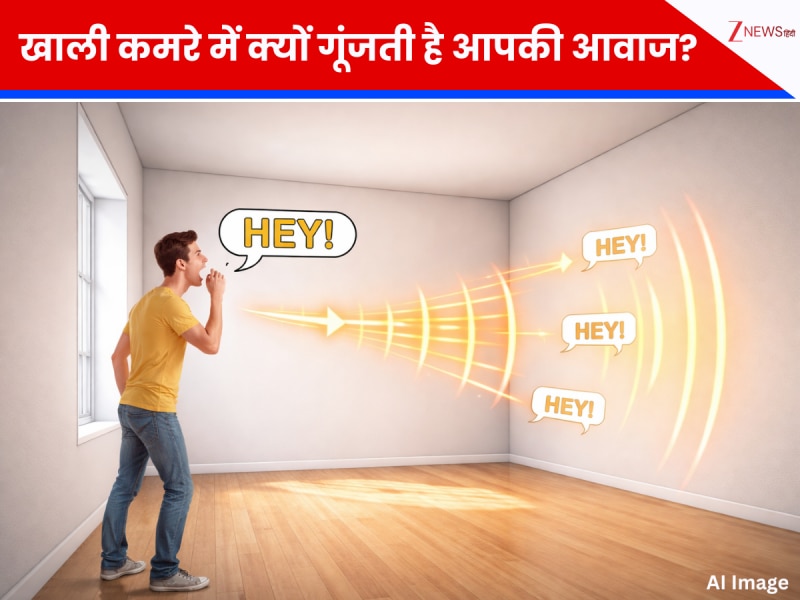
An echo occurs when a sound wave is reflected back to its source after bouncing off a surface. The sound wave travels through the air and hits a surface, such as a wall or a mountain, causing it to reverberate. The surface reflects the sound wave back to the original source, creating an echo. The time it takes for the sound wave to travel to the surface and back is called the "reverberation time."
Why Do We Hear Echoes in Empty Rooms?
So, why do we hear echoes in empty rooms? It's because the sound wave has nowhere to dissipate. In a room with no obstacles or soft surfaces, the sound wave can travel long distances and bounce back from the walls, creating an echo. The shape and size of the room, as well as the material of the walls, can affect the frequency and intensity of the echo.
The Role of Resonance
Resonance plays a crucial role in the formation of echoes. When a sound wave meets a surface, it can cause the surface to vibrate at its natural frequency. This vibration is called resonance. If the frequency of the sound wave matches the natural frequency of the surface, the vibration can become amplified, creating a strong echo.
The Science of Echo in Empty Rooms
Now, let's explore the science behind the echo in an empty room. When we speak, our voice produces a sound wave that travels through the air and hits the walls of the room. The walls reflect the sound wave back to us, creating an echo. The time it takes for the sound wave to travel to the wall and back is the reverberation time.
The Factors Affecting Echo in Empty Rooms
Several factors can affect the echo in an empty room, including:
* Room size and shape: The size and shape of the room can affect the frequency and intensity of the echo. A larger room with a more complex shape can produce a more complex echo.
* Wall material: The material of the walls can affect the frequency and intensity of the echo. Hard surfaces like concrete or metal can produce a more intense echo than soft surfaces like wood or fabric.
* Obstacles: Obstacles in the room, such as furniture or people, can absorb or scatter the sound wave, reducing the intensity of the echo.
* Volume and pitch: The volume and pitch of our voice can also affect the echo. A louder or higher-pitched voice can produce a stronger echo.
Conclusion
The phenomenon of echoes in empty rooms is a fascinating example of the science behind sound waves. By understanding the factors that affect the echo, we can better appreciate the complexity of the human ear and the way it interprets sound. Whether you're a scientist or simply someone who enjoys the eerie silence of an empty room, the science of echo is a fascinating topic that can capture your imagination. So, next time you're in an empty room, take a moment to appreciate the science behind the echo that follows your voice.