The Science Behind Echoes in Empty Rooms: Unraveling the Mystery
Have you ever spoken in an empty room and been startled by the sudden echo of your own voice? It's a phenomenon that has puzzled many of us, leaving us wondering if there's a ghostly presence lurking in the shadows or if there's a scientific explanation behind it. In this report, we'll delve into the world of acoustics and uncover the fascinating science behind echoes in empty rooms.
What is an Echo?
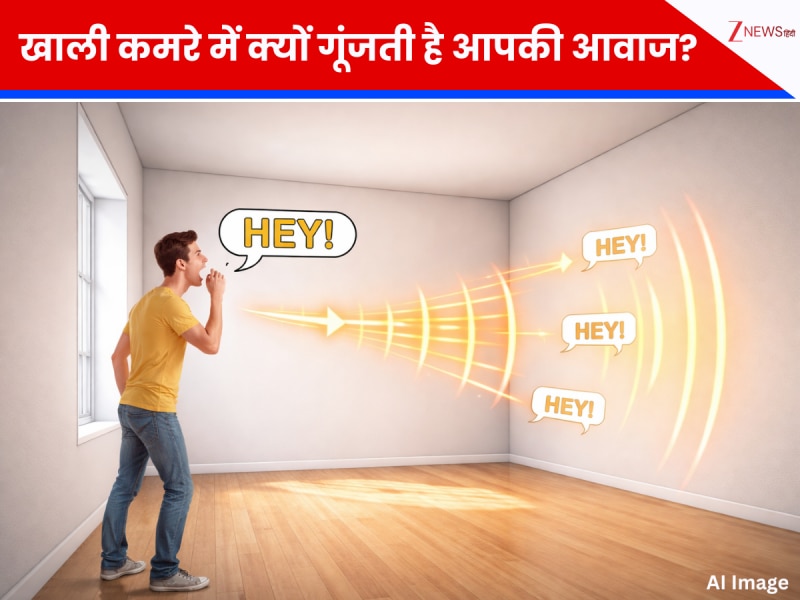
Before we dive into the science, let's define what an echo is. An echo is a repeated sound that occurs when a sound wave bounces back from a surface, such as a wall or a ceiling, after being reflected off it. In the case of an empty room, the sound wave travels freely until it hits a boundary, causing it to bounce back and return to the listener's ears.
The Role of Sound Waves
Sound waves are a type of mechanical wave that propagates through the air as a series of compressions and rarefactions. When we speak, our vocal cords vibrate, producing sound waves that travel through the air. The speed of sound is approximately 343 meters per second at sea level and room temperature.
In an empty room, the sound waves travel freely until they hit a surface, such as a wall or a ceiling. The surface acts as a reflector, bouncing the sound waves back towards the listener. The time it takes for the sound wave to travel from the speaker's mouth to the surface and back again is known as the echo delay.
The Science of Echoes
The science behind echoes is based on the principles of acoustics and the behavior of sound waves. When a sound wave hits a surface, it is reflected back towards the listener, but it is also absorbed by the surface to some extent. The amount of absorption depends on the material properties of the surface, such as its density, elasticity, and porosity.
In an empty room, the sound waves are reflected off the surfaces, creating an echo. The echo is caused by the delayed reflection of the sound wave, which is then perceived by the listener as a repeated sound. The delay between the original sound and the echo is known as the echo time.
Factors Affecting Echoes
Several factors can affect the formation and perception of echoes in an empty room. These include:
* Room size and shape: The size and shape of the room can affect the way sound waves bounce off the surfaces. Smaller rooms with more reflective surfaces tend to produce more pronounced echoes.
* Surface material: The material properties of the surfaces can affect the amount of absorption and reflection of sound waves. Smooth surfaces tend to produce more echoes, while rough surfaces tend to absorb more sound.
* Sound source: The position and direction of the sound source can affect the formation of echoes. Sounds coming from a specific direction tend to produce more pronounced echoes.
* Listener position: The position of the listener can also affect the perception of echoes. Listening from a corner of the room can enhance the echo effect, while listening from a central position can reduce it.
Applications of Echoes
Echoes have a wide range of applications in various fields, including:
* Acoustics: Echoes are used in acoustics to study the behavior of sound waves and to design sound-absorbing materials.
* Music: Echoes are used in music to create special effects, such as reverb and delay.
* Communication: Echoes are used in communication systems, such as radar and sonar, to detect and track objects.
* Architecture: Echoes are used in architecture to design buildings with optimal acoustics, such as concert halls and auditoriums.
Conclusion
In conclusion, echoes in empty rooms are a fascinating phenomenon that is rooted in the principles of acoustics and the behavior of sound waves. By understanding the science behind echoes, we can appreciate the complex interactions between sound, surfaces, and listeners. Whether you're a scientist, a musician, or simply a curious individual, understanding echoes can add a new layer of appreciation to your daily experiences.
Nishkarsh
The next time you're in an empty room, take a moment to appreciate the science behind the echoes. Whether it's the reverberation of your voice or the sound of footsteps, echoes are a reminder of the intricate relationships between sound, surfaces, and ourselves. By embracing the science behind echoes, we can unlock new insights into the world of acoustics and enhance our appreciation for the beauty of sound.