The Mysterious Echo: Uncovering the Science Behind the Empty Room
As we go about our daily lives, we often find ourselves in rooms that seem to come alive with the echoes of our own voices. Whether it's a new home, an empty classroom, or a quiet corridor, the phenomenon of echo has fascinated humans for centuries. But have you ever stopped to wonder why this happens? Is it some kind of supernatural phenomenon or is there a scientific explanation behind it? In this report, we'll delve into the fascinating world of acoustics and explore the science behind the echoes that reverberate through empty rooms.
The Physics of Sound
To understand why we hear echoes, we need to first grasp the fundamental physics of sound. Sound is a form of mechanical wave that propagates through a medium, such as air, water, or solids. When we speak, our vocal cords vibrate, producing a series of pressure waves that travel through the air. These waves then strike objects, such as walls, floors, and ceilings, causing them to vibrate in response.
The Role of Reflection and Refraction
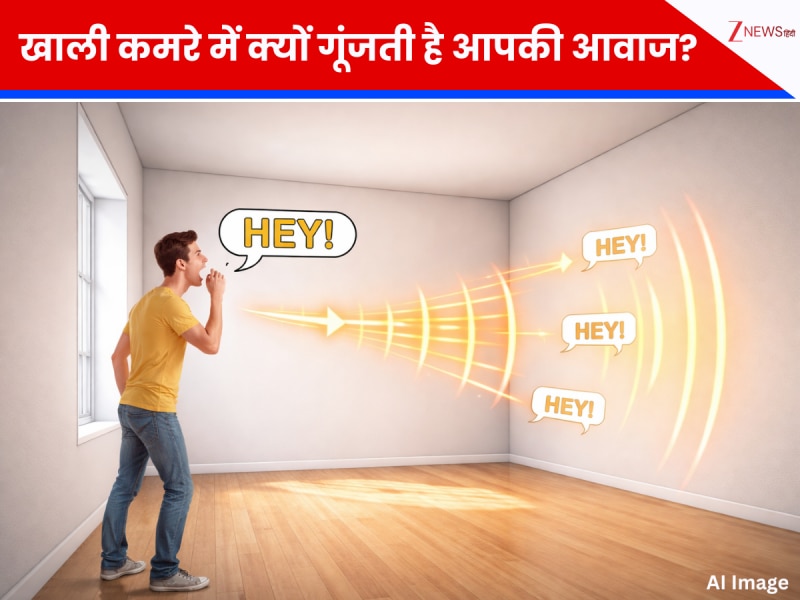
When sound waves strike a surface, they either reflect, refract, or absorb the energy. Reflection occurs when the sound wave bounces back from the surface, while refraction occurs when the wave changes direction as it passes from one medium to another. In the case of an empty room, the sound waves reflect off the walls, floor, and ceiling, creating multiple echoes.
The Science of Echoes
So, why do we hear echoes in empty rooms? The answer lies in the way sound waves interact with the physical environment. When we speak, our voice produces a series of pressure waves that travel through the air. These waves then strike the walls, floor, and ceiling of the room, causing them to vibrate in response.
The Effects of Room Geometry
The geometry of the room plays a crucial role in the formation of echoes. The shape and size of the room, as well as the position and arrangement of objects within it, all influence the way sound waves interact with the environment. For example, a room with a high ceiling and a large, flat surface area will tend to produce more echoes than a room with a low ceiling and a smaller surface area.
The Role of Absorption
But why don't we hear echoes in all rooms? The answer lies in the role of absorption. When sound waves strike an object, they can either reflect, refract, or absorb the energy. In rooms with soft furnishings, carpets, and curtains, the sound waves are more likely to be absorbed, reducing the amount of echo that is produced.
The Impact of Human Perception
Finally, let's not forget the impact of human perception on the way we experience echoes. Our brains are wired to recognize patterns and make sense of the world around us. When we hear an echo, our brain processes the sound wave as a separate entity, creating the illusion of multiple voices speaking at once.
Conclusion
In conclusion, the phenomenon of echo in empty rooms is a fascinating example of the complex interplay between sound waves, physical environments, and human perception. By understanding the physics of sound, the role of reflection and refraction, and the effects of room geometry and absorption, we can gain a deeper appreciation for the science behind the echoes that reverberate through our daily lives.
Key Takeaways
* Echoes are a result of sound waves reflecting off surfaces in a room
* The geometry of the room, including the shape and size, influences the formation of echoes
* Absorption plays a crucial role in reducing the amount of echo produced
* Human perception plays a key role in processing and interpreting echoes
Future Research Directions
* Investigating the impact of different materials and textures on sound absorption
* Developing new technologies to reduce echo in noisy environments
* Exploring the potential applications of echo in fields such as music and acoustics
As we continue to explore the fascinating world of acoustics, we may uncover new and exciting ways to harness the power of sound and silence. Whether it's improving the quality of our daily lives or creating new forms of artistic expression, the science of echo is sure to continue captivating and inspiring us for years to come.