The Science Behind Echoes in Empty Rooms: Unraveling the Mystery
Have you ever wondered why your voice bounces back to you when you speak in an empty room? It's a phenomenon that has puzzled many of us, leaving us to wonder if there's some kind of "ghostly" presence lurking in the walls. But, is it really just a figment of our imagination? In this report, we'll delve into the science behind echoes in empty rooms and uncover the secrets behind the mysterious echoes.
What is an Echo?
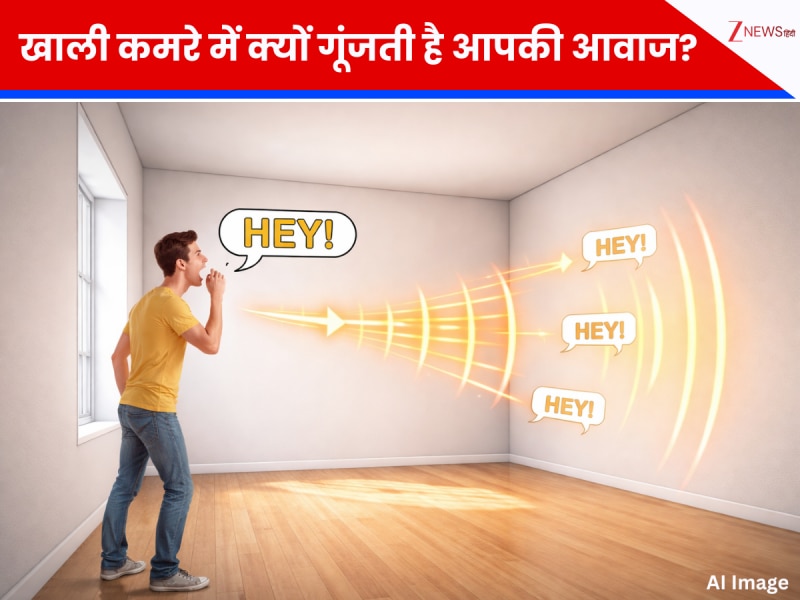
An echo is a repeated sound that arises from the reflection of sound waves off a surface. When you speak, your voice produces sound waves that travel through the air and strike various objects, including walls, floors, and ceilings. These sound waves bounce back, creating an echo that we hear as a repeated sound.
The Role of Sound Waves
Sound waves are a type of mechanical wave that propagates through a medium, such as air, water, or solids. When you speak, your vocal cords produce sound waves that travel through the air at a speed of approximately 343 meters per second (m/s). These sound waves are made up of compressions and rarefactions, which are the alternating high and low pressure areas that allow the sound wave to propagate.
The Science of Reflections
When sound waves hit a surface, they are reflected back, rather than being absorbed. This is because the molecules on the surface of the object are not able to absorb the energy of the sound wave efficiently. Instead, the sound wave is bounced back, creating an echo.
The Importance of Distance and Angle
The distance between the sound source (your voice) and the reflecting surface, as well as the angle at which the sound wave hits the surface, play a crucial role in the formation of an echo. When the sound wave hits the surface at a shallow angle, the echo is more pronounced and can be heard more clearly. As the angle increases, the echo becomes weaker and eventually fades away.
Why Do We Hear Echoes in Empty Rooms?
So, why do we hear echoes in empty rooms? The answer lies in the way sound waves behave in these spaces. In an empty room, there are no objects to absorb the sound waves, allowing them to bounce back and create an echo. Additionally, the walls, floor, and ceiling of the room act as a kind of "trap" for the sound waves, causing them to reflect back and forth multiple times, creating a prolonged echo.
The Role of Reverberation
Reverberation is the persistence of sound waves in a space after the original sound has stopped. In an empty room, the sound waves can reverberate for several seconds, creating a lingering echo that can be heard long after the original sound has ceased. This is why we often hear echoes in empty rooms, even after the sound source has stopped.
The Science of Echoes in Practice
Echoes are not just a curiosity; they have practical applications in various fields, including:
* Acoustics: Understanding echoes is crucial in designing soundproofing systems and optimizing sound quality in auditoriums, concert halls, and recording studios.
* Architecture: The way sound waves interact with a building's design can greatly impact the acoustics of the space. Architects must take into account the effects of echoes when designing buildings, particularly those intended for music or speech.
* Communication: Echoes can be a problem in communication systems, such as telephones and radios. Understanding how echoes form can help engineers design systems that minimize echo and improve sound quality.
Conclusion
In conclusion, the science behind echoes in empty rooms is a fascinating and complex phenomenon that is rooted in the behavior of sound waves. By understanding the role of sound waves, reflections, and reverberation, we can appreciate the beauty and importance of echoes in our daily lives. Whether it's in the design of soundproofing systems, the creation of music, or simply enjoying a quiet moment in an empty room, echoes play a vital role in shaping our experiences.
Key Takeaways
* Echoes are a result of sound waves reflecting off surfaces, creating a repeated sound.
* The distance and angle of the sound wave hitting the surface affect the formation of an echo.
* Empty rooms are prone to echoes due to the lack of objects to absorb sound waves.
* Reverberation is the persistence of sound waves in a space after the original sound has stopped.
* Echoes have practical applications in acoustics, architecture, and communication systems.