A Fiery Oration at the United Nations: Sushma Swaraj\'s Resounding Rebuke to Pakistan and the World\'s Awestruck Silence
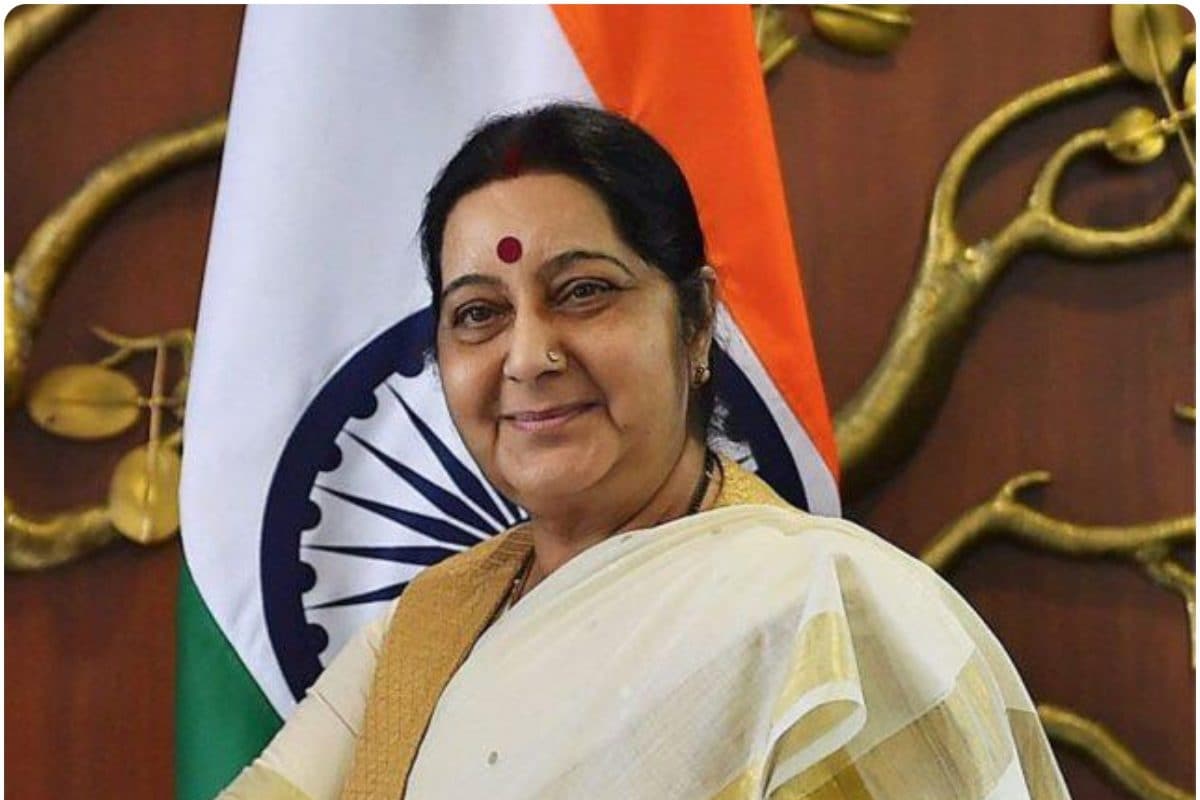
The global stage, often a theater of measured diplomacy and carefully crafted rhetoric, witnessed a seismic shift in its usual cadence on that fateful day. The esteemed United Nations General Assembly, a hallowed ground for international dialogue, became the backdrop for a powerful indictment, a searing retort that resonated across continents and left nations, particularly Pakistan, utterly speechless. It was Sushma Swaraj, then India\'s External Affairs Minister, who delivered this historic address, a speech that transcended mere political discourse and etched itself into the annals of diplomatic history as a moment of unyielding courage and profound truth.
The genesis of this momentous statement lay not in a vacuum, but in a deeply entrenched and consistently demonstrated pattern of behavior from across India\'s western border. For decades, Pakistan had engaged in a relentless campaign of cross-border terrorism, sponsoring and perpetuating acts of violence against India with impunity. From the bloody streets of Mumbai to the remote valleys of Kashmir, the fingerprints of state-sponsored terrorism were undeniable. Despite overwhelming evidence, Pakistan consistently denied its involvement, resorting to evasive tactics and often deflecting blame onto India itself, painting itself as a victim rather than the perpetrator.
This strategic denial and the perpetuation of a narrative that sought to legitimize its actions, even in the face of international condemnation, had become a tiresome and dangerous game. India, while committed to peace and dialogue, had reached a breaking point. The human cost of Pakistan\'s sponsorship of terror was immense, a constant hemorrhage of innocent lives and a perpetual threat to regional stability. The international community, while occasionally issuing perfunctory statements of concern, had largely failed to exert sufficient pressure on Pakistan to fundamentally alter its destructive trajectory. This perceived inaction, this tacit acceptance of Pakistan\'s duplicity, was a source of growing frustration for India.
It was against this backdrop of persistent provocation and international apathy that Sushma Swaraj ascended the podium at the UN. Her presence itself was significant. As a woman leading India\'s foreign policy on the global stage, she embodied a new era of assertiveness and conviction. But it was her words, delivered with a steely resolve and an unwavering conviction, that would etch her name in history. The speech was not merely a diplomatic address; it was a moral reckoning, a powerful exposé of Pakistan\'s hypocrisy and a resounding declaration of India\'s unwavering stance against terrorism.
The core of Swaraj\'s indictment was a stark and brutal contrast, a juxtaposition that laid bare the fundamental divergence in the nations\' approaches to human development and the very essence of their nation-building. She began by highlighting India\'s contributions to the global community, a narrative of positive creation and intellectual advancement. \"We have made doctors,\" she declared, her voice carrying the weight of millions of lives saved, of diseases conquered, of medical advancements that have benefited humanity. India, a nation rich in ancient wisdom and a burgeoning hub of modern scientific innovation, had consistently strived to contribute to the well-being of the world. From the development of life-saving vaccines to the training of countless medical professionals who serve across the globe, India\'s legacy was one of healing, of nurturing, and of fostering human progress. This was not mere rhetoric; it was a demonstrable reality, a testament to a nation\'s commitment to a brighter future.
She then turned her gaze towards Pakistan, her voice taking on a sharper, more accusatory tone. The contrast she drew was not subtle; it was designed to shock, to expose, and to force a confrontation with the uncomfortable truth. \"And you,\" she addressed Pakistan directly, her words hanging in the charged atmosphere of the General Assembly, \"you have made jihadis.\" This was not a casual observation; it was a direct accusation, a damning indictment of Pakistan\'s deliberate and systematic nurturing of extremist ideologies and terrorist outfits. The term \"jihadis,\" in this context, was not a neutral descriptor but a loaded term, representing individuals trained, funded, and ideologically indoctrinated to engage in violence and sow terror. It spoke of a state apparatus that, by its own actions, had become a breeding ground for hatred and violence, actively contributing to the global scourge of terrorism.
The implications of this statement were profound and far-reaching. It directly challenged Pakistan\'s claims of being a victim of terrorism, flipping the narrative on its head. Instead of portraying itself as a nation under attack, Pakistan was being revealed as the architect of terror, the very source from which these destructive forces emanated. Swaraj was not merely pointing fingers; she was presenting a clear and irrefutable cause-and-effect relationship. India was creating healers and innovators, contributing to the betterment of humanity, while Pakistan, through its policies and patronage, was actively producing agents of destruction. The stark dichotomy was intended to be a wake-up call, not just for Pakistan, but for the entire international community, which had for too long indulged in a diplomatic charade that ignored the root causes of regional instability.
The immediate aftermath of Swaraj\'s pronouncement was one of stunned silence. The delegates in the General Assembly, accustomed to the carefully choreographed dances of international diplomacy, were caught off guard. The sheer audacity and directness of her accusation, devoid of diplomatic niceties, left many momentarily speechless. This was not the language of veiled threats or subtle insinuations; this was a clear, unambiguous, and powerful declaration of truth. The world, often prone to looking for nuanced explanations and diplomatic compromises, was confronted with a stark reality, a truth that had been largely glossed over or deliberately ignored.
For Pakistan, the impact was cataclysmic. The carefully constructed facade of victimhood crumbled in an instant. The Pakistani delegation, present in the hall, was reportedly left visibly shaken, their faces reflecting a mixture of shock, embarrassment, and perhaps even a dawning realization of the international spotlight now firmly fixed on their nation\'s complicity in sponsoring terror. The narrative that Pakistan had so assiduously cultivated – that it was a frontline state fighting terrorism – was irrevocably damaged. Swaraj\'s words had cut through the propaganda, exposing the uncomfortable truth to a global audience. The \"sann reh gayi duniya\" (the world was stunned) and \"kaamp utha tha Pakistan\" (Pakistan trembled) in the original Hindi description were not hyperbole; they were accurate reflections of the profound impact of her words. The tremors of her speech were felt far beyond the confines of the UN hall, reverberating through diplomatic circles, media outlets, and the collective consciousness of nations grappling with the existential threat of terrorism.
Beyond the immediate shock, Swaraj\'s speech was a masterclass in strategic communication. She understood the power of concise, impactful statements that resonate with universal values. By contrasting the creation of doctors – symbols of life, progress, and healing – with the creation of jihadis – symbols of death, destruction, and hatred – she appealed to a fundamental human instinct for self-preservation and a desire for a peaceful world. This was not an abstract geopolitical argument; it was a deeply moral and ethical appeal.
Her words also served to highlight India\'s unwavering commitment to peace and development, contrasting it with Pakistan\'s consistent obstructionism. India, despite facing immense challenges, had consistently focused on building its economy, improving the lives of its citizens, and contributing to global progress. This was a testament to the strength and resilience of its democratic institutions and its people\'s aspirations for a better future. In contrast, Pakistan\'s focus, as highlighted by Swaraj, seemed to be perpetually drawn towards destructive pursuits, diverting precious resources and human potential towards fostering conflict.
The context of the speech also needs to be understood within the broader narrative of Indian foreign policy under Sushma Swaraj. She was known for her assertive yet empathetic approach, her ability to connect with people on a personal level, and her unwavering commitment to protecting India\'s national interests. Her tenure as External Affairs Minister was marked by a series of diplomatic triumphs, often characterized by her swift and decisive responses to challenging situations. This UN speech, however, stood out as a particularly bold and defining moment. It signaled a new era of Indian diplomacy, one that was not afraid to call out injustice and hold nations accountable for their actions. It was a demonstration of India\'s growing confidence on the world stage and its willingness to assume a leadership role in addressing global challenges.
The reference to Anna Hazare\'s anti-corruption movement and the then-ruling Congress government being \"shaken\" in the description is an interesting piece of context. While seemingly unrelated to the UN speech, it speaks to Sushma Swaraj\'s broader political persona. She was a formidable opposition leader, known for her sharp intellect, her powerful oratory, and her ability to articulate the concerns of the people. When she spoke, whether in Parliament or on the international stage, her words carried weight and commanded attention. This earlier instance of her impactful pronouncements in a domestic political context might have foreshadowed her ability to deliver such a powerful blow on the global stage. Her reputation as someone who could articulate grievances and hold power accountable was well-established, and the UN speech was a magnified expression of this inherent strength.
The description\'s emphasis on her leaving an \"indelible mark\" and no one being able to \"draw a line like hers\" speaks to the unique and enduring impact of her political career. Sushma Swaraj was not just a politician; she was an icon, a symbol of strength, integrity, and unwavering patriotism for many. Her ability to articulate complex issues with clarity and passion, her deep understanding of Indian culture and values, and her unwavering commitment to public service made her a truly exceptional figure. The UN speech, in this regard, was a culmination of her lifelong dedication to her country and her unyielding belief in the principles of justice and peace.
The repercussions of Swaraj\'s speech were felt long after she left the podium. It served as a catalyst for renewed international scrutiny of Pakistan\'s role in sponsoring terrorism. While diplomatic pressure is a slow and often arduous process, her words undoubtedly added a significant moral and political weight to the international community\'s discourse on the issue. It forced a recalibration of perceptions, moving beyond the platitudes of conventional diplomacy to confront the stark realities of state-sponsored violence.
For India, the speech was a moment of national pride and validation. It showcased their resolve to stand up against injustice and to speak truth to power, regardless of the potential diplomatic fallout. It reinforced India\'s image as a responsible global player committed to peace and development, while simultaneously exposing the destructive tendencies of its neighbor. The image of a world stunned and a nation trembling, as described in the original text, encapsulates the profound impact of this singular moment. It was a testament to the power of words, wielded with conviction and truth, to challenge established narratives and to demand accountability.
In conclusion, Sushma Swaraj\'s address at the United Nations was more than just a diplomatic statement; it was a landmark event that redefined the discourse on terrorism and international relations. Her powerful juxtaposition of India\'s constructive contributions with Pakistan\'s destructive agenda, her unvarnished indictment of state-sponsored terror, and her unwavering commitment to truth left an indelible mark on the global stage. The world was indeed stunned, and Pakistan, for a moment, was forced to confront the uncomfortable truth of its actions, a moment that underscored the immense power of principled leadership and the enduring strength of a nation committed to peace and progress. Her legacy, cemented by such moments of unyielding courage, continues to inspire and resonate, a powerful reminder that diplomacy, when backed by truth and conviction, can indeed change the world.