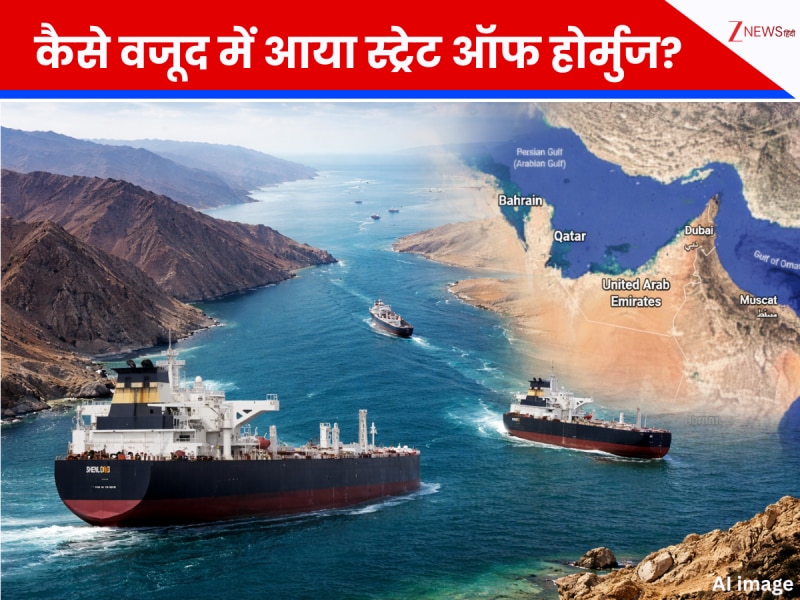
The Ancient Roots of Hormuz: Unveiling the Geological Birth of the World's Busiest Strait
The Strait of Hormuz, a narrow waterway connecting the Persian Gulf to the Gulf of Oman, has been a crucial maritime route for centuries. Today, it remains one of the world's most important and busiest sea lanes, with over 20% of the world's oil exports passing through it. However, the geological history of this strategic waterway dates back millions of years, predating human existence. In this article, we will delve into the ancient roots of Hormuz and uncover the secrets of how nature created this critical choke point.
The Tectonic Puzzle
The Strait of Hormuz is situated in the Arabian Peninsula, where the Arabian plate meets the Eurasian plate. The region's complex tectonic history has played a significant role in shaping the strait's formation. Geologists believe that the strait was created around 10-15 million years ago, during the Miocene epoch, when the Arabian plate began to diverge from the Eurasian plate. This process, known as rifting, led to the formation of a rift valley, which eventually became the strait.
The Birth of the Strait
The geological birth of Hormuz is attributed to a series of tectonic events that occurred over millions of years. The process began with the uplift of the Arabian plate, which led to the creation of a mountain range called the Zagros Mountains. As the plate continued to rise, it collided with the Eurasian plate, causing the Earth's crust to buckle and fold. This resulted in the formation of a series of faults and fractures, which eventually connected to form the Strait of Hormuz.
The Role of Erosion
Erosion played a crucial role in shaping the strait's morphology over millions of years. The relentless pounding of the sea against the rocky coastline led to the erosion of the surrounding mountains, creating a narrow and winding waterway. The Strait's unique shape, with its steep cliffs and narrow channels, is a result of this erosion process.
The Importance of Hormuz
The Strait of Hormuz has been a critical maritime route for centuries, with significant trade and commerce passing through it. The strait's importance lies in its role as a gateway to the Persian Gulf, which is home to some of the world's largest oil reserves. The strait's narrow waters make it a natural bottleneck, allowing only a limited number of vessels to pass through at any given time. This has made Hormuz a strategic location for military powers, with several naval bases and military installations situated along its shores.
The Modern-Day Importance of Hormuz
Today, the Strait of Hormuz is more important than ever, with the global economy heavily reliant on the flow of oil and other commodities through the strait. However, the strait's importance has not gone unnoticed, and several countries have invested heavily in its security. The United States, in particular, has been involved in several naval exercises and deployments in the region, with the aim of ensuring the free flow of traffic through the strait.
Conclusion
In conclusion, the Strait of Hormuz is a natural wonder that has been shaped by millions of years of geological activity. From its tectonic birth to its erosion-driven morphology, the strait's history is a testament to the power of nature. Today, the Strait of Hormuz remains a critical maritime route, with its importance extending far beyond its narrow waters. As the world's economy continues to rely on the flow of oil and other commodities through the strait, it is essential that we understand and appreciate its ancient roots.