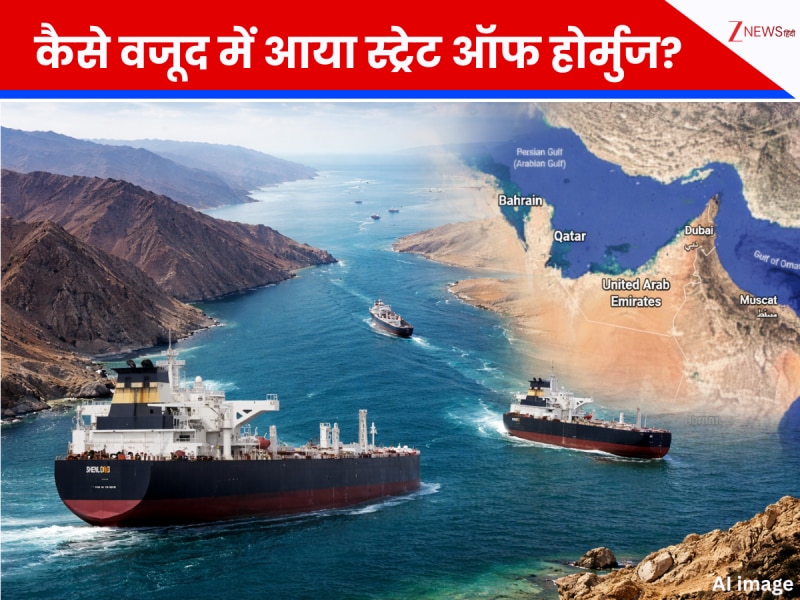
The Strait of Hormuz: A Maritime Highway with a Rich Geological History
Introduction
The Strait of Hormuz, a narrow and strategic waterway connecting the Persian Gulf to the Gulf of Oman, has been a vital artery of international trade for centuries. Today, it is one of the busiest shipping lanes in the world, with over 20% of the world's oil exports passing through it. But how did this crucial waterway come into existence? A team of geologists has recently uncovered the secrets of the Strait's geological birth, revealing that it has a rich history that predates human existence by millions of years.
The Geological Birth of Hormuz
The Strait of Hormuz is located at the southern tip of Iran, where the Arabian Peninsula meets the Persian Gulf. The region is characterized by a unique combination of tectonic activity, erosion, and sedimentation, which have shaped the landscape over millions of years. The strait itself is a relatively recent feature, with its formation dating back to the Paleogene period, around 25-30 million years ago.
During this period, the Arabian Plate was in a state of intense tectonic activity, resulting in the formation of a series of fault lines and mountains. The collision between the Arabian and Eurasian plates caused the Earth's crust to buckle and fold, creating a series of mountains and valleys. The Strait of Hormuz was formed as a result of this tectonic activity, as the Earth's crust was stretched and thinned, creating a narrow channel between the Arabian Peninsula and the Iranian plateau.
The Role of Erosion and Sedimentation
Over millions of years, the Strait of Hormuz has been shaped by the forces of erosion and sedimentation. The high-energy waters of the Persian Gulf and the Gulf of Oman have worn away the rock formations, creating a narrow and winding channel. Sedimentation has also played a crucial role in the formation of the strait, as sand and sediment have been deposited at the mouth of the channel, forming a natural barrier against the open sea.
The combination of tectonic activity, erosion, and sedimentation has resulted in the formation of a unique landscape, with a narrow strait flanked by towering cliffs and mountains. The strait's width varies from 3 to 30 kilometers, and its depth ranges from 10 to 40 meters.
The Importance of the Strait of Hormuz
Today, the Strait of Hormuz is a crucial waterway for international trade, with over 20% of the world's oil exports passing through it. The strait is also an important route for commercial shipping, with tankers, cargo vessels, and naval ships navigating its waters daily. The strait's strategic location has made it a key location for military operations, with Iran, the United States, and other regional powers vying for control of the waterway.
Conclusion
The Strait of Hormuz is a remarkable natural feature, with a rich geological history that predates human existence by millions of years. The combination of tectonic activity, erosion, and sedimentation has shaped the strait's unique landscape, making it a vital artery of international trade and a strategic location for military operations. As the world continues to rely on the Strait of Hormuz for its energy needs, it is essential to understand the geological forces that have shaped this critical waterway.
Conclusion
The Strait of Hormuz is a testament to the incredible forces of geological activity that have shaped our planet over millions of years. From its formation in the Paleogene period to its current status as a vital waterway, the Strait of Hormuz has played a critical role in the development of human civilization. As we look to the future, it is essential to recognize the importance of this natural feature and to work towards preserving its integrity for generations to come.
Key Takeaways
* The Strait of Hormuz has a rich geological history that predates human existence by millions of years.
* The strait was formed as a result of tectonic activity, erosion, and sedimentation.
* The Strait of Hormuz is a vital waterway for international trade, with over 20% of the world's oil exports passing through it.
* The strait is a strategic location for military operations, with Iran, the United States, and other regional powers vying for control of the waterway.
* The geological forces that have shaped the Strait of Hormuz have created a unique landscape, with towering cliffs and mountains flanking the narrow channel.