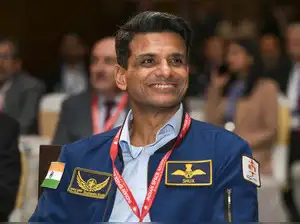
India is rapidly establishing itself as a significant player in the global space arena, attracting considerable international attention with its ambitious and successful space programs. This surge in prominence is largely attributed to a combination of strategic vision, technological advancements, cost-effectiveness, and a burgeoning private sector.
A Legacy of Achievement and a Bold Future:
India's journey in space began decades ago with the establishment of the Indian Space Research Organisation (ISRO). Initially focused on national development and scientific inquiry, ISRO has evolved into a powerhouse, consistently achieving remarkable feats. From the Chandrayaan missions that explored the Moon, including the historic landing of Chandrayaan-3 on the lunar south pole, to the Mars Orbiter Mission (Mangalyaan) that achieved inter-planetary success on its maiden attempt, India has demonstrated its technical prowess and innovative spirit.
The recent success of Chandrayaan-3 has been a pivotal moment, not just for India but for the global space community. The meticulous planning, precise execution, and groundbreaking scientific data gathered have cemented India's reputation for competence and reliability in complex space missions. This achievement has opened new avenues for international collaboration and inspired a generation of young scientists and engineers.
Cost-Effectiveness: A Game Changer:
One of the most compelling aspects of India's space program is its remarkable cost-effectiveness. ISRO has consistently delivered missions with budgets significantly lower than those of its international counterparts. This "frugal innovation" approach, achieved through smart engineering, indigenous development, and efficient resource management, makes India an attractive partner for nations and organizations seeking to undertake space missions without exorbitant financial outlay. This affordability has democratized access to space capabilities, fostering greater participation from developing nations.
Technological Prowess and Indigenous Capabilities:
ISRO's ability to design, develop, and launch sophisticated spacecraft and launch vehicles entirely indigenously is a testament to its strong scientific and engineering foundation. The Polar Satellite Launch Vehicle (PSLV) and the more powerful Geosynchronous Satellite Launch Vehicle (GSLV) are workhorses that have reliably placed numerous satellites into orbit for India and its international clients. India's growing expertise in areas like cryogenics, satellite propulsion, and remote sensing further strengthens its position.
The Rise of the Indian Space Sector:
Beyond ISRO, the Indian government has actively encouraged the growth of the private space sector. The establishment of the Indian National Space Promotion and Authorization Centre (IN-SPACe) has created a regulatory framework to support private players in space activities. This policy shift has led to the emergence of numerous startups and established companies focusing on satellite manufacturing, launch services, space data analytics, and more. This burgeoning ecosystem promises to accelerate innovation, increase competition, and further expand India's footprint in space.
Global Collaborations and Growing Influence:
India's growing capabilities are increasingly translating into fruitful international collaborations. ISRO has partnerships with space agencies across the globe, including NASA, ESA, and JAXA, for joint missions, data sharing, and technology development. The successful launch of satellites for international customers underscores India's reliability and competitive pricing. These collaborations not only enhance India's own capabilities but also contribute to the global scientific endeavor and peaceful exploration of space.
Challenges and the Road Ahead:
While India's trajectory in space is undeniably upward, challenges remain. Sustaining the pace of innovation, securing consistent funding, nurturing a larger pool of skilled professionals, and navigating the evolving regulatory landscape of space are crucial for continued growth. However, the nation's demonstrated resilience, adaptability, and unwavering commitment to scientific advancement suggest that these hurdles can be overcome.
Conclusion:
Shubhanshu Shukla's observation accurately reflects the current reality: India is no longer an emerging force in space programs; it is a significant and influential player. Its combination of ambitious scientific goals, cost-effective solutions, indigenous technological capabilities, and a vibrant private sector is drawing global attention and opening new frontiers in space exploration and utilization. As India continues to push the boundaries of what is possible in space, its influence on the global stage is set to grow even further.