
Politics
Schwarzenegger, Newsom mark climate bill’s anniversary | California
October 15, 2026
1,156 views
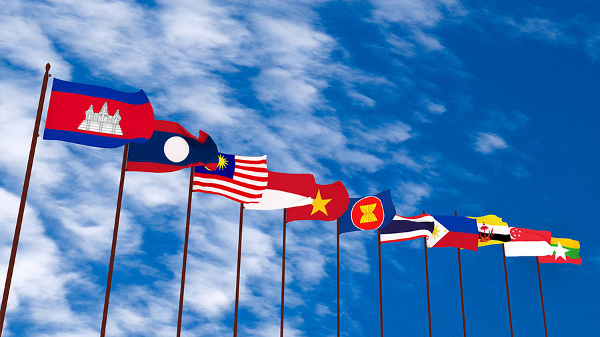
India and ASEAN Strengthen Defence Cooperation for a Secure and Stable Indo-Pacific India has reaffirmed its commitment to building a peaceful, inclusive and rules-based Indo-Pacific where countries can independently pursue their national interests, protect their sovereignty and advance economic development without external pressure. Defence Minister Rajnath Singh outlined this vision while addressing the inaugural ASEAN-India Defence Think Tank Forum at the Manohar Parrikar Institute for Defence Studies and Analyses (MP-IDSA) in New Delhi on October 14, 2026. The Defence Minister called for deeper cooperation between India and the Association of Southeast Asian Nations (ASEAN) in maritime security, defence technology, cybersecurity, artificial intelligence, defence manufacturing and disaster response. He emphasised that regional stability depends on mutual trust, respect for sovereignty, adherence to international law and sustained dialogue among nations. The two-day forum, held on October 14 and 15, brought together defence researchers, strategic experts and policymakers from India and all eleven ASEAN member states to examine emerging security challenges and identify opportunities for practical cooperation. India Advocates an Inclusive and Rules-Based Indo-Pacific Addressing the forum, Rajnath Singh stated that India&039;s Indo-Pacific vision seeks a regional environment where countries, regardless of their size or economic strength, can make independent decisions and pursue development in peace. He stressed that security challenges increasingly transcend national boundaries, making international cooperation essential for regional stability. Terrorism, cybercrime, piracy, trafficking, illegal fishing, climate-related disasters and threats to critical supply chains require coordinated responses involving governments, defence institutions and regional organisations. The Defence Minister also highlighted the impact of growing strategic competition and maritime tensions on regional security. He called for differences between countries to be addressed through peaceful dialogue before they develop into larger disputes. India&039;s approach, he explained, supports a regional order in which nations cooperate without being compelled to align with competing geopolitical groupings. Building mutual confidence, strengthening institutional dialogue and respecting international law remain central to this vision. Act East Policy, SAGAR and MAHASAGAR Guide India&039;s Regional Engagement India&039;s engagement with Southeast Asia is rooted in centuries of commercial, cultural and civilisational exchanges. These longstanding connections provide a foundation for expanding contemporary cooperation in defence, trade, technology and maritime security. Rajnath Singh reiterated that India&039;s Act East Policy represents a long-term commitment to working with Southeast Asian countries as equal partners. The policy complements India&039;s broader maritime visions of SAGAR, or Security and Growth for All in the Region, and MAHASAGAR, or Mutual and Holistic Advancement for Security and Growth Across Regions. These initiatives emphasise cooperation, regional connectivity, shared prosperity and collective approaches to maritime security. The Defence Minister highlighted the importance of ASEAN-led regional mechanisms in India&039;s Indo-Pacific strategy. He observed that India&039;s regional outlook and ASEAN&039;s approach to the Indo-Pacific can complement each other by encouraging cooperation among existing institutions rather than creating competing regional arrangements. Strengthening coordination through established ASEAN-led platforms would help promote a stable regional environment while respecting the priorities of individual countries. Maritime Security Emerges as a Central Priority for India and ASEAN Maritime security featured prominently in the Defence Minister&039;s address, reflecting the strategic and economic importance of the Indian Ocean and Southeast Asian waterways. The Indian Ocean and the maritime regions surrounding Southeast Asia form an interconnected space through which substantial volumes of international trade, energy supplies and essential commodities move. Maintaining safe and secure shipping routes is therefore a shared responsibility that directly affects economic stability, commercial connectivity and regional development. Rajnath Singh identified maritime domain awareness, interoperability and underwater cooperation as important areas for strengthening regional maritime security. Maritime domain awareness enables countries to monitor activities at sea, identify potential threats and exchange relevant information with partner agencies. Improved interoperability allows naval and coast guard forces from different countries to coordinate more effectively during maritime security operations, search-and-rescue missions and humanitarian emergencies. Underwater cooperation is also gaining importance as maritime nations strengthen their ability to understand and monitor activities beneath the sea surface. The Defence Minister emphasised that enhanced cooperation in these areas would contribute to a stable maritime environment governed by international law. ASEAN-India Year of Maritime Cooperation 2026 Creates New Opportunities With 2026 designated as the ASEAN-India Year of Maritime Cooperation, India and Southeast Asian countries have an opportunity to translate shared maritime security objectives into practical initiatives. Rajnath Singh called for stronger information-sharing mechanisms, closer cooperation among navies and coast guards, and improved collective response capabilities during maritime emergencies. He also emphasised the need for coordinated efforts against piracy, trafficking, illegal fishing and other unlawful activities at sea. Such cooperation can strengthen maritime law enforcement while improving the capacity of regional countries to respond to emerging threats. The Defence Minister highlighted the importance of developing practical arrangements that enable maritime agencies to communicate efficiently, share operational information and coordinate activities in accordance with international law. These initiatives would complement existing bilateral and multilateral naval engagements while expanding India&039;s maritime cooperation with ASEAN countries. Artificial Intelligence, Drones and Cybersecurity Transform Defence Cooperation Emerging defence technologies formed another major component of the discussions, with Rajnath Singh highlighting the growing importance of artificial intelligence, unmanned systems, cybersecurity and space-based capabilities. Recent military conflicts have demonstrated how relatively inexpensive drones can challenge sophisticated and costly defence systems. This changing technological environment has increased the importance of affordable, adaptable and rapidly deployable defence solutions. The Defence Minister emphasised that technological innovation should extend beyond large defence manufacturers and established research institutions. Startups, universities, smaller enterprises and independent research organisations can contribute significantly to developing advanced defence technologies. India&039;s Innovations for Defence Excellence (iDEX) initiative and the Technology Development Fund (TDF) provide mechanisms for supporting innovation and encouraging participation by emerging technology developers in defence research and development. Rajnath Singh proposed exploring collaborative innovation programmes involving Indian and ASEAN researchers to address clearly defined technological challenges. Potential areas include counter-drone systems, cyber defence, maritime surveillance and technologies supporting humanitarian assistance and disaster response. Joint Research and Technology Development to Strengthen Defence Innovation India has proposed greater cooperation with ASEAN countries through joint research projects, shared testing facilities, researcher exchanges and innovation challenges. Such initiatives could enable participating countries to combine technical expertise, research infrastructure and operational experience while developing technologies suited to regional security requirements. The Defence Minister suggested that exchanges involving young researchers and technology specialists could strengthen long-term institutional partnerships. Joint innovation challenges could also encourage startups, universities and research organisations to develop solutions for specific defence and maritime security problems. He emphasised that technological collaboration must incorporate appropriate safeguards for sensitive information, intellectual property rights and responsible technology sharing. These arrangements would help build mutual trust while enabling participating countries to develop useful technological capabilities. Greater engagement among research institutions and defence industries could also support the development of a broader regional defence innovation ecosystem. India Offers Defence Industrial Cooperation with ASEAN Countries India expressed its readiness to explore deeper defence industrial partnerships with ASEAN member states across several equipment and technology categories. Rajnath Singh identified patrol vessels, radar systems, air-defence equipment, helicopters, drones and related defence technologies as potential areas for cooperation based on the individual requirements and priorities of partner countries. He explained that India&039;s Aatmanirbhar Bharat initiative focuses on strengthening domestic defence manufacturing and technological capabilities while creating opportunities for collaboration with trusted international partners. Self-reliance, he emphasised, does not require countries to develop every capability independently or limit their technological partnerships. Instead, stronger domestic industrial capabilities can provide a foundation for joint development, manufacturing, maintenance and technological improvement. India&039;s expanding defence manufacturing ecosystem provides opportunities for ASEAN countries to explore partnerships involving equipment development, production, technical support and specialised services. Such cooperation could support the defence modernisation priorities of participating countries while encouraging deeper industrial engagement. Co-Development, Co-Production and MRO to Build Long-Term Partnerships The Defence Minister placed particular emphasis on moving beyond conventional defence equipment transactions towards sustained industrial cooperation. He identified co-development, co-production, maintenance, repair and overhaul (MRO), professional training and long-term technical support as important components of effective defence partnerships. Joint development programmes can enable participating countries to contribute their technical expertise to equipment design and improvement. Co-production arrangements can support manufacturing capabilities while creating opportunities for local industries and skilled personnel. Maintenance, repair and overhaul cooperation is equally important because defence equipment requires reliable technical support throughout its operational life. Developing local maintenance capabilities can reduce dependence on distant service providers, strengthen operational readiness and support regional supply chains. Rajnath Singh urged defence researchers and industry specialists to examine the factors that make such partnerships sustainable, including clearly defined requirements, dependable after-sales support, appropriate technology safeguards and equitable sharing of responsibilities and benefits. He also highlighted the importance of involving local companies and skilled workers so that defence cooperation contributes to industrial development and technological capacity building. The broader objective is to establish lasting industrial relationships that benefit participating countries beyond individual equipment purchases. Humanitarian Assistance and Disaster Relief Receive Greater Attention The growing frequency and severity of natural disasters have made humanitarian assistance and disaster relief an increasingly important component of regional security cooperation. Rajnath Singh called for Humanitarian Assistance and Disaster Relief (HADR) to become a regular subject of defence dialogue between India and ASEAN countries. Cyclones, floods, rising sea levels and extreme weather events can damage critical infrastructure, disrupt maritime transportation and threaten coastal communities. Ports, shipping networks and essential supply chains are particularly vulnerable to major natural disasters, making coordinated preparedness important for both humanitarian and economic reasons. The Defence Minister encouraged participating countries to exchange experiences, share best practices and strengthen coordination mechanisms before emergencies occur. Joint training programmes, disaster response exercises and improved communication among military and civilian agencies can contribute to faster and more effective humanitarian operations. India&039;s experience in maritime disaster response and regional humanitarian assistance provides opportunities for practical cooperation with Southeast Asian partners. Strengthening preparedness across the region would improve the ability of participating countries to protect lives, support affected communities and restore essential services following natural disasters. Defence Think Tanks to Develop Practical India-ASEAN Security Initiatives Rajnath Singh highlighted the important role of defence think tanks in connecting strategic research with practical policy development. He emphasised that governments require not only informed analysis of security challenges but also workable recommendations that can guide institutional cooperation. The Defence Minister proposed developing a joint India-ASEAN research agenda covering maritime security, cyber threats, emerging technologies, disaster response and defence industrial cooperation. Such an agenda would help participating institutions concentrate their research capabilities on issues of common regional importance. He also encouraged regular exchanges among researchers through fellowships, visiting scholar programmes and joint publications. These initiatives could strengthen professional relationships between India&039;s strategic research community and its Southeast Asian counterparts while supporting sustained dialogue on regional security developments. Another proposal involved identifying a limited number of pilot projects that could demonstrate the practical value of collaborative research. Potential initiatives include tabletop exercises on maritime disaster response, joint studies on counter-drone technologies and research projects focused on secure maritime information sharing. The Defence Minister also advocated stronger Track 1.5 and Track 2 dialogue mechanisms, which bring together officials, researchers, policy specialists and other experts to discuss regional security issues. He suggested that the forum prepare focused recommendations, identify institutions responsible for advancing them and review progress during future engagements. First ASEAN-India Defence Think Tank Forum Strengthens Institutional Dialogue The inaugural ASEAN-India Defence Think Tank Forum was organised at the Manohar Parrikar Institute for Defence Studies and Analyses in New Delhi on October 14 and 15, 2026. The initiative followed an announcement made by Rajnath Singh during the second ASEAN-India Defence Ministers&039; Informal Meeting in Kuala Lumpur on October 31, 2025, held on the sidelines of the 12th ASEAN Defence Ministers&039; Meeting Plus (ADMM-Plus). The forum was designed to strengthen strategic dialogue, encourage joint analysis and identify practical avenues for defence and security cooperation. Its two-day programme covered strategic stability, regional geopolitics, maritime security, grey-zone challenges, humanitarian assistance, maritime domain awareness, artificial intelligence, cybersecurity, space technologies, unmanned systems, defence industrial collaboration and resilient supply chains. In his welcome address, Ambassador Sujan R. Chinoy, Director General of MP-IDSA, described the forum as an important institutional milestone in the development of ASEAN-India defence relations. Welcoming representatives from India and all eleven ASEAN member states, he expressed confidence that the initiative would establish enduring dialogue between the strategic communities of both regions. The participation of researchers, defence specialists and policy experts provided an opportunity to examine common security concerns while identifying areas where cooperation could deliver practical results. The forum also complemented established diplomatic and defence mechanisms by creating an additional platform for sustained engagement between research institutions. India-ASEAN Defence Partnership Advances Regional Security and Stability The inaugural ASEAN-India Defence Think Tank Forum reflects the growing importance of defence and security cooperation in India&039;s relationship with Southeast Asia. India&039;s emphasis on maritime domain awareness, defence innovation, industrial collaboration and humanitarian assistance demonstrates an approach that combines security cooperation with technological and institutional capacity building. The proposals for joint research, collaborative defence manufacturing, maritime information sharing and disaster response training offer opportunities to strengthen practical cooperation between India and ASEAN member states. By encouraging long-term industrial partnerships and greater participation from startups, universities and research institutions, India is also seeking to broaden the foundations of regional defence cooperation. The forum has created an institutional platform for translating shared strategic interests into coordinated research, professional exchanges and practical security initiatives. As India continues to advance its Act East Policy alongside the SAGAR and MAHASAGAR visions, stronger engagement with ASEAN will remain central to its approach towards the Indo-Pacific. The partnership reinforces a shared commitment to regional sovereignty, freedom of navigation, peaceful dialogue, international law and collective security, supporting an Indo-Pacific where nations can pursue prosperity and development through cooperation and mutual respect. References 1. Press Information Bureau, Ministry of Defence, Government of India *India Seeks an Indo-Pacific Where All Countries Make Their Own Choices, Protect Their Interests & Pursue Development in Peace: Raksha Mantri at 1st ASEAN-India Defence Think Tank Forum* Published: October 14, 2026 https://pib.gov.in/ 2. Ministry of Defence, Government of India Official information on India&039;s defence cooperation and regional security initiatives. https://mod.gov.in/ 3. Manohar Parrikar Institute for Defence Studies and Analyses (MP-IDSA) ASEAN-India Defence Think Tank Forum and research on regional security cooperation. https://www.idsa.in/ 4. ASEAN Secretariat ASEAN-India dialogue relations and ASEAN-led defence cooperation mechanisms. https://asean.org/ The post India and ASEAN Strengthen Defence Cooperation for a Secure and Stable Indo-Pacific appeared first on Dharmakshethra - India Unabridged | Defence, Diplomacy, Economy, Health, Ayurveda, Heritage.
Loading more news...
You've reached the end of our news feed. Check back later for more updates!