
Business
Invetech & MeMed win 2026 Good Design Award Gold for MeMed Key™
October 9, 2026
2,539 views
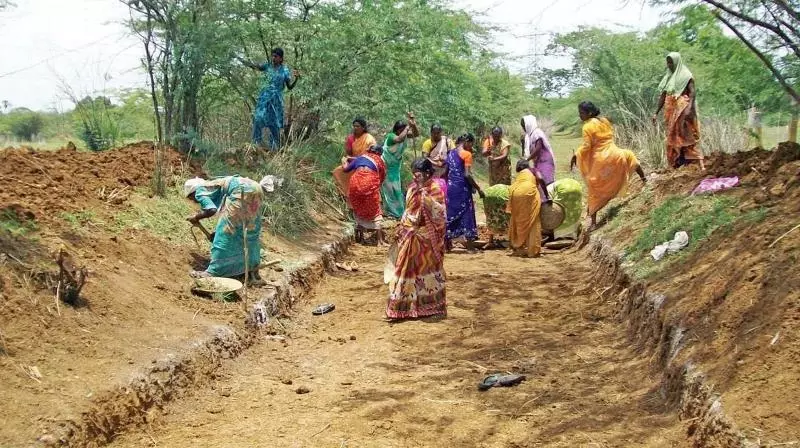
Recent reports indicate a significant decline in guaranteed rural employment in Andhra Pradesh (AP), with a staggering drop of 563 lakh days. This alarming trend has been highlighted by LibTech India, an organization dedicated to analyzing rural employment data and advocating for transparency in government schemes. The decrease in employment days raises serious concerns about the effectiveness of rural job schemes and the socio-economic conditions of the vulnerable populations in the state.
The decline in guaranteed rural employment can be attributed to several factors, primarily the weaker work environment and the transition impact of the VB-G RAM G (Village-Based Grama Rural Asset Management Guarantee) initiative. The VB-G RAM G program, aimed at improving rural infrastructure and creating job opportunities, has faced challenges in its implementation, leading to a noticeable dip in the days of work provided to rural laborers. Many workers who relied on these schemes for their livelihood are now finding themselves without adequate employment opportunities, exacerbating the already critical situation in rural areas.
LibTech India has been pivotal in uncovering these statistics and shedding light on the implications of the decreasing employment days. By employing data analytics and leveraging technology, the organization tracks employment trends and highlights discrepancies in government data. Their findings underscore the urgent need for policy interventions to address the gaps in rural employment schemes. The organization emphasizes that without proper monitoring and evaluation, the objectives of rural employment initiatives remain unfulfilled, leaving millions of workers vulnerable.
The repercussions of the decline in guaranteed rural employment are profound. Families that depend on daily wages for survival are now struggling to make ends meet. The reduced employment days translate into lower household incomes, which can lead to increased poverty levels in rural communities. This economic strain affects not only the families but also the local economies, as decreased spending power leads to a ripple effect on businesses and services in the area.
In light of these findings, there is an urgent call for action from various stakeholders, including government officials, non-governmental organizations, and community leaders. It is essential to reassess the current rural employment schemes and implement strategies that can effectively address the barriers to employment. This includes enhancing the implementation of the VB-G RAM G initiative, ensuring that it meets its objectives of providing sustainable employment and improving rural infrastructure.
As Andhra Pradesh grapples with this employment crisis, the focus should shift towards innovative solutions that can revitalize rural employment. This could involve adopting new technologies, improving training programs, and facilitating better access to markets for rural products. Additionally, there needs to be a concerted effort to engage communities in planning and executing employment programs, ensuring they are tailored to meet the specific needs and challenges faced by rural laborers.
The drop in guaranteed rural employment in Andhra Pradesh by 563 lakh days is a wake-up call for all stakeholders involved in rural development. The insights provided by LibTech India serve as a crucial reminder of the ongoing challenges in ensuring job security for rural populations. It is imperative that concerted efforts are made to address these challenges, promote transparency, and ensure that rural employment schemes are effective in providing the support that communities desperately need.


Loading more news...
You've reached the end of our news feed. Check back later for more updates!