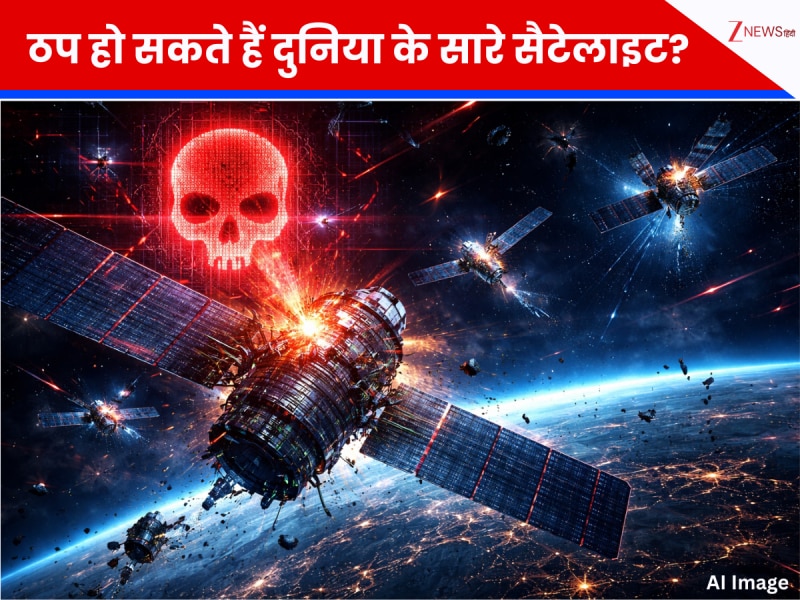
The looming threat of AI-based cyber attacks on satellites: A warning from experts
The world is on high alert as experts warn of an impending catastrophic threat to the global satellite infrastructure. A recent warning from scientists and defense experts has sparked widespread concern about the potential risks of AI-based cyber attacks on satellites, which could have devastating consequences for the entire world. The threat is not just hypothetical; experts believe that the next two years (by 2028) could see the launch of AI-based cyber attacks that could bring about a "Satellite Apocalypse."
What is a Satellite Apocalypse?
A Satellite Apocalypse refers to a hypothetical scenario in which AI-based cyber attacks cripple or destroy the global satellite infrastructure, disrupting critical services such as communication, navigation, and weather forecasting. Satellites play a vital role in modern society, providing connectivity, navigation, and weather forecasting services that are essential for global commerce, transportation, and daily life.
The risks are real
The warning from experts comes at a time when the world is already grappling with the consequences of cyber attacks on critical infrastructure. The increasing reliance on technology has made it easier for hackers to launch attacks, and the consequences can be devastating. The impact of a Satellite Apocalypse could be catastrophic, disrupting global communication networks, causing widespread power outages, and even affecting the functioning of critical infrastructure such as hospitals and emergency services.
How can AI-based cyber attacks be launched?
AI-based cyber attacks on satellites can be launched through various means, including:
1. Satellite hacking: Hackers can gain access to satellite systems by exploiting vulnerabilities in their software or hardware.
2. Satellite spoofing: Hackers can create fake satellite signals that mimic the signals of legitimate satellites, allowing them to disrupt communication and navigation services.
3. Space-based attacks: Hackers can launch attacks on satellites from space, using advanced technologies such as laser beams or high-powered radio frequencies.
The consequences of a Satellite Apocalypse
The consequences of a Satellite Apocalypse could be far-reaching and devastating. Some of the potential impacts include:
1. Communication disruptions: Global communication networks could be disrupted, causing widespread disruptions to business and daily life.
2. Navigation system failures: GPS and other navigation systems could fail, causing disruptions to transportation and logistics.
3. Power outages: Satellites play a critical role in power grid management, and a failure could lead to widespread power outages.
4. Economic losses: A Satellite Apocalypse could have significant economic implications, including losses in the billions of dollars.
What can be done to prevent a Satellite Apocalypse?
To prevent a Satellite Apocalypse, experts recommend the following:
1. Increase cybersecurity measures: Satellite operators and manufacturers must increase their cybersecurity measures to prevent hacking and spoofing attacks.
2. Improve satellite design: Satellites must be designed with cybersecurity in mind, incorporating advanced security features and protocols.
3. Develop international standards: International standards must be developed to ensure that satellite systems are secure and resilient.
4. Increase awareness and education: Public awareness and education campaigns must be launched to educate people about the risks of Satellite Apocalypses and the importance of cybersecurity.
Conclusion
The warning from experts about the potential risks of AI-based cyber attacks on satellites is a stark reminder of the importance of cybersecurity in the modern world. The consequences of a Satellite Apocalypse could be devastating, and it is imperative that we take action to prevent it. By increasing cybersecurity measures, improving satellite design, developing international standards, and increasing awareness and education, we can prevent a Satellite Apocalypse and ensure the continued safe and secure operation of our global satellite infrastructure.