
Business
Invetech & MeMed win 2026 Good Design Award Gold for MeMed Key™
October 9, 2026
2,539 views
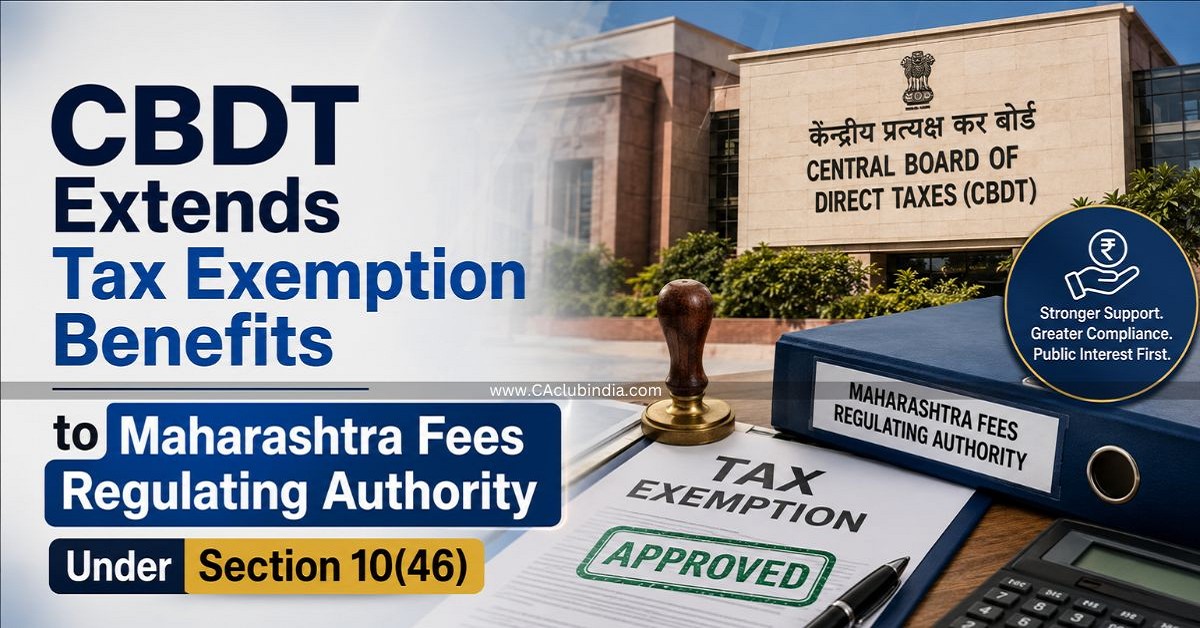
In a significant development for the educational sector in Maharashtra, the Central Board of Direct Taxes (CBDT) has extended tax exemption benefits to the Maharashtra Fees Regulating Authority (MFRA) under Section 10(46) of the Income-tax Act, 1961. This move is expected to bolster the operations of the MFRA, which plays a crucial role in regulating the fees charged by educational institutions across the state.
Section 10(46) of the Income-tax Act, 1961, provides tax exemptions to certain authorities, boards, and other bodies established by the government. This provision is designed to promote the welfare of the community by facilitating the smooth functioning of these regulatory bodies without the burden of taxation. The extension of these benefits to the MFRA is a recognition of its pivotal role in ensuring that educational institutions maintain fair fee structures.
The tax exemption granted under this section means that the MFRA will not be liable to pay income tax on the funds it receives. This financial relief is crucial for the authority as it can now allocate more resources towards its regulatory functions, including monitoring fee structures, conducting audits, and addressing grievances from students and parents alike. This is particularly important in a state where education is a top priority and where many families struggle to afford rising tuition fees.
With the MFRA now enjoying tax exemption benefits, the authority is expected to enhance its capacity to oversee educational institutions more effectively. The MFRA's primary mandate is to ensure that fees charged by private educational institutions are reasonable and transparent. This exemption allows the MFRA to operate with increased efficiency and effectiveness, ultimately benefiting students and parents across Maharashtra.
The enhanced oversight capabilities of the MFRA can lead to improved compliance among educational institutions. The authority can now conduct more frequent audits and inspections, ensuring that schools and colleges adhere to the prescribed fee structures and do not impose arbitrary charges on students. Furthermore, this move may encourage greater transparency and accountability within the education sector, fostering trust among stakeholders.
While the tax exemption is a positive development, it is important to note that certain conditions are likely attached to this benefit. The MFRA must maintain proper records and ensure that its operations align with the objectives set forth by the Income-tax Act. Moreover, the authority will need to provide regular reports to the CBDT regarding its financial activities and compliance with the stipulated regulations.
To maintain transparency and ensure that the tax exemption is utilized efficiently, the MFRA may be required to implement additional governance measures. This could include regular audits by independent bodies and the establishment of clear protocols for fee regulation and dispute resolution. By adhering to these conditions, the MFRA can reinforce public confidence in its operations and demonstrate its commitment to serving the educational community.
The CBDT's decision to grant tax exemption benefits to the Maharashtra Fees Regulating Authority opens up new avenues for the authority's growth and effectiveness. With increased funding and resources, the MFRA can expand its outreach programs, conduct more comprehensive research on fee regulation, and engage in proactive measures to address common issues faced by students and parents.
This tax exemption is not just a financial boon for the MFRA but also a significant step towards strengthening the entire education sector in Maharashtra. By ensuring that educational institutions operate within a fair fee framework, the MFRA can contribute to a more equitable educational landscape. This, in turn, can lead to increased access to quality education for students from diverse backgrounds, fostering a more inclusive society.
In conclusion, the extension of tax exemption benefits to the Maharashtra Fees Regulating Authority under Section 10(46) of the Income-tax Act, 1961, marks a notable advancement in the regulation of educational fees in Maharashtra. This move not only empowers the MFRA to execute its responsibilities more effectively but also sets a precedent for similar authorities across the country. As the MFRA leverages these benefits to enhance its operations, the ultimate goal of ensuring fair and transparent fee structures in educational institutions will be realized, benefiting students and parents alike.


Loading more news...
You've reached the end of our news feed. Check back later for more updates!