Politics
धरना-प्रदर्शनों का नया कारोबार: लोकतंत्र की आड़ में आखिर किसके हित साधे जा रहे हैं?
October 10, 2026
1,612 views

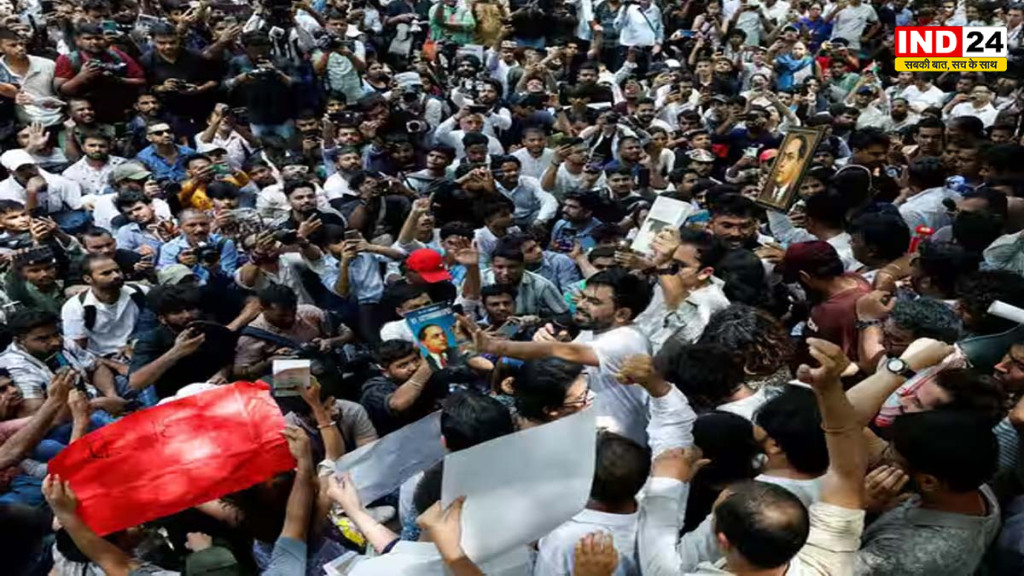
In a dramatic escalation of political tension, the BJP chief has launched a scathing critique of the Cockroach Janta Party (CJP), referring to them as ‘puppets’ in a larger game of political maneuvering. This comment comes in the wake of a recent protest organized by the CJP, which has given a 7-day ultimatum for the education minister to resign. The protest, which has drawn attention to various grievances regarding the current state of the education system, underscores a growing rift among political factions in the region.
Highlighting the aspirations of the younger generation, the BJP chief stated, “While youth wants to work for building the nation and secure their future, some people labeled the youth as ‘anti-establishment’.” This statement resonates with many young voters who feel disillusioned with the current political landscape. The BJP has positioned itself as a party that supports youth empowerment and development, emphasizing the need for constructive engagement rather than labeling dissent as rebellion.
The CJP's protest, characterized by its unique and bold imagery, aims to raise awareness about the pressing issues in the education sector. Protesters, wearing costumes and carrying props, have drawn comparisons to cockroaches, symbolizing what they perceive as the decay in educational policies. “We are not just protesting; we are here to demand accountability from our leaders,” said a spokesperson for the CJP during the rally. The ultimatum set by the CJP has sparked discussions on social media, with many expressing their support for the movement.
The BJP chief’s remarks about the CJP are part of a broader strategy to undermine the opposition's credibility. By labeling them as ‘puppets,’ the BJP aims to discredit their demands and rally their supporters around a narrative of stability and progress. Political analysts suggest that this tactic may backfire if the CJP successfully mobilizes public sentiment around their cause. “The youth are increasingly looking for authenticity in their leaders,” noted a political commentator. “If the BJP fails to address their concerns, they could lose significant support.”
The education minister, who has been in office for several years, faces mounting pressure not only from the CJP but also from various student organizations and educational bodies. Critics argue that under his leadership, the quality of education has declined, with many institutions struggling to meet basic standards. The protestors are demanding a comprehensive review of educational policies, increased funding for schools, and better support for teachers. “We deserve an education system that prepares us for the future, not one that stifles our potential,” stated a student leader at the protest.
Social media has played a pivotal role in the CJP’s ability to organize and amplify their message. Platforms like Twitter and Facebook have been flooded with hashtags related to the protest, creating a virtual space for young people to express their frustrations and rally support. This digital activism is indicative of a shift in how political movements are conducted in the modern age, making it easier for grassroots organizations to reach a wider audience. “We are leveraging social media to connect with our peers and share our message,” explained a CJP member.
The current situation raises important questions about the future of political engagement in the country. With an increasingly vocal youth demographic, political parties must adapt to meet the expectations of younger voters who are demanding transparency, accountability, and genuine representation. The BJP’s response to the CJP’s protest will be crucial in shaping the narrative leading up to the next elections. As the deadline approaches, all eyes will be on the education minister and the government’s response to the mounting pressure.
The unfolding drama between the BJP and the Cockroach Janta Party serves as a reminder of the dynamic and often contentious landscape of Indian politics. As protests continue and the youth demand change, the implications of these events will likely resonate far beyond the immediate political arena, potentially redefining the relationship between the establishment and the emerging generation of leaders and activists.


Loading more news...
You've reached the end of our news feed. Check back later for more updates!