The Celestial Spectacle of 2026: A \"Ring of Fire\" to Grace the Heavens on February 17th
Introduction: A Glimpse into Cosmic Grandeur
The celestial sphere, an eternal canvas of the cosmos, frequently presents us with breathtaking phenomena that inspire awe and wonder. Among these, solar eclipses stand out as particularly captivating events, transforming the familiar face of our Sun into something otherworldly. On February 17, 2026, the Earth will witness one such extraordinary occurrence: an annular solar eclipse, famously dubbed the \"Ring of Fire.\" This astronomical marvel promises to be the first major celestial event of its kind in the year, offering an unparalleled opportunity for skygazers to witness a spectacular dance between our planet, its moon, and our life-giving star. This detailed exposition aims to unravel the intricacies of this impending eclipse, providing comprehensive information about its timing, visibility, and the scientific principles that govern its occurrence. We will delve into the geographical path of the eclipse, the optimal viewing conditions, and the historical and cultural significance of such cosmic alignments. Furthermore, we will explore the scientific importance of observing these events and the safety precautions that must be taken to ensure an enjoyable and secure experience.
Understanding the Annular Solar Eclipse: A Cosmic Ballet of Light and Shadow
At its core, a solar eclipse occurs when the Moon passes directly between the Sun and Earth, casting a shadow on our planet. There are several types of solar eclipses, each determined by the precise alignment of the Sun, Moon, and Earth and the apparent sizes of these celestial bodies as viewed from Earth.
* Total Solar Eclipse: In a total solar eclipse, the Moon completely obscures the Sun\'s disk. This happens when the Moon is at its closest point to Earth in its elliptical orbit (perigee), making it appear large enough to cover the Sun entirely. During totality, the Sun\'s corona, its ethereal outer atmosphere, becomes visible, creating a truly spectacular sight.
* Partial Solar Eclipse: In a partial solar eclipse, the Moon only covers a portion of the Sun\'s disk. This occurs when the alignment is not perfect, or when the observer is located outside the path of totality.
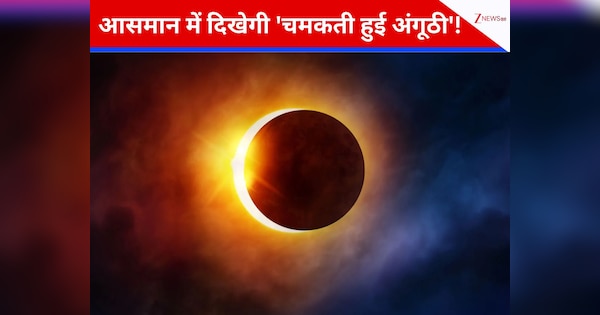
* Annular Solar Eclipse: The phenomenon we will witness on February 17, 2026, is an annular solar eclipse. This occurs when the Moon is at its farthest point from Earth in its orbit (apogee). At apogee, the Moon appears smaller in the sky than the Sun. Consequently, even when the Moon is directly in front of the Sun, it cannot completely cover the Sun\'s disk. Instead, a ring of the Sun\'s bright surface remains visible around the dark silhouette of the Moon. This creates the breathtaking visual effect known as the \"Ring of Fire.\"
The \"Ring of Fire\" is a direct consequence of the differing apparent sizes of the Sun and Moon as viewed from Earth. The Sun, being much larger than the Moon, maintains its dominance in the sky, peeking out from behind the lunar disc. The brilliance of this exposed solar edge is what gives the eclipse its fiery moniker.
The Celestial Mechanics: Why February 17, 2026, Hosts the Ring of Fire
The occurrence of solar eclipses is not random; it is a predictable outcome of celestial mechanics governed by the laws of orbital motion. Both the Earth and the Moon orbit the Sun, but their orbits are not perfectly aligned. The Moon\'s orbit is tilted by approximately 5 degrees relative to the Earth\'s orbit around the Sun (the ecliptic plane).
Eclipses can only happen when the Sun, Moon, and Earth are aligned in such a way that the Moon\'s orbital plane intersects the ecliptic plane at a point where the Moon is positioned between the Sun and Earth (new moon phase). These intersection points are called \"nodes.\" For an eclipse to occur, the new moon must happen when the Moon is near one of these nodes.
The specific type of solar eclipse – total, partial, or annular – depends on the distance of the Moon from Earth during the alignment. As mentioned, if the Moon is closer to Earth (perigee) during the new moon phase, it appears larger and can cause a total eclipse. If it is farther away (apogee), it appears smaller and results in an annular eclipse.
The date of February 17, 2026, is significant because it marks a specific point in the orbital cycles of the Earth and Moon where these conditions align to produce an annular solar eclipse. Astronomical calculations, based on centuries of observation and refined by advanced computational models, predict these events with remarkable accuracy. The precise timing and path of the eclipse are meticulously calculated, allowing scientists and the public alike to prepare for these celestial spectacles.
The Grand Path: Where Will the \"Ring of Fire\" Be Visible?
The annular solar eclipse of February 17, 2026, will not be visible from every point on Earth. Like all solar eclipses, it will traverse a specific geographical path across the globe. This path, known as the \"path of annularity,\" is the region where the central alignment of the Sun, Moon, and Earth occurs, allowing observers to witness the full \"Ring of Fire\" effect.
While the exact, highly detailed path can be pinpointed with sophisticated astronomical software, general information regarding its trajectory is crucial for potential viewers. For the February 17, 2026, annular eclipse, preliminary astronomical data suggests that the path of annularity will primarily sweep across:
* The Southern Hemisphere: The eclipse is expected to begin its journey across the Pacific Ocean.
* South America: A significant portion of South America will have the opportunity to witness this celestial event. Countries in the southern parts of the continent are likely to lie within the path of annularity.
* Africa: As the eclipse progresses, its path will likely extend over parts of Africa.
Key Regions of Visibility (General Outline):
While specific city-level predictions require more advanced astronomical data, the following general regions are anticipated to experience the annular solar eclipse:
* South America: Regions in countries such as Chile, Argentina, and potentially Uruguay or southern Brazil might be prime viewing locations. The exact trajectory will determine which specific areas are most favored.
* Africa: Several southern African nations could be within the path. Countries like South Africa, Namibia, Botswana, Zimbabwe, and Mozambique are strong candidates, depending on the precise north-south sweep of the shadow.
Important Note for Potential Viewers: The path of annularity is a relatively narrow band on Earth\'s surface. Outside this path, observers will witness a partial solar eclipse, where only a portion of the Sun is obscured by the Moon. The farther one is from the path of annularity, the less the Sun will be covered. Therefore, for those wishing to experience the \"Ring of Fire,\" precise geographical planning is essential. Travelers intending to witness the event should consult detailed eclipse maps and resources from reputable astronomical organizations as the date approaches. These maps will provide precise ingress and egress times for specific locations within the path of annularity.
Timing is Everything: When to Witness the Cosmic Event
The timing of the annular solar eclipse on February 17, 2026, is critical for planning viewing sessions. Like all celestial events, eclipses unfold over a period of time, with different phases occurring sequentially. The key timings to consider are:
* Partial Eclipse Begins (First Contact): This marks the moment when the Moon\'s silhouette first begins to touch the Sun\'s disk. From this point onwards, the eclipse is observable.
* Annularity Begins (Second Contact): This is the crucial moment when the Moon has moved sufficiently across the Sun to reveal the complete \"Ring of Fire.\" This is the peak of the annular eclipse.
* Maximum Annularity: This is the point of greatest obscuration during the annular phase, where the ring of fire is at its most symmetrical and apparent.
* Annularity Ends (Third Contact): The Moon begins to move off the Sun\'s disk, and the \"Ring of Fire\" starts to diminish.
* Partial Eclipse Ends (Fourth Contact): This is the moment when the Moon\'s silhouette completely leaves the Sun\'s disk, and the eclipse is over.
While exact times for specific locations will be published closer to the event, a general timeframe can be anticipated:
* Duration: The entire process of a solar eclipse, from the first partial contact to the last, can last for several hours.
* Annular Phase: The period of annularity, where the \"Ring of Fire\" is visible, is typically shorter, often lasting for a few minutes to around ten minutes at any given location within the path of annularity. This is the most spectacular phase to witness.
Factors Influencing Visibility:
* Local Time: The specific times for each phase will be in local time for the viewing location.
* Weather: Cloud cover is the most significant factor that can obstruct the view of the eclipse. Clear skies are paramount for an unobstructed observation.
* Horizon: For the initial and final stages of the partial eclipse, the Sun might be low on the horizon, which can affect visibility due to atmospheric conditions and potential obstructions like buildings or trees. However, the peak annular phase often occurs when the Sun is higher in the sky.
As the date of February 17, 2026, draws nearer, detailed eclipse maps and timing schedules will become available from astronomical organizations. These resources will provide precise times for each contact point for specific cities and regions within the predicted path of annularity.
Observing Safely: Protecting Your Precious Sight
The allure of the Sun, even when partially obscured, is immense. However, it is crucially important to understand that looking directly at the Sun at any time, without proper protection, can cause severe and permanent eye damage, including blindness. This holds true even during a solar eclipse.
NEVER look directly at the Sun without certified solar eclipse glasses or viewers.
Here are the essential safety guidelines for observing the annular solar eclipse of February 17, 2026:
1. Certified Solar Eclipse Glasses/Viewers: The most critical piece of equipment for safe solar viewing is certified solar eclipse glasses or handheld solar viewers. These are NOT regular sunglasses. They must meet the ISO 12312-2 international safety standard. Reputable manufacturers will clearly label their products as compliant with this standard. Purchase these from trusted vendors well in advance of the eclipse.
2. Inspect Your Glasses: Before using your eclipse glasses, inspect them for any scratches, holes, or damage to the lenses. If they are damaged, do not use them.
3. Proper Usage:
* Wear your eclipse glasses at all times when looking at the Sun, even during the partial phases before and after annularity.
* The only time you can safely remove your eclipse glasses is during the brief period of totality in a *total* solar eclipse. Since the February 17, 2026, event is an *annular* eclipse, the Sun\'s bright ring will always be visible, and you must keep your eclipse glasses on throughout the entire event.
* Supervise children closely to ensure they use the glasses correctly.
4. Alternative Viewing Methods (Indirect Observation):
* Pinhole Projector: This is a simple and safe method. You can create a pinhole projector by making a small hole in a piece of cardboard. Project the Sun\'s image onto another piece of cardboard held behind the first. You will see an inverted image of the Sun. Never look at the Sun through the pinhole itself.
* Telescopes and Binoculars: If you use a telescope or binoculars, they must be fitted with a certified solar filter designed specifically for that instrument. Never look at the Sun through an unfiltered telescope or binoculars, even with eclipse glasses on, as the concentrated sunlight can damage the equipment and your eyes.
5. Avoid Uncertified Viewers: Do not use homemade filters, regular sunglasses, smoked glass, photographic neutral density filters, or any other uncertified viewing methods. They do not offer adequate protection.
6. During the Eclipse: Even if you are in the path of annularity and witness the \"Ring of Fire,\" the exposed portion of the Sun is still extremely bright and dangerous to view directly without proper protection.
By adhering strictly to these safety guidelines, you can enjoy the magnificent spectacle of the annular solar eclipse without compromising your vision.
The Scientific Significance of Observing Solar Eclipses
Solar eclipses, particularly total and annular ones, are not just visually stunning events; they also offer invaluable opportunities for scientific research. Throughout history, eclipses have played a crucial role in advancing our understanding of the Sun and its relationship with Earth.
* Studying the Sun\'s Corona: During a total solar eclipse, the Moon blocks the Sun\'s bright disk, revealing its outer atmosphere, the corona. The corona is a superheated plasma that extends millions of kilometers into space and is crucial for understanding solar activity, such as solar flares and coronal mass ejections. These phenomena can have significant impacts on Earth\'s magnetosphere, satellites, and communication systems. While an annular eclipse doesn\'t allow for direct observation of the corona (as the bright ring remains), the precise alignment and shadow casting still provide data points for atmospheric studies.
* Testing Einstein\'s Theory of Relativity: Total solar eclipses have historically been used to test Einstein\'s theory of general relativity. During a total eclipse, the Sun\'s immense gravity bends the path of light from distant stars that pass close to it. By observing the apparent shift in the positions of these stars, scientists can verify the predictions of relativity.
* Understanding Solar Prominences and Flares: Eclipses can also reveal solar prominences, vast loops of plasma that extend outward from the Sun\'s surface, and solar flares, sudden bursts of energy and radiation. Studying these events during eclipses helps scientists understand the complex magnetic processes at play on the Sun.
* Atmospheric Studies: The passage of the Moon\'s shadow across Earth during an eclipse creates localized changes in temperature and atmospheric conditions. Scientists can monitor these changes to study atmospheric dynamics and their response to variations in solar radiation.
* Educational Opportunities: Eclipses serve as powerful educational tools, inspiring interest in astronomy and science. They provide a tangible and awe-inspiring way for people of all ages to connect with the cosmos and understand fundamental scientific principles.
The annular solar eclipse of February 17, 2026, will contribute to this ongoing scientific endeavor. While it offers a different visual experience than a total eclipse, the precise geometry and shadow effects provide unique data for atmospheric research and can be utilized by amateur astronomers and citizen scientists to contribute to larger observational campaigns.
Beyond the Ring: The Cultural and Historical Significance
Throughout human history, solar eclipses have been events of profound cultural and often religious significance. For ancient civilizations, the sudden disappearance of the Sun was a deeply unsettling and often terrifying event. These celestial occurrences were frequently interpreted as omens, divine interventions, or battles between celestial beings.
* Mythology and Folklore: Many cultures developed myths and legends to explain eclipses. Some believed a celestial dragon or wolf was devouring the Sun, and their rituals were aimed at scaring the creature away. Others saw it as a sign of anger from the gods, prompting appeasement ceremonies.
* Calendrical and Astronomical Achievements: Despite the fear, some ancient cultures, like the Babylonians and Mayans, possessed sophisticated astronomical knowledge and could predict eclipses with remarkable accuracy. This allowed them to integrate eclipse predictions into their calendars and understand the cyclical nature of celestial events.
* Modern Interpretations: In the modern era, while the fear associated with eclipses has largely subsided, their ability to inspire wonder and unite people remains potent. They serve as reminders of our place in the vast universe and foster a shared sense of awe. The \"Ring of Fire\" phenomenon, with its dramatic visual impact, is likely to spark similar wonder and discussion, continuing this long tradition of human fascination with celestial alignments.
Preparing for the Event: A Checklist for the Enthusiast
For those planning to witness the \"Ring of Fire\" on February 17, 2026, careful preparation is key to a memorable experience.
1. Identify Your Viewing Location: Determine if you are within the predicted path of annularity. Consult detailed eclipse maps from reputable astronomical sources as they become available.
2. Book Travel and Accommodation (if necessary): If your preferred viewing spot requires travel, book flights, trains, and hotels well in advance, as these events can attract significant numbers of visitors to prime viewing locations.
3. Acquire Certified Solar Eclipse Glasses: Purchase your certified eclipse glasses from a trusted vendor. Do not wait until the last minute.
4. Check the Weather Forecast: Monitor weather forecasts for your chosen location as the date approaches. Have a backup plan or be prepared for potential cloud cover.
5. Plan Your Viewing Site: Choose a location with an unobstructed view of the Sun, especially during the annular phase. Consider areas with minimal light pollution if you plan to observe any related phenomena before or after the main event.
6. Gather Your Viewing Gear: Beyond eclipse glasses, consider bringing a comfortable chair, sunscreen, a hat, water, and snacks. A camera (with proper solar filters if attempting to photograph the Sun directly) or binoculars can also enhance the experience.
7. Familiarize Yourself with Eclipse Timings: Understand the schedule of events for your specific location – when the partial eclipse begins, when annularity starts, and when it ends.
8. Educate Yourself and Others: Learn about the science behind the eclipse and share this knowledge with family and friends. This will enhance the appreciation of the event.
9. Prioritize Safety: Reiterate the importance of never looking at the Sun without certified protection.
Conclusion: A Celestial Invitation to Wonder
The annular solar eclipse of February 17, 2026, presents a magnificent invitation to connect with the cosmos. The \"Ring of Fire,\" a fleeting yet unforgettable spectacle, serves as a powerful reminder of the intricate and dynamic nature of our solar system. As the Moon gracefully traverses its orbit, it will briefly transform our Sun into a celestial jewel, offering a glimpse of cosmic grandeur accessible to those in the right place at the right time.
By understanding the science, planning meticulously, and prioritizing safety, individuals can transform this astronomical event into a truly enriching and awe-inspiring experience. Whether you are a seasoned astronomer or a curious novice, the \"Ring of Fire\" of 2026 promises to be a celestial highlight, a shared moment of wonder that will undoubtedly leave an indelible mark on all who witness it. Mark your calendars, prepare your viewing instruments, and get ready to be mesmerized by the breathtaking ballet of light and shadow that will unfold in our skies.