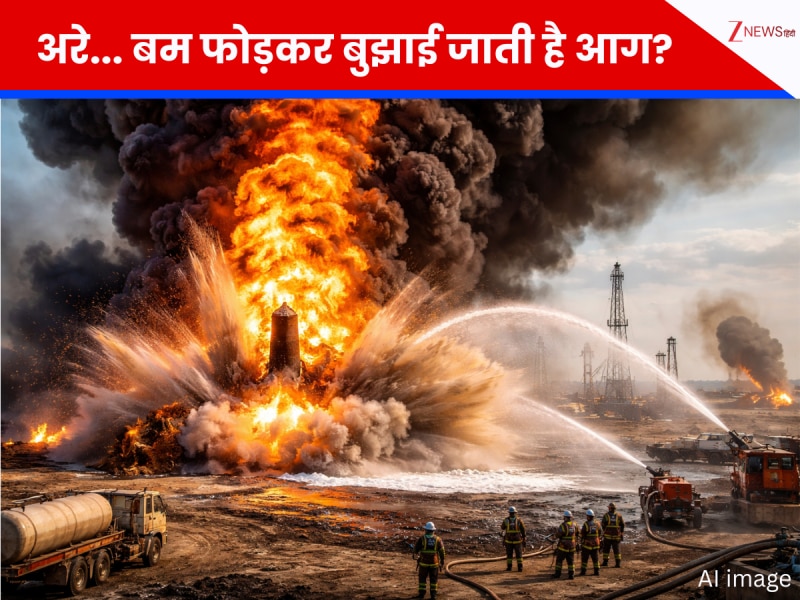
The Daring Method of Extinguishing Oil Field Fires: A Blast of Dynamite
As the world's attention remains fixed on the Middle East, where tensions and wars continue to escalate, a pressing concern has emerged: the threat of fires in oil fields. With the conflict spreading, the risk of gas and oil field fires has become a major concern. But what many may not know is that when these fires rage out of control, it's not water that's used to extinguish them, but rather a rather unconventional method: dynamite.
The Risks of Oil Field Fires
Oil fields are complex systems that require precise maintenance and monitoring to ensure safe operation. However, in times of war or conflict, the risks of fire and explosion increase exponentially. Oil wells can ignite due to various reasons, including equipment failure, sabotage, or accidental ignition. Once a fire starts, it can spread rapidly, engulfing the entire field and causing catastrophic damage.
The Conventional Approach
In the past, firefighters have relied on traditional methods to extinguish oil field fires, including water and foam. While these methods can be effective, they often require large quantities of water, which may not be readily available in areas where oil fields are located. Moreover, water can actually exacerbate the situation, as it can cause the oil to spread and create a larger fireball.
The Unconventional Solution: Dynamite
In recent years, a more unconventional method has emerged as a viable solution: the use of dynamite to extinguish oil field fires. This may seem counterintuitive, but the science behind it is surprisingly sound. When a fire rages out of control, it can create a massive amount of heat and pressure, making it difficult to approach with traditional firefighting equipment. Dynamite, on the other hand, can be used to create a controlled explosion that can starve the fire of oxygen, effectively extinguishing it.
The Process
The process of using dynamite to extinguish oil field fires is complex and requires careful planning and execution. First, a team of experts must assess the situation and determine the best course of action. This involves evaluating the size and intensity of the fire, as well as the surrounding environment.
Once the plan is in place, a team of trained professionals will set up the explosives, carefully calculating the amount of dynamite needed to create the desired effect. The dynamite is then detonated, creating a controlled explosion that can extinguish the fire.
The Benefits
While the use of dynamite to extinguish oil field fires may seem drastic, it has several benefits. For one, it can reduce the risk of injury or death to firefighters, who may be at risk of being overwhelmed by the intense heat and flames. Additionally, dynamite can be used in areas where traditional firefighting equipment is not feasible, such as in remote or hard-to-reach locations.
The Challenges
While the use of dynamite to extinguish oil field fires has its benefits, it's not without its challenges. One of the main concerns is the risk of secondary explosions, which can occur if the dynamite is not detonated correctly. Additionally, the use of dynamite can create environmental hazards, such as soil contamination and air pollution.
Conclusion
The use of dynamite to extinguish oil field fires may seem unconventional, but it's a vital tool in the fight against these devastating blazes. As the world continues to grapple with the challenges of war and conflict, it's essential that we develop innovative solutions to mitigate the risks associated with oil field fires. By understanding the science behind this unconventional method, we can better prepare ourselves for the challenges that lie ahead.
In Conclusion
In conclusion, the use of dynamite to extinguish oil field fires is a daring and unconventional method that requires careful planning and execution. While it may seem extreme, it's a vital tool in the fight against these devastating blazes. As we continue to navigate the complex landscape of war and conflict, it's essential that we develop innovative solutions to mitigate the risks associated with oil field fires. By understanding the science behind this method, we can better prepare ourselves for the challenges that lie ahead.