The Bhojpuri film industry, known for its vibrant storytelling and often larger-than-life characters, is abuzz with the release of the trailer for its upcoming flick, \'3 Star Bahuria\'. This cinematic offering promises a compelling narrative centered around a formidable mother-in-law and her equally spirited daughter-in-law, a dynamic that has already ignited considerable discussion and anticipation among audiences. The trailer, a potent blend of familial emotions and societal struggles, hints at a story that delves deep into the complexities of human relationships, juxtaposed against the harsh realities of a corrupt system. At the heart of this unfolding drama lies a pivotal turning point where an intense conflict erupts between the forces of systemic corruption and the unwavering principles of honesty. The central question that the film poses, and which the trailer artfully teases, is how two powerful women, a \"Sherni\" (lioness) and a \"Baghini\" (tigress), will coexist under one roof, and the inevitable torment it will inflict upon the man caught between them – the husband.
The title itself, \'3 Star Bahuria\', is evocative. \"Bahuria\" in Bhojpuri traditionally refers to a daughter-in-law, a role often imbued with expectations of subservience and domesticity. However, the \"3 Star\" prefix immediately suggests a departure from the conventional. It hints at women of high caliber, women with aspirations, perhaps even with ranks and authority, who are far from being meek and submissive. The trailer confirms this premonition with its unveiling of the characters: the mother-in-law is a \"Havildar\" (a rank in police or military forces, implying authority and discipline), and the daughter-in-law is an \"SI\" (Sub-Inspector, another significant rank within law enforcement). This immediately establishes a power dynamic where both women are figures of authority, accustomed to commanding respect and wielding influence, albeit in different spheres and perhaps with differing approaches. The collision of these two strong personalities within the confines of a single household is the core dramatic engine of the film.
The trailer opens with a vibrant, albeit perhaps slightly melodramatic, depiction of traditional Indian family life. We see glimpses of rituals, familial gatherings, and the everyday interactions that define a joint family system. However, this initial veneer of domestic harmony is quickly disrupted. The presence of two authoritative figures, the Havildar mother-in-law and the SI daughter-in-law, immediately suggests a potential for friction. The trailer strategically employs visual cues and dialogue snippets to highlight their distinct personalities. The mother-in-law, likely portrayed as seasoned and perhaps a bit rigid, embodies an older generation\'s sense of duty and control. Her Havildar status might translate into a stern, no-nonsense attitude, accustomed to giving orders and expecting obedience. On the other hand, the SI daughter-in-law, with her official uniform and presumably modern outlook, represents a younger, perhaps more progressive, generation. Her position as a law enforcement officer implies a sense of justice, integrity, and a willingness to challenge established norms, especially those that are unjust.
The central conflict, as teased in the description, is not merely a domestic squabble. While the mother-in-law and daughter-in-law are undoubtedly at loggerheads, their clashes extend beyond trivial household matters. The trailer makes it clear that their differences are rooted in deeper ideological struggles. The description explicitly states a \"sharp conflict between the corrupt system and honesty.\" This suggests that the film will not shy away from portraying the pervasive issues of corruption that plague many societies. The SI daughter-in-law, by her very profession, is likely to be at the forefront of fighting this corruption. Her principles and commitment to justice will inevitably bring her into conflict with those who benefit from or perpetrate corrupt practices.
The Havildar mother-in-law\'s role in this conflict is crucial and potentially complex. Is she a victim of the system, or a part of it? Does her own experience within the forces, perhaps in a lower or more subordinate position than her daughter-in-law, have made her cynical and accepting of the corrupt practices? Or, is she, like her daughter-in-law, a woman of integrity who finds herself in an unenviable position, perhaps forced to compromise her values for the sake of family or survival? The trailer offers hints, but the full depth of her character and her involvement in the larger conflict will undoubtedly be a key revelation in the film. The juxtaposition of their ranks – Havildar and SI – might also play a symbolic role. Perhaps the Havildar represents the established, often compromised, order, while the SI embodies the new wave of reform and genuine justice.
The \"husband,\" the man caught in the middle, is presented as the primary victim of this high-octane domestic and societal drama. His predicament is described as \"jeena hua dushwar\" – his life has become difficult. This is a classic trope in family dramas, where the man often bears the brunt of the conflicting wills of the women in his life. In this case, with two such formidable women, his suffering is likely to be amplified. He is likely to be torn between his loyalty to his mother and his duty towards his wife. His emotional and psychological turmoil will form a significant part of the narrative, serving as an audience surrogate who experiences the escalating tensions firsthand. The trailer likely showcases scenes of him pleading, trying to mediate, or simply looking utterly exasperated and overwhelmed. His efforts to maintain peace and balance in the household will be futile against the storm of the \"Sherni\" and the \"Baghini.\"
The description also emphasizes \"familial emotions\" alongside \"social struggle.\" This indicates that the film aims for a holistic narrative, exploring both the intimate dynamics of a family and the broader societal issues that affect its members. The familial emotions could encompass love, resentment, duty, ambition, and the complex web of relationships within a joint family. The social struggle, as mentioned, is the fight against corruption. The trailer probably interweaves these two threads seamlessly. For instance, a domestic argument might escalate when it touches upon a corrupt deal or an injustice that one of the women is trying to rectify. The personal stakes will be intertwined with the larger fight for justice.
The \"big turning point\" alluded to in the description is likely the catalyst that propels the story from domestic conflict to a full-blown confrontation with the corrupt system. This could be an event that directly impacts the family, forcing the daughter-in-law to take a stand and the mother-in-law to either support her or find herself on the opposing side. This turning point is what elevates \'3 Star Bahuria\' from a simple family drama to a film with a potent social message. It signifies that the stakes are no longer just personal but have broader implications for the community or the society at large.
The visual elements in the trailer, which are not explicitly detailed but can be inferred from the context of Bhojpuri cinema and the described themes, likely include dramatic confrontations, tense standoffs, and perhaps even action sequences given the law enforcement backgrounds of the protagonists. The cinematography would aim to capture the intensity of the emotions, the grandeur of the family setting, and the gritty realism of the societal issues. The background score would undoubtedly be a crucial element, building suspense during moments of conflict and underscoring the emotional weight of the dramatic scenes.
The description\'s mention of \"Bhojpuri cinema ki nayi film\" signifies that \'3 Star Bahuria\' is part of the evolving landscape of this film industry. Bhojpuri cinema has often been criticized for its formulaic plots and reliance on sensationalism. However, in recent years, there has been a discernible shift towards more nuanced storytelling, socially relevant themes, and technically superior productions. \'3 Star Bahuria\' appears to be an attempt to align with this progressive trend, offering a narrative that is both entertaining and thought-provoking. The focus on strong female characters, especially in positions of authority, is also a significant departure from traditional portrayals in many Indian film industries.
The \"discussion it has generated\" among people points to the trailer\'s success in piquing audience interest. This suggests that the film\'s premise is compelling enough to resonate with viewers. The concept of two powerful women locked in a domestic power struggle, while simultaneously battling external forces of corruption, offers a unique blend of drama, intrigue, and social commentary. The trailer has likely succeeded in establishing these elements clearly, leaving the audience eager to witness how these conflicts unfold and resolve.
Delving deeper into the character archetypes:
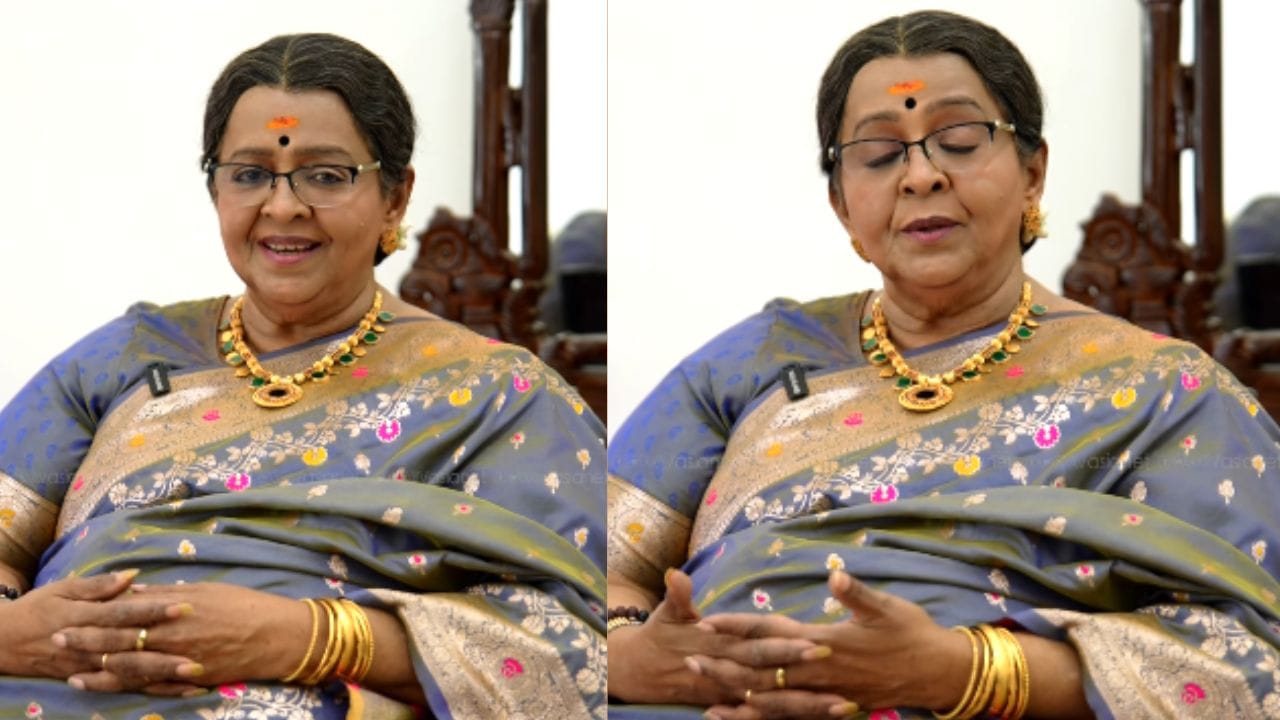
The Havildar Mother-in-law: This character, though a \"Havildar,\" might not necessarily be an active police officer in her current domestic life. Her title could represent her former life, or perhaps her inherent authoritative nature that she carries into her role as the matriarch. She could be depicted as someone who values tradition, discipline, and the established order. Her experiences might have taught her to navigate the system, perhaps even to exploit its loopholes for the family\'s benefit. She might view her daughter-in-law\'s idealism as naive and potentially dangerous, threatening the family\'s stability. Her conflicts with her daughter-in-law could stem from her protectiveness of her son, her ingrained beliefs about family hierarchy, or her own past compromises that she feels her daughter-in-law is too young to understand. There\'s a possibility that her \"Havildar\" past might have instilled in her a certain pragmatism that borders on cynicism when it comes to the fight against corruption. She might have seen too much to believe in genuine change, or she might have developed a modus operandi of \"playing the game\" to survive and thrive.
The SI Daughter-in-law: As a Sub-Inspector, she embodies a commitment to justice and the law. She is likely to be portrayed as ambitious, upright, and perhaps a bit fiery. Her entry into the family might have been with the intention of being a good wife and daughter-in-law, but her professional ethics and inherent sense of fairness will inevitably clash with the realities she encounters, both within her new family and in the wider society. She might view her mother-in-law\'s approach as outdated and perhaps even complicit with the very corruption she is sworn to fight. Her struggle will be to maintain her integrity while navigating the intricate dynamics of her in-laws\' household, which might be entangled with the corrupt elements she is trying to expose. Her \"Baghini\" persona would manifest in her fierce determination to uphold justice, her unwillingness to back down from a fight, and her ability to strategize and outmaneuver her opponents.
The Husband: His role as the mediator, the peacekeeper, and the victim is crucial. He is likely to be a man caught between two worlds, his traditional upbringing that values his mother\'s authority and his modern sensibilities that respect his wife\'s professional integrity and her burgeoning power. He might be a man who loves both women deeply but finds himself increasingly unable to reconcile their opposing viewpoints and their clashing personalities. His internal conflict will be a reflection of the larger societal conflict the film portrays – the struggle between old and new, between compromise and idealism. His \"dushwar jeena\" will manifest in sleepless nights, constant anxiety, awkward silences at the dinner table, and the agonizing realization that he may have to choose sides, a choice that could shatter his family. He might be the one who tries to reason with his mother about the importance of his wife\'s work, or the one who pleads with his wife to exercise more caution, fearing for their family\'s safety.
The \"social struggle\" against corruption is a broad theme, and the film can explore it in various ways. It could be about a specific land scam, a case of bribery within the police force, or a larger conspiracy that implicates powerful individuals. The trailer would likely provide tantalizing glimpses of this struggle, perhaps showing the daughter-in-law investigating a case, receiving threats, or facing pressure from superiors. The mother-in-law\'s potential involvement could be as an unwitting participant, someone who benefits from corrupt dealings without fully understanding their ramifications, or someone who has actively chosen to be part of the system for her own protection or gain. The trailer must effectively communicate the gravity of this fight, making it clear that the stakes are high for everyone involved.
The \"familial emotions\" aspect allows for a deeper exploration of relationships. The love between mother and son, the affection between husband and wife, and the potential for animosity and rivalry between daughter-in-law and mother-in-law are all fertile ground for drama. The film could explore the pressures of a joint family system, the expectations placed upon women, and the sacrifices they are often forced to make. The trailer might showcase tender moments between the husband and his wife, hinting at their strong bond, which is then juxtaposed with scenes of heated arguments between the two women. This contrast would effectively highlight the central conflict.
The \"3 Star\" designation could also have a metaphorical meaning beyond just the ranks. It could represent three strong women, perhaps the mother-in-law, the daughter-in-law, and another significant female character, or it could signify a triple threat of power, influence, and determination. The trailer\'s success lies in its ability to convey these layers of meaning and to intrigue the audience with the promise of a story that is both engaging and relevant.
In conclusion, \'3 Star Bahuria\' trailer is a powerful harbinger of a film that aims to break new ground in Bhojpuri cinema. By focusing on a compelling narrative of two strong women, a Havildar mother-in-law and an SI daughter-in-law, locked in a domestic battle that mirrors a larger societal struggle against corruption, the film promises a rich tapestry of familial emotions and social commentary. The trailer effectively sets the stage for a conflict where the man caught between them faces a life of immense difficulty. The film\'s potential to showcase strong female characters, address pertinent social issues, and deliver a gripping narrative makes it a highly anticipated release, poised to generate significant discussion and captivate audiences with its blend of drama, action, and emotional depth. The question of how a \"Sherni\" and a \"Baghini\" will coexist under one roof, especially when their individual strengths are amplified by their professional authority and their commitment to opposing ideologies, is the central enigma that the trailer masterfully poses, leaving viewers clamoring for the full cinematic experience.