
Politics
धरना-प्रदर्शनों का नया कारोबार: लोकतंत्र की आड़ में आखिर किसके हित साधे जा रहे हैं?
October 10, 2026
1,612 views
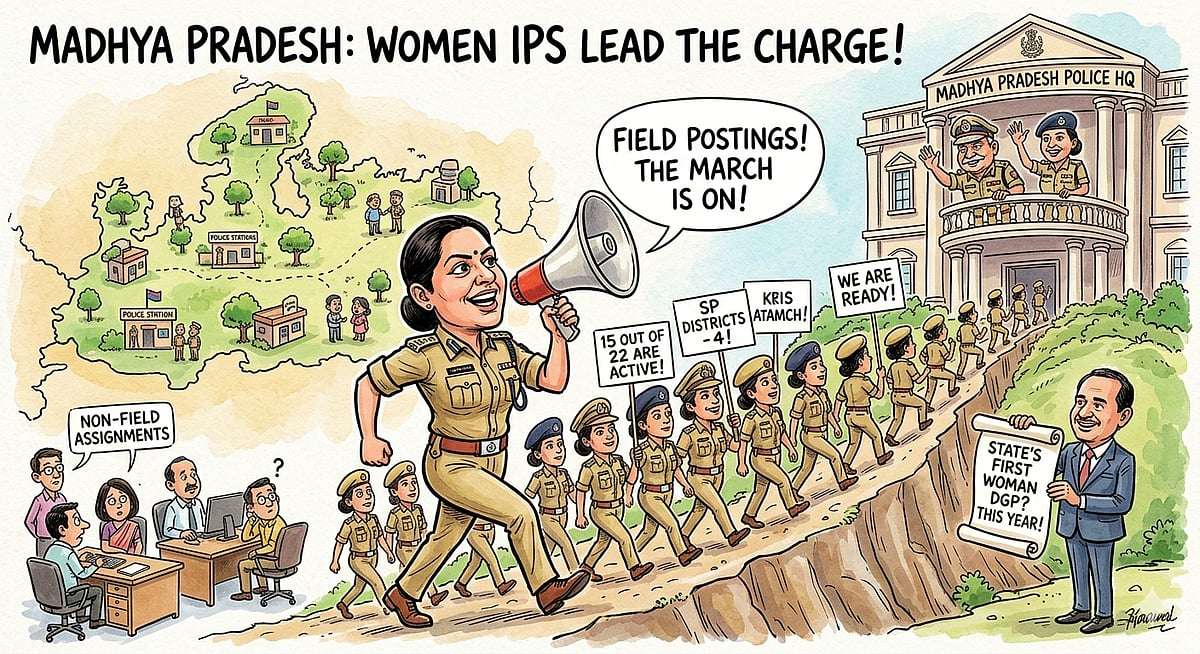
In a significant milestone for gender representation in law enforcement, Madhya Pradesh is witnessing a remarkable shift with women IPS officers increasingly taking on crucial roles in field postings. Currently, 15 out of 22 women officers are serving in active positions, marking a progressive step towards equality in a traditionally male-dominated domain. This trend not only reflects the evolving dynamics within the police force but also symbolizes a broader societal change towards gender parity in leadership roles.
The presence of women in higher ranks of the Indian Police Service (IPS) has been historically limited. However, Madhya Pradesh is setting a precedent with its current statistics. Out of the 22 women IPS officers, 15 are actively engaged in fieldwork, which includes crucial positions such as Director General of Home Guards and Inspector General. Additionally, women officers are serving as Superintendents of Police in four districts, showcasing their capability to handle significant responsibilities.
The increasing number of women in field postings signifies more than just a numerical increase; it represents a cultural shift within the Madhya Pradesh police department. This shift indicates a growing recognition of the critical role women play in law enforcement and their ability to contribute effectively to various aspects of policing. The appointment of female officers in significant positions is a strong message about the importance of diversity and inclusion in the police force.
Adding to the momentum, there are indications that Madhya Pradesh may soon appoint its first-ever woman Director General of Police (DGP). This potential appointment is a landmark event that could pave the way for more women to aspire to top positions within the police hierarchy. While some senior officers still occupy non-field assignments, the possibility of a female DGP serves to inspire and motivate upcoming female officers to aim for leadership roles.
Despite these positive developments, challenges remain. Some senior women officers continue to find themselves in non-field roles, which can restrict their professional growth and visibility within the force. However, the current trajectory indicates a willingness among policymakers to address these disparities. The recognition of women's contributions in field postings is likely to encourage further reforms aimed at ensuring that women officers are not only present but also visible in leadership roles.
The increasing representation of women in the IPS is expected to have a profound impact on community policing efforts in Madhya Pradesh. Women officers often bring unique perspectives and approaches to policing, which can enhance community engagement and trust. Their presence in the field is likely to foster a more inclusive environment, where the concerns and needs of diverse populations are adequately addressed. This shift can lead to improved relationships between the police and the community, ultimately resulting in more effective policing.
The rise of women IPS officers in Madhya Pradesh heralds a new era for law enforcement in the state. With 15 of 22 women currently serving in field positions and the potential appointment of the first woman DGP, the future looks promising for gender representation within the police force. As these women continue to break barriers and redefine leadership in policing, they pave the way for future generations of female officers, inspiring them to dream big and strive for excellence in their careers. The ongoing journey towards equality and representation in law enforcement is not just a victory for women, but a victory for society as a whole.


Loading more news...
You've reached the end of our news feed. Check back later for more updates!