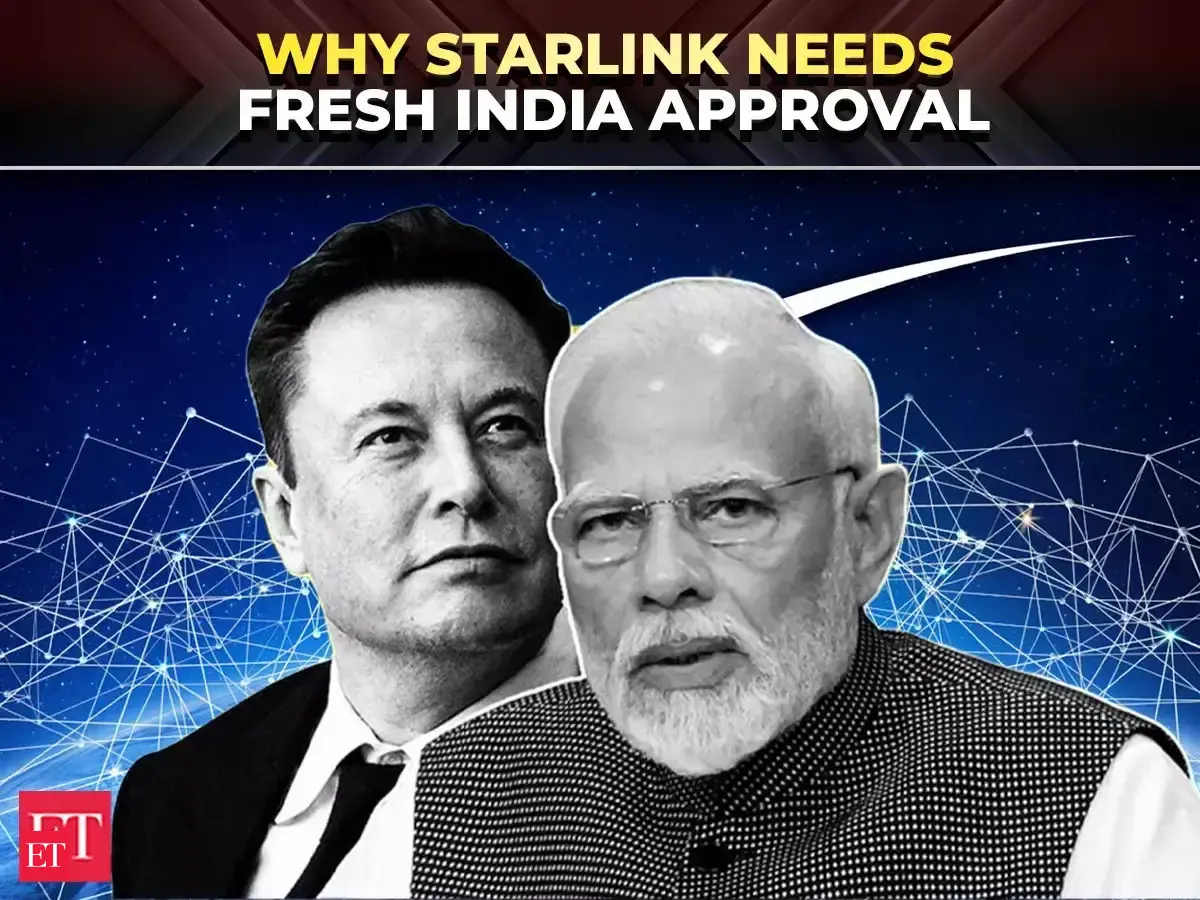
Here's a full article exploring why India hasn't yet cleared Starlink's direct-to-device (D2D) satellite plans, delving into the various factors at play:
The Unseen Hurdles: Why India's Skies Remain Closed to Starlink's Direct-to-Device Ambitions
Elon Musk's Starlink, the Low Earth Orbit (LEO) satellite constellation aiming to provide internet access globally, has made significant strides in numerous countries. However, when it comes to its ambitious "direct-to-device" (D2D) service – a plan to enable smartphones to connect directly to Starlink satellites without special hardware – India remains a notable holdout. This isn't a simple oversight or a lack of interest; a complex web of regulatory, strategic, and security considerations is keeping Starlink's D2D ambitions grounded in the Indian context.
At its core, the delay stems from a fundamental tension between Starlink's vision of unfettered, decentralized connectivity and India's robust and, at times, stringent approach to telecommunications regulation, national security, and data sovereignty.
Navigating the Regulatory Labyrinth: A Spectrum of Concerns
The most immediate obstacle is the existing regulatory framework governing telecommunications services in India. Starlink's D2D offering essentially bypasses the traditional terrestrial network infrastructure and licensing requirements that have long been the bedrock of India's telecom sector.
* Spectrum Allocation Woes: For any communication service to operate, it requires access to radio spectrum. In India, spectrum is a highly prized and tightly controlled national resource, typically auctioned or allocated to licensed telecom operators. Starlink's D2D plans involve utilizing spectrum bands that are traditionally associated with mobile phone services. The Indian government, through its Department of Telecommunications (DoT) and the Telecom Regulatory Authority of India (TRAI), is meticulously evaluating how this new paradigm fits within its existing spectrum management policies. Granting access to spectrum for D2D services without a clear framework could set a disruptive precedent and potentially impact existing licensees.
* Licensing and Operational Permits: Operating a telecommunications service in India necessitates a license. Starlink has obtained a Global Mobile Personal Communication Satellite Service (GMPCS) license for its satellite internet services, which allows it to offer broadband to fixed locations and vehicles. However, the D2D service, by its very nature, implies a more pervasive and potentially consumer-facing mobile service. The government is likely scrutinizing whether the existing GMPCS license is sufficient or if a new, more specific license is required, along with the associated regulatory obligations.
* Interoperability and Standards: Ensuring seamless interoperability between D2D services and the existing terrestrial mobile networks is a significant concern. Without proper integration, D2D services could create a parallel, unmanaged communication ecosystem, potentially leading to network congestion and an inability for authorities to monitor or intervene in cases of misuse. India is also keen on ensuring that any new technology adheres to its evolving telecommunications standards and infrastructure development goals.
National Security and Data Sovereignty: The Paramount Imperatives
Beyond regulatory hurdles, national security and data sovereignty loom large as critical determinants in India's decision-making process.
* Unchecked Connectivity and Potential for Misuse: The very appeal of D2D – its ability to provide connectivity anywhere, anytime – also presents a security risk. Critics and policymakers worry about the potential for malicious actors, terrorist groups, or foreign adversaries to leverage such a service for clandestine communication, bypassing surveillance mechanisms. India has a history of heightened security concerns, and the idea of an unmonitored communication channel, even if unintentional, is a significant red flag.
* Data Localization and Privacy: India has been increasingly vocal about data localization – the requirement for companies to store data generated within its borders on servers located within India. Starlink's D2D operations, by their nature, involve data transmission. The government will want clear assurances on how user data will be handled, stored, and protected, and whether it will be subject to Indian privacy laws and data localization requirements. The decentralized nature of satellite communication can make this aspect particularly challenging to enforce.
* Control and Oversight: In a critical national security scenario, the ability of the government to exert control or gain access to communication networks is paramount. The decentralized and global nature of Starlink's D2D network could complicate efforts to intercept or shut down communications in emergencies. India is likely seeking guarantees regarding lawful interception capabilities and governmental oversight, which might be more complex to implement with a purely satellite-based D2D service.
Strategic Considerations and Indigenous Capabilities
India's approach to technology adoption is also influenced by its broader strategic objectives and its commitment to fostering indigenous capabilities.
* Protecting Domestic Telecom Sector: India has a vibrant and competitive domestic telecommunications industry, which is a significant employer and contributor to its economy. The introduction of a new, disruptive technology like Starlink D2D could pose a competitive challenge to existing players. The government might be weighing the potential impact on its domestic ecosystem and seeking ways to ensure a level playing field or to encourage partnerships that benefit local entities.
* Promoting 'Atmanirbhar Bharat' (Self-Reliant India): A key policy thrust of the Indian government is 'Atmanirbhar Bharat', aiming to foster self-reliance in various sectors, including technology and defense. While Starlink's D2D technology is undeniably advanced, India is also investing heavily in its own satellite communication programs and indigenous technology development. The government might be strategically evaluating how D2D fits into its long-term vision for an independent and secure communication infrastructure.
* The "Made in India" Factor: While Starlink is a foreign entity, India is increasingly prioritizing the adoption and development of technologies that have a significant "Made in India" component or contribute to its own space and communication ambitions.
The Path Forward: A Measured Approach
It's crucial to understand that India's caution is not necessarily an outright rejection. Rather, it signifies a deliberate and measured approach to integrating a transformative technology into its complex ecosystem. The government is likely engaged in ongoing discussions with Starlink and other stakeholders, seeking to address these multifaceted concerns.
The resolution will likely involve:
* Development of a bespoke regulatory framework: India may need to evolve its telecommunications laws and spectrum management policies to accommodate the unique characteristics of D2D satellite services.
* Robust security assurances: Starlink will need to provide concrete guarantees regarding data security, privacy, and lawful interception capabilities that align with Indian national security requirements.
* Potential for partnerships and localization: Collaborations with Indian companies and adherence to data localization norms could be key to unlocking the Indian market.
* Phased rollout and pilot programs: A gradual introduction of the service, possibly through pilot programs or with specific limitations, could allow for testing and refinement before widespread deployment.
Until these critical pieces fall into place, the promise of direct connectivity to Starlink satellites for every Indian smartphone user will remain a tantalizing prospect, held back by the very real complexities of a nation balancing innovation with security, sovereignty, and strategic foresight. The skies for Starlink's D2D in India are not closed, but they are certainly under careful scrutiny, waiting for the right conditions to be met.