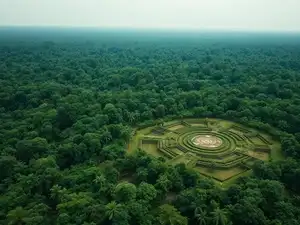
Lost Cities in the Emerald Abyss: 6,000 Platforms Rewrite Amazonian History
The Amazon rainforest, a verdant tapestry woven with an unparalleled diversity of life, has long been romanticized as a pristine, untouched wilderness. For centuries, its dense canopy concealed secrets, fueling imaginations with tales of undiscovered tribes and impenetrable jungles. But a revolutionary technological breakthrough is systematically dismantling this myth, revealing a truth far more profound and complex: the Amazon, once believed to be sparsely populated, was in fact home to vast, sophisticated civilizations that shaped their environment on an unprecedented scale.
The recent discovery of over 6,000 ancient platforms, roads, and plazas in Ecuador\'s Upano Valley, brought to light through advanced laser mapping technology, is not merely an archaeological find; it is a paradigm shift. This revelation forces a radical re-evaluation of pre-Columbian Amazonia, suggesting that its history is not one of nomadic hunter-gatherers but of settled, agrarian societies with intricate social structures, advanced engineering capabilities, and a profound understanding of their ecological landscape.
This article delves into the astonishing revelations from the Upano Valley, exploring the technology that made these discoveries possible, the intricate details of these ancient settlements, and the profound implications for our understanding of human history, environmental interaction, and the very essence of what it means to be a civilization.
The Whispers of the Forest, Amplified by Light: Introduction
For generations, the dominant narrative of the Amazon was one of emptiness, a vast expanse largely devoid of significant human presence before European arrival. The rainforest\'s challenging terrain, dense vegetation, and acidic soils were perceived as insurmountable barriers to the development of large, complex societies akin to those found in other parts of the Americas, such as the Maya or the Inca. Archaeological evidence, limited by the difficulty of penetrating the dense canopy and the ephemeral nature of many ancient structures in a tropical environment, largely supported this view.
However, the relentless march of technology has provided us with a new set of eyes. LiDAR (Light Detection and Ranging), a remote sensing method that uses laser pulses to measure distances and create highly detailed 3D maps of the Earth\'s surface, is proving to be a game-changer. By penetrating the forest canopy, LiDAR can reveal subtle topographical features that have remained hidden for millennia. It\'s like shining a powerful, invisible flashlight through the dense foliage, illuminating the buried architecture and engineered landscapes of ancient peoples.
The recent discoveries in the Upano Valley of eastern Ecuador are a testament to LiDAR\'s transformative power. Here, beneath the emerald blanket, archaeologists have unearthed an astonishing network of 6,000 human-made earth platforms, interconnected by an intricate system of roads, plazas, and agricultural drainage channels. These structures, dating back an astonishing 2,500 years, are not haphazard clusters but appear to be part of a meticulously planned and organized landscape, hinting at a previously unimagined level of societal complexity and environmental manipulation. This finding challenges deeply ingrained assumptions and opens a new chapter in our understanding of the Amazon\'s past, suggesting a history far richer and more vibrant than ever believed.
Beyond the Myth of the Pristine Wilderness: Deep-Dive Background & Context
The traditional view of the Amazon as an \"empty space\" before European contact has deep roots, influenced by several factors:
* The Challenge of Tropical Environments: The dense vegetation, high humidity, and rapid decomposition rates in the Amazon make traditional archaeological surveys incredibly difficult. Organic materials degrade quickly, and stone structures are often reclaimed by the jungle, making them hard to spot from the ground.
* Colonial Bias and Eurocentrism: Early European explorers and chroniclers, accustomed to the grand stone cities of Mesoamerica and the Andes, often overlooked or misinterpreted the evidence of indigenous settlements in the Amazon. Their accounts frequently painted a picture of \"primitive\" or nomadic peoples, reinforcing a narrative of a largely untamed frontier.
* Limited Archaeological Tools: For centuries, archaeologists relied on ground-based surveys, which were often labor-intensive, time-consuming, and limited in their scope. The sheer scale of the Amazon made comprehensive exploration nearly impossible.
* The \"Garden of Eden\" Fallacy: The romanticized notion of the Amazon as a pristine \"Garden of Eden\" before human interference, while appealing, has obscured the fact that indigenous populations have actively managed and shaped this environment for millennia.
However, a growing body of research in recent decades has begun to chip away at this long-held narrative. Discoveries of:
* Terra Preta: These are anthropogenic (human-made) dark soils found throughout the Amazon basin, rich in charcoal, pottery shards, and organic matter. Their presence indicates intensive agriculture and long-term human habitation, leading to the creation of highly fertile land.
* Large-Scale Earthworks: Evidence of mounds, canals, and raised fields in various Amazonian regions suggested more than just small, dispersed settlements.
* Geoglyphs: Large-scale geometric earthworks visible from the air, found in other parts of the Amazon, also pointed to significant human engineering capabilities.
These earlier findings provided tantalizing clues, but the scale and sophistication of the Upano Valley discoveries, enabled by LiDAR, represent a quantum leap in our understanding. The Upano Valley, located in the foothills of the Andes in eastern Ecuador, is characterized by a network of fertile river valleys. For a long time, it was assumed that any settlements here would have been relatively small and short-lived, unable to sustain large populations. The LiDAR data, however, has painted a vastly different picture, revealing a meticulously organized landscape that suggests a sustained and significant human presence over centuries.
Layers of Civilization: Multi-faceted Analysis of the Upano Valley Discoveries
The revelation of the 6,000 platforms in the Upano Valley is far more than just a numerical count; it represents a profound shift in our understanding of Amazonian history, societal complexity, and human-environment interaction. This discovery has far-reaching implications for various disciplines and stakeholders:
1. Rewriting Amazonian Prehistory:
* Challenging the \"Underpopulation\" Myth: The sheer scale of the Upano settlements directly contradicts the long-held belief that the Amazon could only support small, nomadic groups. It indicates the existence of dense, sedentary populations capable of significant environmental modification.
* Evidence of Urbanism in the Tropics: The organized nature of the settlements, with their interconnected platforms, plazas, and road networks, suggests a form of early urbanism or at least proto-urbanism in a tropical rainforest environment. This challenges the notion that complex urban development was exclusive to drier, more open regions.
* Long-Term Habitation and Sustainability: The age of these structures (dating back to around 500 BCE) indicates a long period of sustained occupation. This implies that these societies developed sophisticated methods for managing resources and sustaining themselves within the rainforest ecosystem over many centuries.
2. The Ingenuity of the Builders:
* Sophisticated Engineering and Urban Planning: The organized layout of the platforms, the creation of plazas for communal gathering, and the extensive road networks all point to advanced planning and engineering skills. The platforms themselves, often arranged in specific geometric patterns, suggest a deep understanding of architecture and spatial organization.
* Environmental Adaptation and Management: The presence of agricultural drainage channels alongside residential structures indicates a sophisticated approach to agriculture, allowing for the cultivation of crops in a challenging environment. These systems likely helped manage water, prevent flooding, and improve soil fertility, showcasing a symbiotic relationship with the land.
* Social Organization and Hierarchy: The presence of distinct types of platforms – some larger and more elaborate than others – might suggest social stratification or specialized functions within the community. The organized layout of entire settlements could also imply a centralized authority or a complex system of governance.
3. Stakeholders and Their Perspectives:
* Archaeologists and Anthropologists: This discovery is a goldmine, offering unparalleled insights into the lives, social structures, and technological capabilities of Amazonian peoples. It necessitates a revision of existing textbooks and research methodologies.
* Indigenous Communities: For the indigenous peoples of the Upano Valley and the broader Amazon, these findings validate their ancestral connection to the land and their history as sophisticated stewards of the environment. It offers a powerful counter-narrative to historical marginalization and can empower cultural revitalization efforts.
* Environmental Scientists and Conservationists: The understanding that the Amazon was shaped by human hands for millennia changes the perspective on conservation. It highlights the importance of understanding traditional land management practices and the potential for sustainable coexistence between humans and nature, rather than solely viewing the rainforest as an untouched natural state.
* Governments and Policymakers: These discoveries have implications for land use planning, cultural heritage preservation, and the recognition of indigenous rights. They underscore the importance of protecting these sites from development and ensuring that the descendants of these ancient civilizations are involved in their stewardship.
* The General Public: The allure of lost cities and ancient civilizations captures the public imagination. This discovery offers a compelling narrative that can foster a greater appreciation for the depth and complexity of human history and the remarkable achievements of pre-Columbian societies.
4. The Role of Technology: LiDAR as a Window to the Past:
The breakthrough in the Upano Valley is inextricably linked to the advancement of LiDAR technology. Before LiDAR, uncovering such extensive and complex settlements would have been an almost insurmountable task.
* Penetrating the Canopy: LiDAR\'s ability to penetrate the dense rainforest canopy is its most crucial asset. It sends millions of laser pulses towards the ground, and by measuring the time it takes for these pulses to return after reflecting off surfaces, it can create incredibly detailed topographical maps.
* Revealing Subtle Features: LiDAR can detect even subtle variations in elevation, revealing the outlines of platforms, roads, and earthworks that would be invisible to the naked eye or obscured by vegetation.
* Large-Scale Survey Efficiency: Unlike traditional ground surveys, LiDAR allows for rapid, large-scale mapping of vast areas, making it possible to identify patterns and connections across entire landscapes.
* Preservation of Context: By mapping the landscape as it exists today, LiDAR provides crucial context for understanding how ancient structures were integrated into their environment.
A Tapestry of Earth and Ingenuity: A Detailed Breakdown of the Upano Valley Discoveries
The discoveries in Ecuador\'s Upano Valley are not isolated finds but a sprawling, interconnected network that speaks of a highly organized and populous society. The LiDAR data has unveiled a landscape meticulously sculpted by human hands over centuries, fundamentally altering our perception of Amazonian history.
The Platforms: Foundations of a Lost World
At the heart of the Upano Valley discoveries lie over 6,000 earth platforms. These are not mere mounds of dirt; they are deliberate constructions, often rectangular or square, with precise dimensions and arrangements.
* Purpose and Function: While the exact purpose of every platform may not be definitively known, the evidence strongly suggests they served as the foundations for dwellings, ceremonial structures, or other important buildings. The scale and uniformity of some platforms indicate the presence of permanent settlements.
* Construction Methods: These platforms were likely constructed by painstakingly moving large quantities of earth, a monumental undertaking that required significant labor and coordination. The use of earth as a primary building material is a testament to the inhabitants\' resourcefulness and their intimate knowledge of their local environment.
* Variations in Size and Complexity: The platforms vary in size and complexity. Some are relatively small, suggesting individual homes, while others are much larger and more elaborate, possibly indicating communal buildings, elite residences, or ceremonial centers. This variation hints at a degree of social organization and hierarchy.
* Arrangement and Layout: Crucially, these platforms are not randomly scattered. They are often clustered together, forming distinct residential or ceremonial zones, and are frequently arranged around central plazas. This organized layout is a key indicator of planned settlements rather than haphazard encampments.
The Road Network: Arteries of an Ancient Society
Connecting these platforms and settlements is an astonishing network of raised and drained causeways, or roads. These are not simple footpaths but engineered thoroughfares, suggesting a society that valued connectivity and movement.
* Scale and Extent: The road network extends for many kilometers, linking dispersed settlements and traversing the landscape in a structured manner. Some roads are remarkably straight, while others follow the contours of the land, demonstrating an impressive understanding of engineering and logistics.
* Purpose of the Roads: The roads likely served multiple purposes:
* Transportation: Facilitating the movement of people, goods, and resources between settlements.
* Communication: Enabling faster and more efficient communication across the region.
* Social Cohesion: Connecting communities and fostering a sense of shared territory and identity.
* Drainage: Some causeways appear to have been designed with drainage in mind, helping to manage water in the seasonally wet environment.
* Construction and Maintenance: Building and maintaining such an extensive road network would have required significant, coordinated labor and ongoing effort, underscoring the organizational capacity of these ancient societies.
The Plazas: Centers of Community Life
Interspersed within the platform clusters and along the road networks are numerous open spaces, or plazas. These are crucial elements that suggest communal gathering and social interaction.
* Function: Plazas were likely used for a variety of activities, including social gatherings, ceremonies, markets, or public events. Their presence indicates a need for shared spaces where communities could come together.
* Strategic Placement: The placement of plazas, often at the confluence of roads or at the heart of settlement clusters, suggests they were central to the social and ceremonial life of these communities.
Agricultural Infrastructure: Sustaining a Population
Beyond the residential and communal structures, the LiDAR data has also revealed extensive agricultural drainage channels. This is a critical component that explains how these societies sustained themselves.
* Water Management: The Amazon is a region with distinct wet and dry seasons. The drainage channels were essential for managing water, preventing waterlogged fields during the wet season, and potentially channeling water to crops during drier periods.
* Creating Arable Land: These channels likely helped to create and maintain arable land, allowing for the cultivation of staple crops such as maize, beans, and other vegetables.
* Intensification of Agriculture: The organized nature of these drainage systems suggests a move towards more intensive and sustainable forms of agriculture, capable of supporting larger populations. This aligns with the concept of \"agroforestry\" or \"managed landscapes\" where human intervention enhances natural productivity.
Chronological Context: A Long and Flourishing History
The most astonishing aspect of the Upano Valley discoveries is their age. Radiocarbon dating has placed the earliest phases of construction at around 500 BCE, with the settlements appearing to have been occupied and expanded for over a thousand years, potentially until the arrival of Europeans.
* Early Phase (approx. 500 BCE - 300 CE): This period likely saw the initial construction of many of the platforms and the establishment of the basic settlement patterns.
* Middle Phase (approx. 300 CE - 600 CE): This era likely witnessed significant expansion and development, with the construction of larger platforms, more extensive road networks, and more complex agricultural systems.
* Late Phase (approx. 600 CE - 1500 CE): Evidence suggests continued occupation and adaptation, though the nature of these later settlements may have differed.
This long period of occupation demonstrates the resilience and adaptability of these societies, their ability to innovate and sustain themselves within the Amazonian environment for a significant span of human history.
The Ripples of Revelation: Future Outlook and Implications
The discoveries in the Upano Valley are not an endpoint but a powerful catalyst for a profound reimagining of Amazonian history and human-environment relationships. The implications stretch far beyond archaeology, impacting our understanding of civilization, sustainability, and our place within the natural world.
1. A New Era of Amazonian Archaeology:
* Accelerated Discovery: The success of LiDAR in the Upano Valley will undoubtedly spur its application across other vast and previously unexplored regions of the Amazon. We can expect numerous similar discoveries in the coming years, revealing other hidden civilizations.
* Re-evaluation of Existing Data: Existing archaeological data from other Amazonian sites will need to be re-examined with fresh eyes, looking for patterns and evidence that may have been overlooked due to technological limitations or preconceived notions.
* Interdisciplinary Collaboration: The complexity of these findings necessitates even greater collaboration between archaeologists, anthropologists, geographers, environmental scientists, and indigenous communities.
2. Rethinking Human-Environment Interactions:
* Beyond Pristine Wilderness: The Amazon is no longer just a \"natural\" landscape; it is a cultural landscape, shaped by human ingenuity for millennia. This challenges the notion of a pristine wilderness and highlights the long history of human stewardship and modification.
* Sustainable Practices as Models: The sophisticated agricultural and land management techniques employed by these ancient societies, developed over centuries, offer potential models for sustainable development in tropical regions today. Understanding how they managed water, soil, and biodiversity could provide invaluable lessons for modern conservation efforts.
* Resilience and Adaptability: The ability of these societies to thrive and develop in the Amazonian environment for such a long period speaks to their remarkable resilience and adaptability. This is a crucial reminder of human capacity to innovate and coexist with challenging ecosystems.
3. The Voice of Indigenous Heritage:
* Validation and Empowerment: These discoveries provide undeniable proof of the deep, complex, and ancient history of indigenous peoples in the Amazon. This can serve as a powerful tool for empowering indigenous communities, strengthening their claims to land and cultural heritage, and fostering greater respect for their ancestral knowledge.
* Collaborative Stewardship: Future archaeological and conservation efforts must prioritize collaboration with the descendants of these ancient civilizations. Their knowledge and perspectives are invaluable for understanding and protecting these sites.
4. Global Implications for Understanding Civilization:
* Diversity of Urbanism: The Upano Valley findings demonstrate that complex, organized societies and proto-urban centers can arise in diverse environments, not just in the arid or mountainous regions where they are often more readily preserved. This broadens our definition of what constitutes a civilization.
* The Long Arc of Human History: These discoveries push back the timeline of significant human societal development in the Amazon, integrating it more fully into the broader narrative of human history. They remind us that human ingenuity and complexity have existed in many forms and in many places long before recorded history.
5. Challenges and Ethical Considerations:
* Preservation and Protection: The newfound knowledge of these sites brings with it a critical responsibility to protect them from looting, uncontrolled tourism, and destructive development.
* Intellectual Property and Data Sharing: Ensuring that the benefits of these discoveries are shared equitably with the indigenous communities and the nations where these sites are located is paramount.
* Avoiding New Colonial Narratives: It is crucial to present these discoveries in a way that respects indigenous heritage and avoids perpetuating colonial narratives of \"discovery\" by outsiders. The focus should be on uncovering and understanding the achievements of the original inhabitants.
Conclusion: The Amazon, a Living Archive, Rediscovered
The Amazon rainforest, once a symbol of untouched wilderness, is now emerging as a testament to the enduring power and ingenuity of human civilization. The discovery of over 6,000 platforms, roads, and plazas in Ecuador\'s Upano Valley, brought to light by the remarkable capabilities of LiDAR technology, is not just an archaeological marvel; it is a profound recalibration of our understanding of the past.
For centuries, the prevailing narrative painted the Amazon as a sparsely populated frontier, incapable of supporting large, complex societies. This narrative, shaped by colonial biases and the limitations of traditional archaeological methods, has now been decisively challenged. The meticulously planned settlements, the extensive road networks, and the sophisticated agricultural infrastructure unearthed in the Upano Valley reveal a vibrant, organized, and highly capable civilization that flourished for over a millennium, shaping its environment with purpose and skill.
This revelation compels us to ask critical questions: What else lies hidden beneath the emerald canopy? What other lost cities and forgotten civilizations await rediscovery? How can we learn from these ancient societies\' ability to thrive in harmony with their environment?
The implications are far-reaching. These discoveries will undoubtedly usher in a new era of Amazonian archaeology, with LiDAR poised to unlock more secrets across the vast rainforest. They challenge our definitions of urbanism and civilization, demonstrating the remarkable diversity of human societal development. Crucially, they provide a powerful validation of indigenous heritage, offering a rich historical tapestry that empowers and connects present-day communities to their ancestral past.
As we stand on the precipice of this new understanding, we are reminded that the Amazon is not merely a collection of trees and rivers; it is a living archive, a repository of human history and ingenuity. The whispers of its past, once drowned out by the rustling leaves, are now being amplified by the light of technology, revealing a story of human achievement that is far grander, more complex, and more inspiring than we ever imagined. The journey to fully comprehend the Amazon\'s lost civilizations has just begun, promising to rewrite the textbooks and reshape our perception of humanity\'s place on Earth.